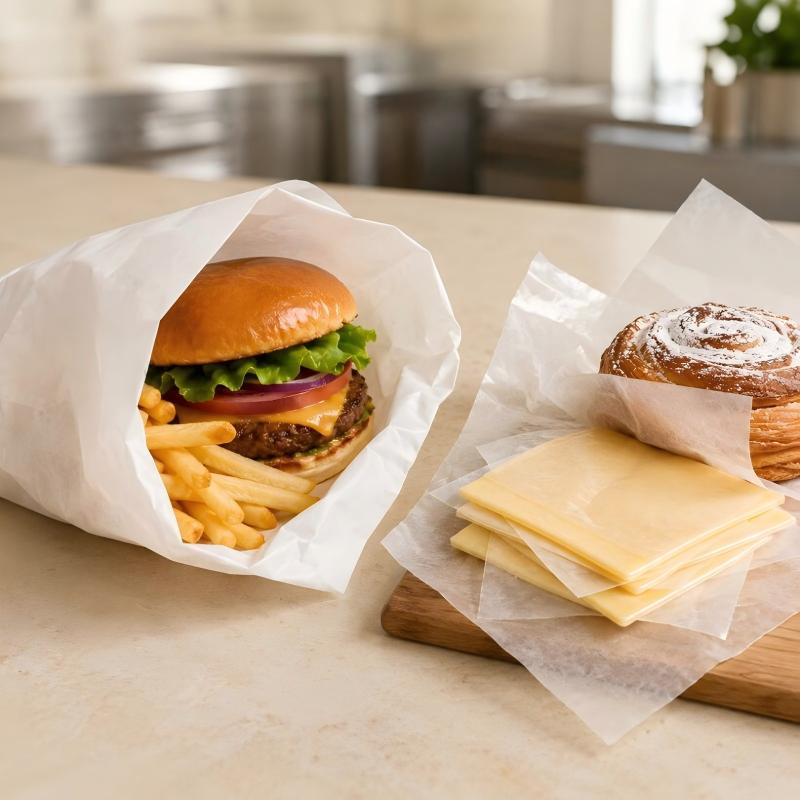
Choosing between greaseproof paper and wax paper depends on what your food packaging needs to do. Although both materials are commonly used for food wrapping, liners, and interleaving, they rely on different barrier mechanisms and perform differently when exposed to grease, moisture, heat, and repeated handling.
Greaseproof paper primarily resists oil through a dense, tightly bonded fiber structure, while wax paper relies on a wax coating to create a moisture-resistant and non-stick surface. These structural differences affect their suitability for hot foods, cold foods, oily products, custom printing, and end-of-life disposal.
For foodservice businesses, packaging converters, and bulk buyers, the best choice comes from matching the material to food temperature, grease and moisture levels, packaging format, branding needs, and sustainability goals.
Key Takeaways
- Greaseproof paper is generally better suited to applications where grease resistance and heat performance are important.
- Wax paper provides a smooth, non-stick surface and generally stronger moisture resistance for cold or room-temperature applications.
- Greaseproof paper relies mainly on a dense fiber structure, while wax paper depends on a wax coating.
- Printing performance, recyclability, and compostability depend on the finished construction, inks, food contamination, and local waste-management systems.
- Select the paper according to the food product, temperature, handling conditions, and packaging requirements.
What Is Greaseproof Paper?
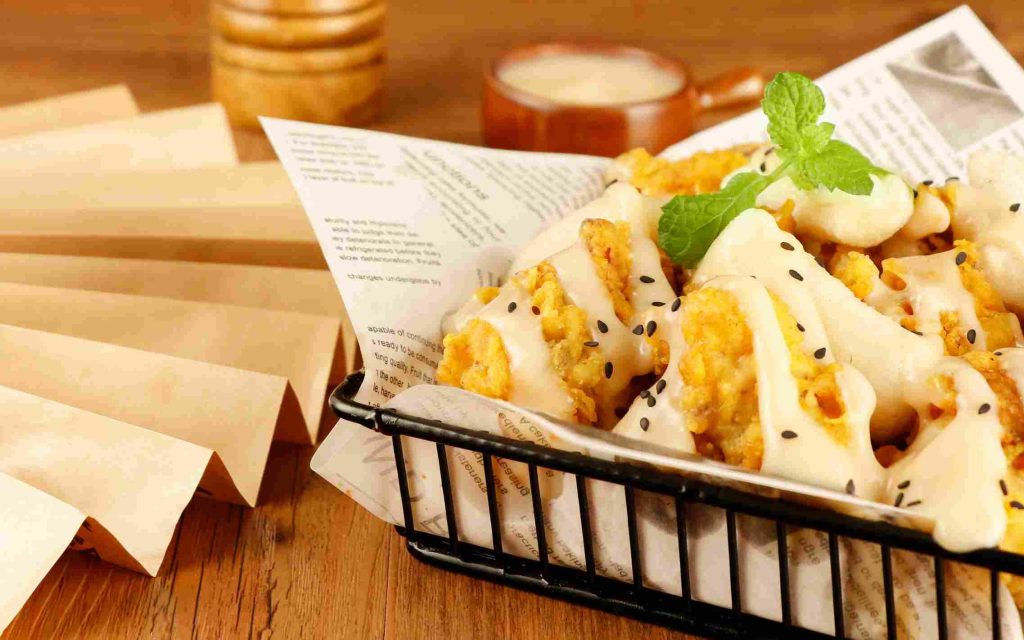
Greaseproof paper is a food packaging paper designed to resist the penetration of oil and grease. Its barrier performance typically comes from a dense fiber structure created through intensive refining and papermaking processes rather than from a conventional wax coating.
During production, cellulose fibers are refined and bonded closely together, reducing the size and connectivity of pores within the paper. This makes it more difficult for grease to migrate through the sheet. This fiber-based structure also differs from parchment paper, which typically relies on additional processing to achieve its heat-resistant and non-stick properties. Learn more about the difference between greaseproof paper vs. parchment paper.
Greaseproof paper is available in various GSM ranges, grease-resistance levels, colors, sheet sizes, and printing formats.
What Is Wax Paper?
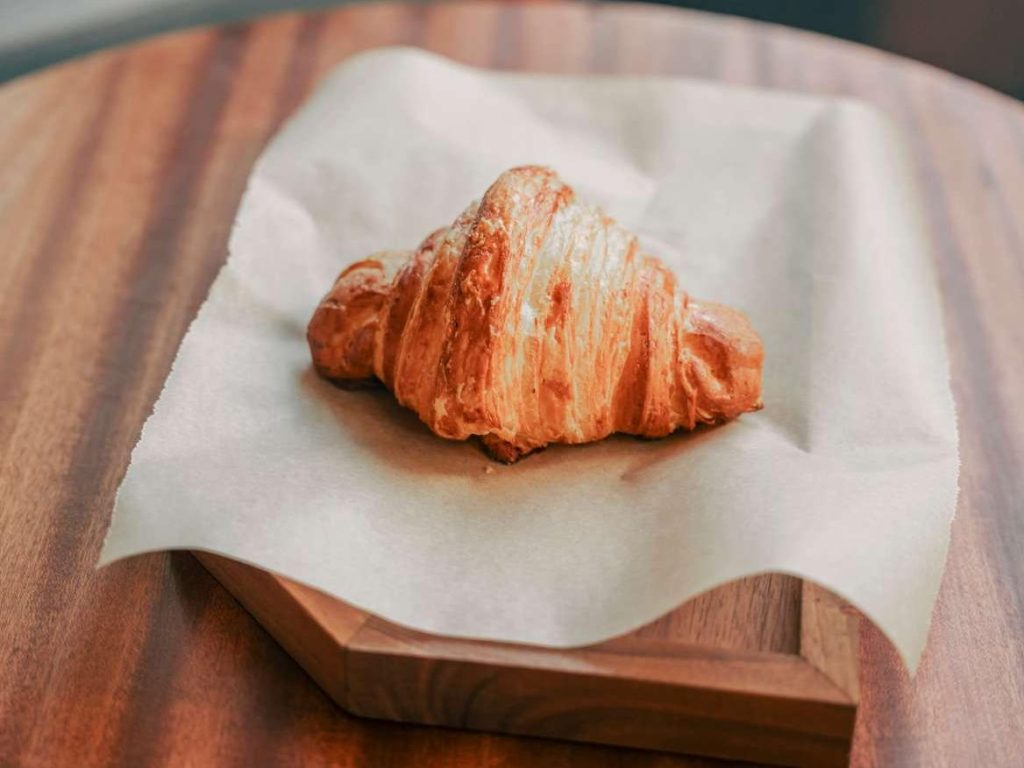
Wax paper is paper coated with a thin layer of wax. The coating may be made from paraffin, microcrystalline wax, or other food-contact wax formulations.
Unlike greaseproof paper, wax paper primarily relies on its surface coating to create a barrier. The wax layer gives the paper a smooth, non-stick surface and helps reduce moisture penetration.
Wax paper is generally most suitable for cold or room-temperature food applications. It is not typically intended for high-temperature oven use because the wax coating can soften or melt when exposed to excessive heat.
Greaseproof Paper vs Wax Paper: Key Differences
The key distinction is the barrier mechanism.
Greaseproof paper uses a dense fiber structure to slow grease penetration, while wax paper uses a wax coating to improve moisture resistance and non-stick performance.
This difference drives their performance in the applications below.
| Food Packaging Requirement | Better Starting Option |
|---|---|
| Hot, oily takeaway foods | Greaseproof paper |
| Fried-food wraps and basket liners | Greaseproof paper |
| Cold foods with high oil content | Greaseproof paper |
| Cold foods requiring moisture retention | Wax paper |
| Sticky products and food interleaving | Wax paper |
| Oven or baking applications | Oven-rated parchment or baking paper |
| Bakery and food liners | Depends on temperature, grease, and non-stick requirements |
Grease Resistance
Greaseproof paper is specifically designed to resist oil and grease penetration. Its dense fiber structure reduces the pathways through which grease can migrate.
Grease resistance varies by paper grade, basis weight, manufacturing process, and the specified test requirement.
Wax paper can also provide resistance to grease because the wax coating creates a surface barrier. However, its performance is achieved differently and may depend on the wax type and coating weight.
For oily foods, confirm grease resistance under real product, temperature, and packaging conditions.
Moisture Resistance and Breathability
Wax paper generally offers the stronger moisture barrier because its wax coating limits water movement through the paper.
Uncoated greaseproof paper is usually more breathable, which can help release steam but provides less moisture retention.
The choice depends on whether the priority is:
- Preventing grease penetration
- Retaining moisture
- Allowing the food to breathe
- Reducing surface stickiness
Heat Resistance and Food Applications
Greaseproof paper can be used to wrap hot takeaway foods, but this does not automatically make it suitable for oven use. Use it for baking or direct oven exposure only when the specific grade has been tested and rated for the required temperature.
Standard wax paper is generally intended for cold or room-temperature applications and should not be exposed directly to oven heat. Its wax coating can soften or melt at elevated temperatures.
Printing and Custom Branding
Many greaseproof grades can be custom printed with commercial printing methods suited to the paper surface and ink system.
Wax paper can also be printed, but its coated surface requires compatible inks and processes for reliable adhesion and print quality.
For custom food packaging, buyers should confirm:
- Ink adhesion
- Print clarity
- Color consistency
- Resistance to scuffing
- Grease resistance after printing
- Food-contact compliance
For branded wraps and liners, test printing on the actual paper construction before full production.
Sustainability and End-of-Life Options
Environmental performance depends on the finished construction, not the product name.
Uncoated greaseproof paper has a relatively simple fiber-based structure, but inks, additives, food contamination, and local collection rules still affect recyclability and compostability.
Wax paper varies with wax chemistry and coating weight. Verify recycling or composting claims against the finished product and target-market requirements.
Which Paper Is Better for Your Food Packaging?
Neither material is universally better; choose according to the food product and packaging requirements.
When Greaseproof Paper Is the Better Choice
Choose greaseproof paper first when controlling oil and grease is the main requirement.
It may be suitable for:
- Burgers and sandwiches
- Fried food packaging
- Bakery products
- Food wraps and liners
- Takeaway packaging
- Custom printed food paper
- Applications requiring stronger grease resistance
Select grease resistance according to oil exposure, temperature, and holding time.
When Wax Paper Is the Better Choice
Choose wax paper when moisture resistance and non-stick performance are the priorities.
It may be suitable for:
- Cold sandwiches
- Cheese and confectionery
- Food interleaving
- Short-term food wrapping
- Separating sticky products
- Cold or room-temperature food storage
However, standard wax paper should not be selected for high-temperature applications unless the product is specifically designed and rated for that use.
Final Thoughts
Greaseproof paper and wax paper serve different packaging priorities.
Greaseproof paper is usually better for greasy foods and printable wraps, while wax paper suits cold or room-temperature foods requiring moisture resistance or non-stick handling.
Compare grease resistance, moisture protection, temperature, print compatibility, and end-of-life requirements against the actual food product before selection.
FAQ
Can I Use Wax Paper in the Oven?
Generally, standard wax paper is not recommended for high-temperature oven use. The wax coating can soften, melt, or smoke when exposed to excessive heat. Always check the manufacturer’s temperature recommendations and use a paper specifically designed for baking when oven performance is required.
Does Greaseproof Paper Work for Cold Foods?
Yes. Greaseproof paper can be used for many cold food applications, especially when grease resistance is important. However, if moisture retention is the main requirement, wax paper or another moisture-barrier material may be more suitable.
Is Greaseproof Paper More Sustainable Than Wax Paper?
It depends on the specific product construction. Greaseproof paper without additional plastic or barrier coatings may offer simpler end-of-life options, but recyclability and compostability still depend on the finished material, printing inks, food contamination, and local waste systems. Wax paper also varies depending on whether conventional or alternative wax formulations are used.
Which Paper Is Better for Custom Food Packaging?
Greaseproof paper is often a practical option for custom food packaging because many grades are suitable for commercial printing. However, printing performance depends on the paper surface, ink system, and production process. Wax paper may require specialized inks or printing methods because of its coated surface.
How Do I Test Which Paper Is Right for My Product?
Test the paper with the actual food under real packaging conditions. Check for grease penetration, moisture transfer, food sticking, tearing, folding performance, print durability, and temperature stability. A small production trial can help confirm the most suitable paper specification before placing a large order.