
Buying cupstock in reels, sheets or pre-cut fans determines how much converting work you need to handle before cup forming. The right choice starts with your printing and die-cutting capacity, then comes down to order size, design changes and cost per usable cup.
Choose reels if you have access to roll-fed converting equipment, sheets if your workflow uses sheet-fed printing and die-cutting, or paper cup fans if you want blanks ready for forming. Any of these formats may suit a growing business when the processing route is properly matched.
Cupstock formats at a glance
| Format | What you receive | Work before cup forming |
| Reels | Continuous cupstock wound on a core | Printing if required, then cutting into sidewall blanks using compatible equipment |
| Sheets | Rectangular sheets cut to an agreed size | Printing if required, then die-cutting and stripping waste |
| Paper cup fans | Flat, fan-shaped sidewall blanks, plain or printed | No further sidewall die-cutting; printed fans also remove the need for in-house printing |
Understand the sidewall and bottom feeds
A cup forming machine may use pre-cut sidewall blanks together with a separate bottom-paper reel. A machine that accepts bottom reels does not necessarily accept reels for the cup sidewall. Check both feed systems before placing an order.
Cup fans are flat blanks with curved edges, not pre-curved cup bodies. They form the sidewall only. Confirm the matching bottom paper separately; it should not be assumed to be included in a fan quotation.
When cupstock reels make sense
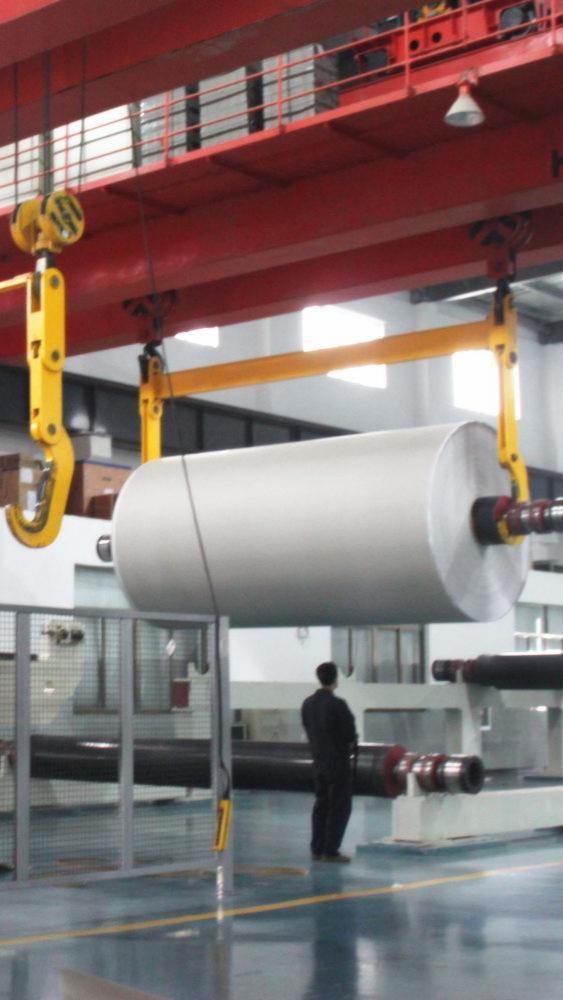
Reels suit buyers who print and die-cut from a continuous web, either in-house or through a converting partner. They can support repeat orders efficiently when the reel width, print repeat and cutting layout match the equipment.
A typical route is reel printing, die-cutting into fans, and then cup forming. Some production systems integrate more of these steps, but buying reels does not remove the need to produce sidewall blanks. Confirm the actual line configuration.
Check reel width, core inner diameter, maximum outside diameter, reel weight, winding direction and coating orientation. A reel that exceeds the unwinder limits cannot be used simply because the paper grade is correct.
Reels may reduce the purchased material cost compared with converted fans, but add printing, cutting, setup and handling costs. Their economic advantage depends on usable output and equipment utilization.
When cupstock sheets make sense
Sheets suit businesses using sheet-fed printing and die-cutting equipment, including buyers who work with a local printer. They offer a practical route for branded cups when that equipment and expertise are already available.
The usual sequence is printing, die-cutting, stripping the surrounding waste and feeding the finished fans into a compatible cup former. Rectangular sheets do not normally go straight into a fan-fed forming machine.
Match sheet dimensions to the press and die-cutter, and confirm grain direction, coating side and the blank layout. The number of usable fans per sheet affects the material cost of every cup.
Sheets can work for multiple designs, but short runs are not automatically economical. Printing plates, cutting tools, setup waste and minimum order quantities still need to be included in the comparison.
When paper cup fans make sense
Paper cup fans suit buyers who want to outsource sidewall converting and focus on forming, packing and sales. They can be supplied plain or printed to an approved design. High-output cup production can also use pre-cut blanks; fans are not restricted to basic machines.
The trade-off is that each fan is already committed to a particular cup geometry and, when printed, a particular design. Confirm the cutting drawing, seam overlap, coating orientation and feed requirements before production. Run samples on your own machine before approving a new specification.
Compare the cost per usable cup
Price per tonne is only part of the decision. A reel quote covers a different processing stage from a printed-fan quote, so the two prices should not be compared without the remaining work.
For a fair comparison, include the landed material cost, printing, tooling, die-cutting, labor, energy, setup losses, rejected cups and any outsourced converting fees. Include bottom paper on the same basis for every option.
Divide the relevant total cost by the number of saleable cups produced. For a purchasing comparison, cost per 1,000 saleable cups is more useful than assuming that one format is always cheapest.
Waste depends on the layout and process
Reel width, sheet dimensions, blank nesting and setup losses all affect yield. There is no universal rule that reels create the least waste or sheets the most. Buying fans moves sidewall cutting waste to the supplier; it does not eliminate that waste from the supply chain.
Labor and storage depend on your operation
Staffing depends on automation, output, changeovers, inspection and packing. Use your own shift data instead of a fixed operator count by format. For storage, compare the actual packed dimensions, handling equipment, stacking limits and protection against moisture and damage.
What to confirm before ordering
- Cup design: nominal volume, top and bottom diameters, height and an approved blank drawing. Cups with the same stated volume can have different dimensions.
- Paper specification: base-paper GSM, caliper, stiffness and grain direction. State the coating type and coating weight on each side separately, and clarify whether quoted GSM includes the coating.
- Supply dimensions: reel and core sizes, sheet dimensions or fan cutting tolerances, plus the separate bottom-paper specification.
- Printing: artwork, colors, print side, registration and areas that must remain clear for sealing. Confirm which party handles proof approval.
- Use and testing: hot or cold drink application, intended holding conditions, machine sealing performance and leak testing of formed cups. Request food-contact documentation for the intended market and use.
- Order details: quantity per size and design, packing, delivery terms, lead time, sample requirements and the minimum order for each specification.
Questions buyers often ask
Can one reel or sheet size cover several cup sizes
Sometimes, if the converting equipment and cutting layouts allow it. Ask your converter to check yield for each design. Pre-cut fans are tied to a specific blank geometry and are not generally interchangeable between cup sizes.
Are paper cup fans always printed
No. Fans can be plain or printed. If you are buying fans for branded cups, specify that printing is included and approve both the artwork and cutting layout before the order is produced.
Do paper cup fans include the cup bottom
Do not assume so. Fans provide the sidewall. Confirm whether the quotation includes bottom reels or another bottom format suitable for your machine, and check the quantity balance between sidewalls and bottoms.
Which format is best for a new cup business
If you have a cup former but no printing or die-cutting equipment, compatible ready-cut fans are a practical starting point. If you already have a converting partner, compare their reel or sheet route with buying fans, including minimum orders and total processing costs.
Does changing the supply format change the coating required
The supply format does not determine the barrier specification. Select the coating for the cup application and validate it on your equipment. A change from reels to fans should not silently change the agreed base paper, coating or performance requirements.
Find the format that fits your production
Start with the operations you can carry out reliably. Reels make sense when roll converting is available; sheets fit a sheet-based converting workflow; fans let you purchase the sidewall after cutting and, if required, printing. Then compare usable yield, total cost and the stock you must hold for each design.
Sure Paper supplies cupstock in reels, sheets and paper cup fans. Send us your cup size or blank drawing, machine model, paper and coating requirements, order quantity and destination port. Tell us whether you handle printing and die-cutting in-house, and we can review a suitable supply format and prepare a quotation.