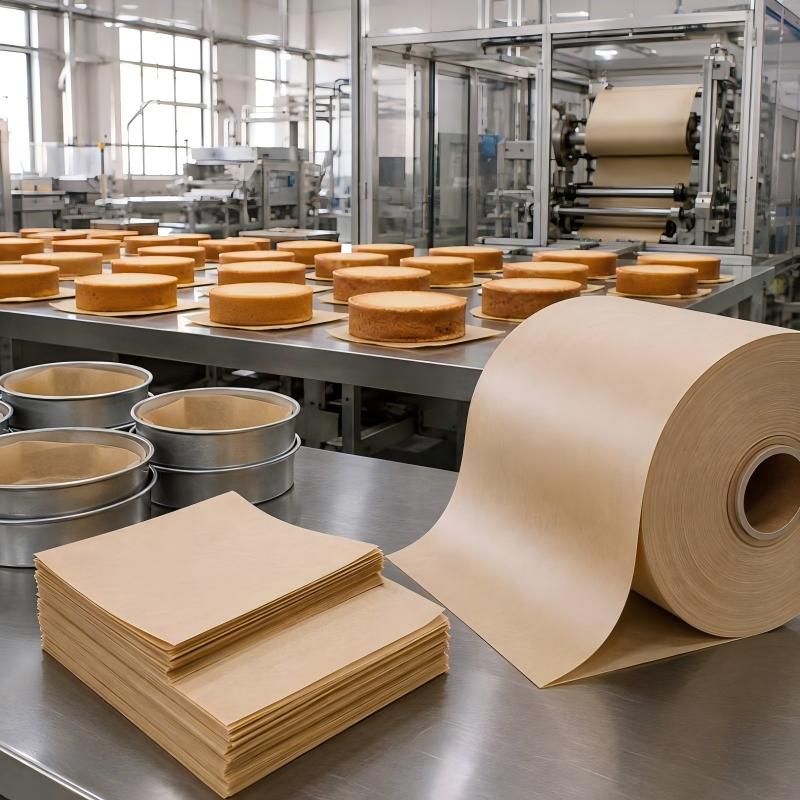
Yes, parchment paper is one of the most reliable tools for baking cakes. It creates a non-stick barrier between cake batter and the pan, ensuring cakes release cleanly without tearing or sticking to the bottom. Food-grade silicone-coated parchment paper is heat-stable at standard baking temperatures and will not leach harmful chemicals into food. For professional and home bakers alike, lining cake pans with parchment paper is a simple step that drastically improves results and cuts down on cleanup.
Key Takeaways
- Parchment paper is one of the best options for lining cake pans, providing reliable non-stick release and easy cake removal.
- It promotes more even baking, reduces cleanup time, and is safe for most cake recipes when used within its recommended temperature range.
- Properly lining round or square cake pans with parchment paper helps prevent sticking, tearing, and uneven baking.
- Avoid common mistakes such as incorrect sizing, wrinkles, overlaps, and exceeding the paper’s maximum heat rating.
- Food-grade silicone-coated parchment paper delivers the most consistent baking performance for both home bakers and commercial bakeries.
Why Use Parchment Paper for Cake Baking?
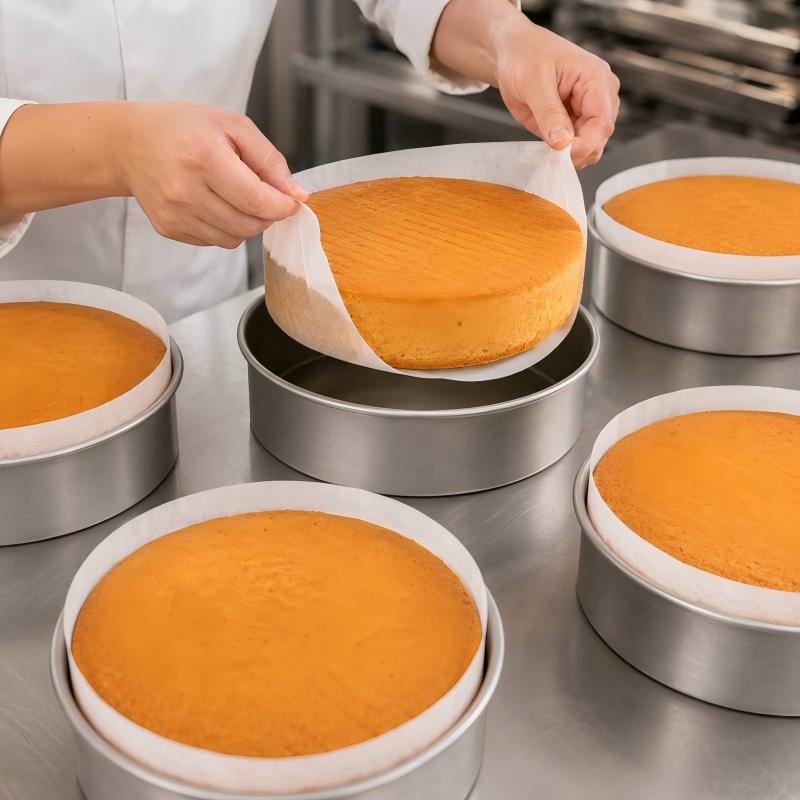
Reliable Non-Stick Release
The biggest benefit is clean, tear-free cake removal. Parchment paper creates a physical barrier between the batter and the pan, so delicate cakes — including sponge, layer and chiffon cakes — slide out intact without sticking or breaking. Silicone-coated parchment paper offers superior non-stick performance compared to uncoated baking paper, making it ideal for fragile, high-moisture cakes.
Even Baking Performance
Parchment paper distributes heat gently and evenly across the pan bottom, reducing hot spots that cause uneven rising or over-browning. This helps cakes bake flat and consistent, which is especially important for layer cakes that need level tops.
Fast, Easy Cleanup
Cake batter, caramelized sugar and melted butter all stay contained on the paper, leaving pans nearly spotless. This saves scrubbing time and extends the life of baking pans.
Heat-Safe & Food-Safe
Food-grade silicone-coated parchment paper is safe for oven use up to 425°F (220°C), which covers nearly all standard cake recipes. The silicone coating is chemically stable at baking temperatures and does not transfer flavors or chemicals to food.
Sure Paper’s premium silicone-coated parchment paper is manufactured from food-safe virgin pulp without chlorine bleaching. It delivers consistent non-stick performance and meets international food contact safety standards for both home and commercial baking.
Common Parchment Paper Mistakes to Avoid
Wrinkling & Bunching
Paper that is too large or not pressed flat will fold up during baking, creating ridges on the cake surface. Always cut paper to fit the pan exactly and smooth it firmly against the bottom and sides.
Incorrect Sizing
Paper that is too small leaves exposed pan areas where cake will stick. Paper that is too large bunches and blocks heat. Use the folding method for round pans and trace-and-cut for square pans for an accurate fit.
Overlaps & Gaps
Overlapping layers create thicker sections that insulate batter and cause uneven baking. Gaps leave bare pan spots that lead to sticking. Always check fit before pouring batter.
Exceeding Temperature Ratings
All parchment paper has a maximum heat rating. Using it above the rated temperature can cause charring or brittleness. Stick within the 400–425°F range for standard cake baking.
How to Line Cake Pans With Parchment Paper
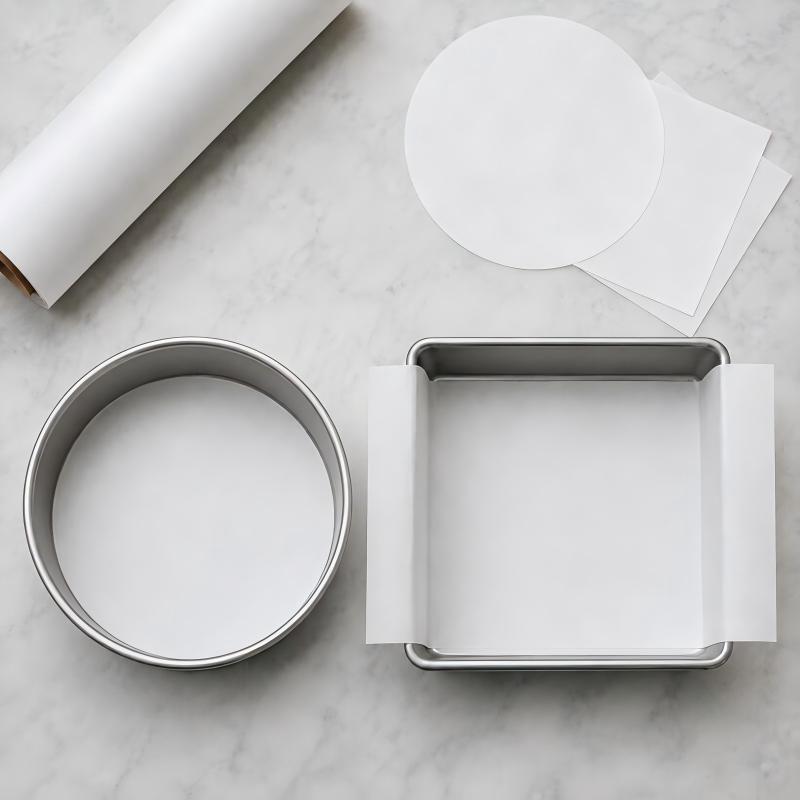
Round Cake Pans
The folding method creates a perfectly sized circle without tracing or special tools:
- Tear off a sheet of baking paper slightly wider than the cake pan diameter.
- Fold the paper in half vertically, then in half again horizontally to form a square.
- Fold the square diagonally into a triangle, then fold once more into a narrower triangle.
- Place the pointed tip at the center of the pan. Mark where the edge of the pan meets the paper.
- Trim about ¼ inch inside the mark. Unfold to reveal a perfectly sized parchment circle.
- Lightly grease the pan bottom, press the parchment circle into place, and pour in batter.
Square & Rectangular Pans
Use the sling method for easy lifting:
- Trace the pan bottom onto parchment paper, then cut the paper 3–4 inches wider than the pan on two opposite sides.
- Make a small diagonal cut at each corner to help the paper fold neatly up the pan sides.
- Press the paper into the pan so the overhanging edges act as handles.
- For full side coverage, use two crisscrossed sheets to line all four walls of the pan.
After baking, let the cake cool for 15–20 minutes in the pan. Use the parchment overhang to lift the cake out cleanly, then peel the paper away slowly from the edges inward.
Pro Tips for Best Results
- Lightly grease the pan before laying down parchment to hold the paper in place.
- Smooth out all wrinkles and air bubbles before adding batter to avoid uneven cake surfaces.
- For extra browning and clean release, you can lightly grease the top of the parchment paper as well.
Conclusion
Parchment paper is a highly effective, safe and practical tool for baking cakes of all kinds. It delivers cleaner release, more even baking and easier cleanup than greasing alone, and works for every pan shape and cake style. For consistent, professional-quality results, food-grade silicone-coated parchment paper is a staple in both home and commercial bakeries.
Sure Paper’s food-safe silicone parchment paper is available in pre-cut rounds, sheets and custom sizes for every pan type. Made with chlorine-free pulp and tested to international food safety standards, it delivers reliable non-stick performance for every cake bake.
FAQ
Can you put parchment paper in the oven with cake batter?
Yes. Food-grade parchment paper is designed to go directly in the oven with batter. It will not melt, burn or release harmful chemicals at standard cake baking temperatures up to 425°F.
Does parchment paper change cake flavor or texture?
No. Parchment paper is tasteless and odorless, and it will not alter the flavor, color or texture of cake batter. It simply provides a non-stick surface and gentle heat distribution.
Should you grease parchment paper before adding cake batter?
It is optional but recommended for delicate cakes. A light spray or brush of grease on top of the parchment helps with browning and ensures ultra-clean release, especially for soft, moist layer cakes.
Can you reuse parchment paper for multiple cakes?
You can reuse parchment paper for 2–3 bakes if it remains clean, intact and free of heavy grease or burnt sugar residue. Discard paper that is torn, brittle or heavily soiled.
Is parchment paper compostable and eco-friendly?
Uncoated and lightly soiled silicone-coated parchment paper will break down in industrial composting facilities. Heavily oil-soiled paper should be placed in general waste to avoid contaminating compost batches. It remains a more sustainable option than single-use plastic liners or aluminum foil.