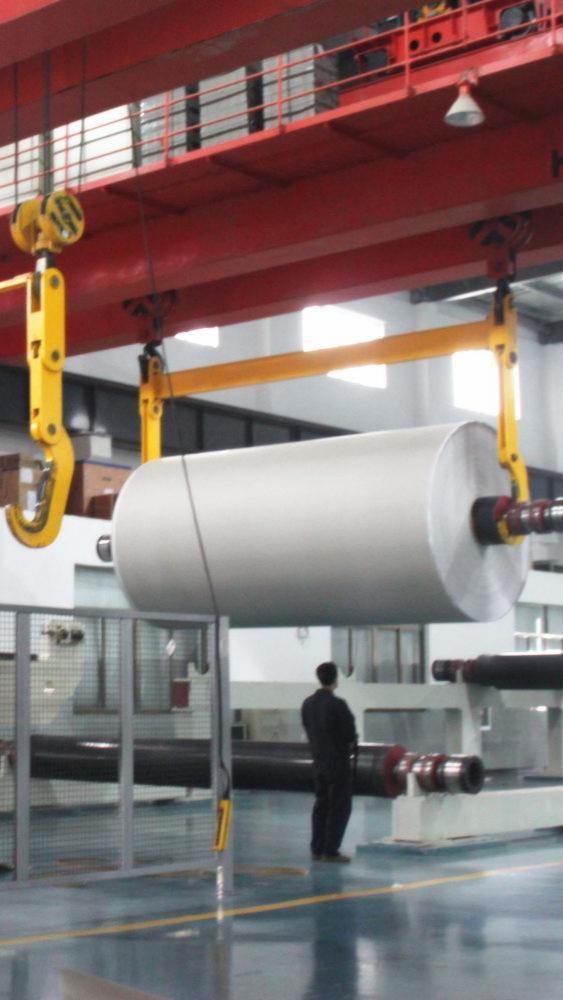
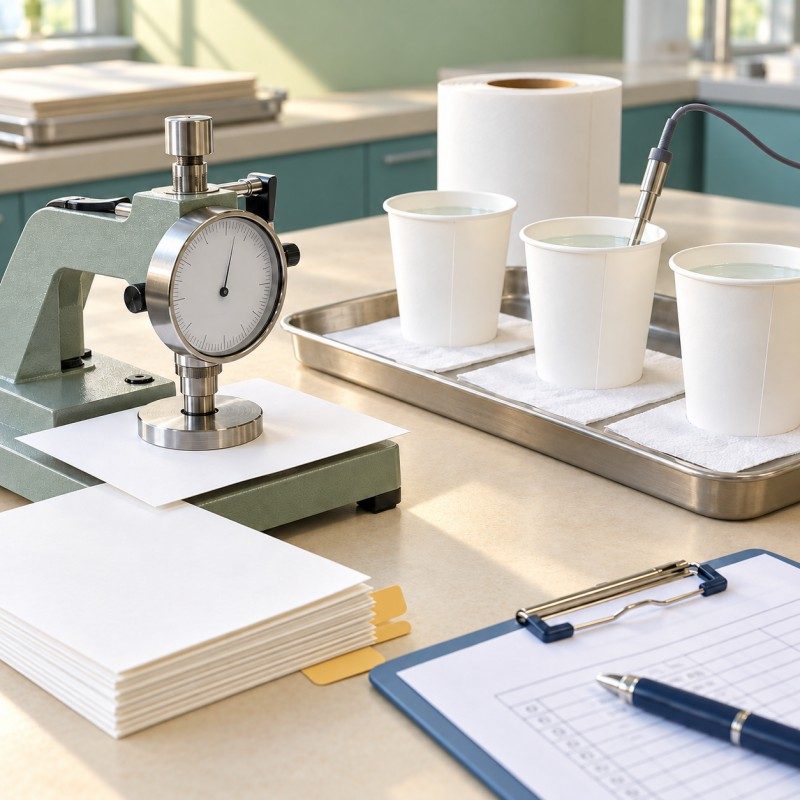
Before approving cupstock for a bulk order, check the material specification, run it on your production equipment, and test finished cups under their intended use conditions. A sheet that looks good may still need different printing or sealing settings, so sample approval should cover both the paper and the finished cup.
This guide explains what to inspect, how to plan a practical trial, and which records to keep. Agree on the test methods and acceptance criteria before starting; sample quantities, temperatures and holding times should reflect your application rather than a universal checklist.
Key Takeaways
- Use A4 sheets for initial screening and suitable trial material for production testing.
- Record sample batch details, and compare the proposed material with your current approved stock.
- Check both the cup body and bottom seals using the intended material combination.
- Set liquid tests around actual filling temperatures, serving times and environmental conditions.
- Review food-contact documentation for the exact material and intended market before approval.
Define the Application and Request Suitable Samples
Tell the supplier your cup capacity, hot or cold drink application, serving temperature, holding time, coating requirements, printing process and forming equipment. Include the cup drawing or blank dimensions and the bottom-paper specification where available.
| Sample format | Useful for | Limitations |
| A4 sheets | Color, surface, feel and selected laboratory measurements | Cannot establish production runnability or finished-cup sealing |
| Trial reels or cup fans | Printing, feeding, forming and sealing trials | Must match equipment requirements and include compatible bottom material |
| Finished cups | Liquid holding, handling, lid fit and comparison | Do not establish how the stock will run on your own equipment |
Agree the quantity with your production and quality teams. Allow material for setup, stable operation, planned setting changes and repeat checks. A small run can screen for obvious issues but cannot, by itself, demonstrate consistent bulk performance.
Record the paper grade, coating specification, batch number and sample source. Different cartons may belong to the same batch; assessing lot-to-lot variation requires samples from separately identified production lots.
Inspect the Material Before Machine Trials
Compare samples with the agreed specification and technical data sheet. Keep a labeled reference sample and record any deviations before moving to production trials.
| Property | What to check |
| GSM | Distinguish base paper weight from total coated weight. Measure using a defined method and compare with agreed tolerances. |
| Caliper | Measure thickness at multiple representative positions. Use consistent equipment and measurement conditions. |
| Coating | Confirm coating type, coated side and weight on each side. Review supplier data and inspect for visible damage or unevenness. |
| Moisture and appearance | Check moisture against the agreed specification; inspect for curl, wrinkles, contamination, rough areas and color variation. |
| Dimensions and cut quality | Check reel width or blank dimensions, grain direction, edge quality, dust and reel winding where relevant. |
Condition specimens according to the selected test method before laboratory comparison. ISO 187 provides a framework for conditioning paper and board. Do not assume that a fixed 24-hour period is sufficient for every sample; follow the method’s requirements for reaching moisture equilibrium.
Measure Stiffness and Check Cup Strength Separately
Paperboard bending stiffness and finished-cup strength are related, but they are different measurements. Thickness alone does not establish stiffness, and higher stiffness should not be treated as proof of better insulation.
| Check | Purpose | How to compare |
| Paperboard bending resistance | Assess resistance to bending before forming | Use a defined method, such as an applicable ISO 2493 method, and report machine and cross directions separately |
| Finished-cup strength | Assess handling, shape retention and stacking | Use an agreed loading or handling procedure for the actual cup design |
| Cup construction | Assess insulation and usability | Evaluate the complete wall structure, sleeve or lid where applicable |
SCT and RCT measure compression properties. They may be relevant to a specific material assessment, but should not be presented as interchangeable with bending stiffness tests or as substitutes for finished-cup evaluation.
Compare With Your Current Approved Cupstock
Run a reference material alongside the new sample under comparable conditions. Record both the initial settings and any adjustments needed by the new stock. Compare stable production speed, reject rate, seam appearance and liquid-holding results; record differences rather than relying only on hand feel.
Run Forming and Seal Integrity Trials
Use your actual printing and forming equipment, with the intended cup-body and bottom materials. Start within the recommended operating range, then establish a stable process. Record material identity, machine settings, trial duration, output and rejects.
- Feeding and forming: Check misfeeds, curl, blank alignment, rim curling, cup shape and stacking. Inspect folds or score lines where the design uses them.
- Side seams: Check consistent overlap, alignment and continuous bonding, with no visible gaps, scorching or open channels.
- Bottom seals: Check bottom-paper position, knurling and bonding against the cup design; inspect for wrinkles, cracks and weak areas.
- Repeatability: Sample cups at intervals during stable running and after planned speed changes or restarts. Identify setup waste separately.
Flat-sheet sealing checks can help screen materials, but finished-cup tests are needed to assess the actual seams. If peel testing is used, define specimen preparation and the test method so results are comparable.
Do not require saleable cups before the machine reaches its approved operating conditions. Instead, document the normal operating range and how stable sealing is restored after a stoppage. Investigate failures by checking material, blank geometry, bottom stock and settings together.
Test Liquid Holding and Leak Resistance
Set filling temperature, fill level, liquid, holding time and ambient conditions before testing. State whether a temperature is the initial fill temperature or is maintained throughout the test. The following is a planning guide, not a universal test standard.
| Test | Set conditions from | Inspect for |
| Hot drink holding | Intended filling temperature and serving time | Side-seam and bottom leakage, wall weeping and unacceptable deformation |
| Cold drink holding | Drink temperature, ice use, ambient humidity and serving time | Leakage and condensation-related softening, delamination or print damage |
| Extended holding | Longer use claimed or required by the customer | Loss of barrier performance or handling strength over time |
| Actual beverage check | Target drinks, such as coffee, juice or milk-based drinks | Leakage, appearance changes and unusual odor under the intended conditions |
Place cups on a clean, dry surface or suitable absorbent paper to help detect leaks. For cold cups, distinguish external condensation from liquid escaping through a seam or wall. Surface droplets alone are not evidence of coating failure.
Record the number tested, observation times, failures and their locations. Agree acceptable deformation or strength loss through a defined procedure. Use dye tracing only under a validated laboratory procedure when it is needed to locate a leak path; it is not a substitute for food-contact testing.
Complete the Performance and Documentation Review
Printing Odor and Lid Fit
Check print adhesion and rub resistance using an agreed method, including expected moisture exposure. For odor screening, compare with a neutral reference under the intended contact conditions; coffee can mask unwanted odors.
Test the actual lid on the finished cup. Check rim fit, retention and leakage during intended handling, and distinguish lid-fit problems from side-seam or bottom-seal failures. Include resistance to fatty contents only where relevant to the intended beverage or food.
Food Contact Documentation
Confirm that the supplier’s documentation identifies the material, coating and intended conditions of use. Check that supporting tests or assessments cover the relevant food types, temperatures and contact times. Physical leak testing does not demonstrate chemical food-contact compliance.
For the EU market, review the requirements applicable to the construction, including the framework Regulation (EC) No 1935/2004, GMP Regulation (EC) No 2023/2006, relevant plastic-layer provisions and applicable national measures. For other markets, ask for supporting documentation addressing the applicable requirements for both paper and coating.
Review reports after changes in material, manufacture, use or legislation; there is no universal 12-month expiry rule. Follow additional customer renewal requirements and obtain restricted-substance evidence where required.
Approve the Specification and Keep a Trial Record
Retain the agreed specification, batch details, reference samples, trial settings, results and supporting documents. Resolve outstanding issues before approval, and agree incoming inspection and change-notification requirements for future shipments.
Frequently Asked Questions
How many samples should I request
Request enough for the planned laboratory checks, machine setup, stable running and repeat tests. Agree a sampling plan with your quality team; a few sheets or a fixed number of cups cannot represent every order size or production process.
What if the sample leaks during a trial
Record the leak location and test conditions, then check seam formation, bottom-paper compatibility, blank dimensions and operating settings with the supplier. Retest after agreed corrections before approving bulk production.
Discuss Cupstock Samples With Sure Paper
Share your cup size, beverage application, preferred GSM and coating, machine requirements and sample format. Sure Paper can review your requirements and discuss suitable samples, trial material and supporting product documents before you place a bulk order.