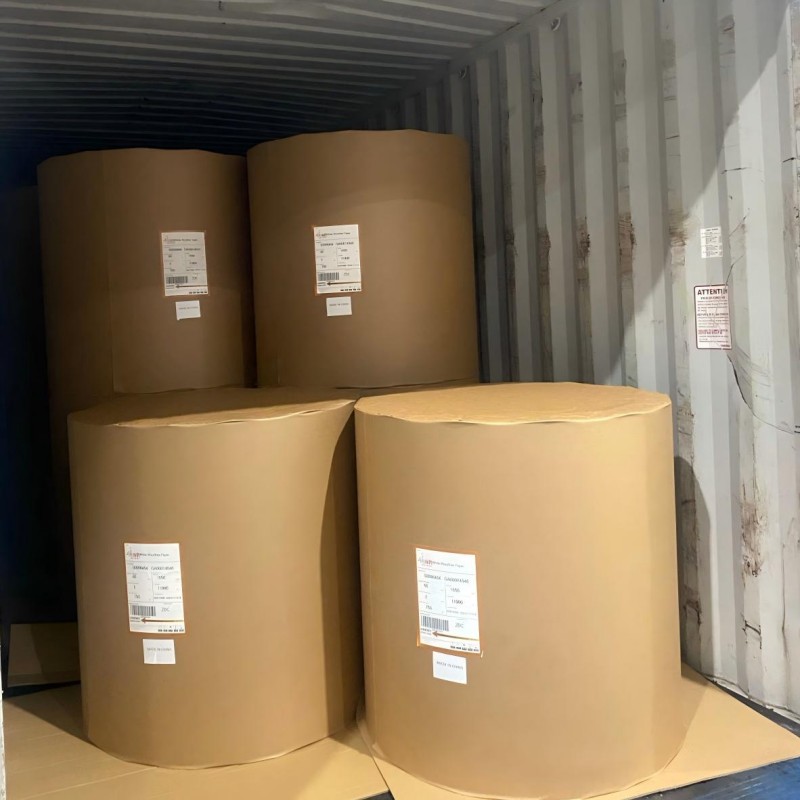
Offset paper — also called woodfree uncoated paper — is one of the most widely used printing substrates across publishing, commercial printing and packaging industries. Engineered for excellent compatibility with both offset lithography and digital presses, it features a smooth, uncoated surface that delivers crisp text and consistent color reproduction. Sure Paper’s Premium Woodfree Offset Paper stands out for its high opacity, strong tensile strength and eco-friendly sourcing, making it a reliable choice for everything from educational textbooks to corporate stationery.
Key Takeaways
- Offset paper is the industry standard for book interiors, office documents, brochures and packaging inserts, thanks to its excellent readability and balanced ink absorption.
- Its high opacity prevents ink show-through on double-sided prints, improving readability for books, manuals and catalogs.
- Compared to coated paper, offset paper is more cost-effective for large runs, easier to recycle, and better suited for text-heavy projects.
- It is available in a wide range of weights to match different applications, from thin text pages to durable lightweight cover stock.
- Sure Paper premium woodfree offset paper offers FSC-certified, eco-friendly options with consistent print performance for both bulk and custom orders.
Common Applications of Offset Paper
Book & Publishing Printing

Offset paper is the primary substrate for trade books, textbooks, magazines, reference manuals and periodicals. Its uncoated, matte surface reduces glare during extended reading, and its high opacity ensures minimal ink show-through for double-sided pages — a critical feature for full-length books.
Commercial & Marketing Printing
For text-forward marketing materials, offset paper delivers a professional, approachable finish at a cost-effective price point. Common uses include brochures, flyers, product catalogs, business cards, postcards and letterhead.
Its smooth surface supports clean, even color reproduction for brand graphics, while the uncoated texture gives materials a tactile, premium feel that stands out from glossy coated flyers. For large print runs, offset paper offers significantly lower per-unit cost than coated alternatives.
Office & Stationery Printing
Offset paper is the standard for everyday office printing, including reports, memos, forms, notebooks and internal documents. It absorbs ink quickly and dries evenly to prevent smudging, making it well-suited for high-speed office and production digital printers.
Its uncoated surface is also easily writable with pen or pencil, which makes it ideal for order forms, workbooks, planner pages and custom stationery that requires handwritten notes.
Packaging & Specialty Printing
Higher-grammage offset paper is widely used in packaging and specialty print applications, most commonly as:
- Product instruction manuals and warranty inserts
- Surface liner paper for folding cartons and gift boxes
- Beverage sleeves and paper cup jackets
- Premium packaging tissue and divider sheets
- Lightweight folding boxes for small consumer goods
Key Properties That Make Offset Paper Suitable

Balanced Ink Absorption
The uncoated fiber structure of offset paper absorbs ink at a controlled, uniform rate. This creates sharp, clean text edges and prevents smudging during production and handling.
Unlike coated paper, which holds ink on the surface for ultra-bright photo reproduction, offset paper lets ink sink into the fibers for a soft, natural finish. This makes it more comfortable for long-form reading and better suited for text-dominant projects.
High Opacity for Double-Sided Printing
High opacity is one of offset paper’s most valuable properties. It prevents ink from showing through to the reverse side of the sheet, which is essential for books, manuals and catalogs printed on both sides.
Poor opacity causes distracting show-through that reduces readability. Sure Paper’s premium woodfree offset paper is formulated for industry-leading opacity, ensuring clean, professional double-sided prints even at lighter weights.
Durability & Eco-Friendliness
Quality woodfree offset paper made from pure pulp has good tensile strength and folding endurance, holding up well to binding, trimming and frequent handling. This durability makes it suitable for textbooks, manuals and packaging that go through heavy use.
As an uncoated paper product, offset paper is also highly recyclable. FSC-certified options such as Sure Paper’s premium line are sourced from responsibly managed forests, helping brands reduce their environmental footprint.
When to Choose Offset Paper
Offset Paper vs. Coated Paper
The two most common printing substrates serve very different purposes:
| Attribute | Offset (Uncoated) Paper | Coated Paper |
|---|---|---|
| Surface | Smooth matte, uncoated fiber | Glossy, silk or matte coated finish |
| Best For | Text-heavy books, documents, stationery | Photo-heavy brochures, premium catalogs, covers |
| Ink Behavior | Ink absorbs into paper fiber | Ink sits on top of the coating layer |
| Unit Cost | Lower, ideal for large runs | Higher, used for premium visual projects |
| Recyclability | Highly recyclable | Harder to recycle due to coating |
| Writeability | Fully writable with pen/pencil | Not easily writable |
Limitations to Consider
- Offset paper is hygroscopic, meaning it absorbs moisture from the air. Extreme humidity changes can cause curling or registration shifts during printing. Storing paper in a temperature-controlled environment prevents these issues.
- It is not optimized for high-detail photo printing. For projects dominated by full-color photography, coated paper will deliver richer color and sharper image detail.
- Very short-run digital-only projects may see better cost efficiency with specialty digital papers.
Paper Weight Selection Guide
The right grammage depends on your project’s use case and desired feel:
| Grammage (gsm) | Typical Applications |
|---|---|
| 48–70 gsm | Novel interiors, thin manuals, mass-market books |
| 80–120 gsm | Magazines, catalogs, brochures, corporate letterhead |
| 150–200 gsm | Brochure covers, premium business cards, book inserts |
| 250–300 gsm | Lightweight book covers, folding cartons, premium packaging |
Sure Paper Premium Woodfree Offset Paper
Sure Paper manufactures high-performance woodfree offset paper for industrial and commercial printing use, with key advantages:
- Full weight range: 48 to 300 gsm, covering text pages, inserts and lightweight cover stock, so customers can source all paper requirements from one supplier.
- Consistent print quality: Uniform fiber structure, controlled ink absorption and reliable opacity deliver sharp text and even color across both offset and digital presses.
- Strong converting performance: Good tensile and folding strength makes it suitable for binding, die-cutting and folding packaging production.
- Sustainable certification: FSC-certified options are available, with all grades fully recyclable to support green printing goals.
- Flexible ordering: Available in multiple white shades and sheet/roll formats, with custom sizing to match specific press and project requirements.
Conclusion
Offset paper is a versatile, cost-effective and reliable printing substrate that forms the foundation of publishing, commercial printing and packaging industries. Its balanced combination of readability, print performance and durability makes it suitable for everything from everyday office documents to high-volume textbook production.
For businesses seeking consistent, high-quality offset paper backed by responsible sourcing, Sure Paper’s Premium Woodfree Offset Paper delivers reliable performance across all weights and applications, supporting everything from small custom orders to large-scale industrial printing runs.
FAQ
What makes offset paper different from coated paper?
Offset paper is an uncoated substrate with a smooth matte finish. It absorbs ink into its fiber structure, making it ideal for text-heavy materials and writable applications. Coated paper has a mineral or polymer coating that holds ink on the surface, delivering brighter, sharper photos but at a higher cost and with lower recyclability.
Can offset paper be recycled?
Yes. As an uncoated paper product, offset paper is highly recyclable. Sure Paper’s Premium Woodfree Offset Paper is made from responsibly sourced pulp and supports circular, eco-friendly printing practices.
What types of projects use offset paper?
Offset paper is used for book interiors, textbooks, magazines, brochures, flyers, business stationery, office reports, product manuals and packaging inserts. Heavier grades can also be used for lightweight covers and folding cartons.
Does offset paper work with all printers?
Offset paper is optimized for both offset lithography presses and digital production printers. It also works with most standard office laser and inkjet printers, and its uncoated surface is easily writable with pen or pencil.
Why do publishers prefer woodfree offset paper?
Woodfree offset paper offers high opacity to prevent show-through on double-sided pages, good durability for repeated reading, and low-glare readability for long-form text. It is also cost-effective for large print runs, making it the industry standard for trade books and educational materials.