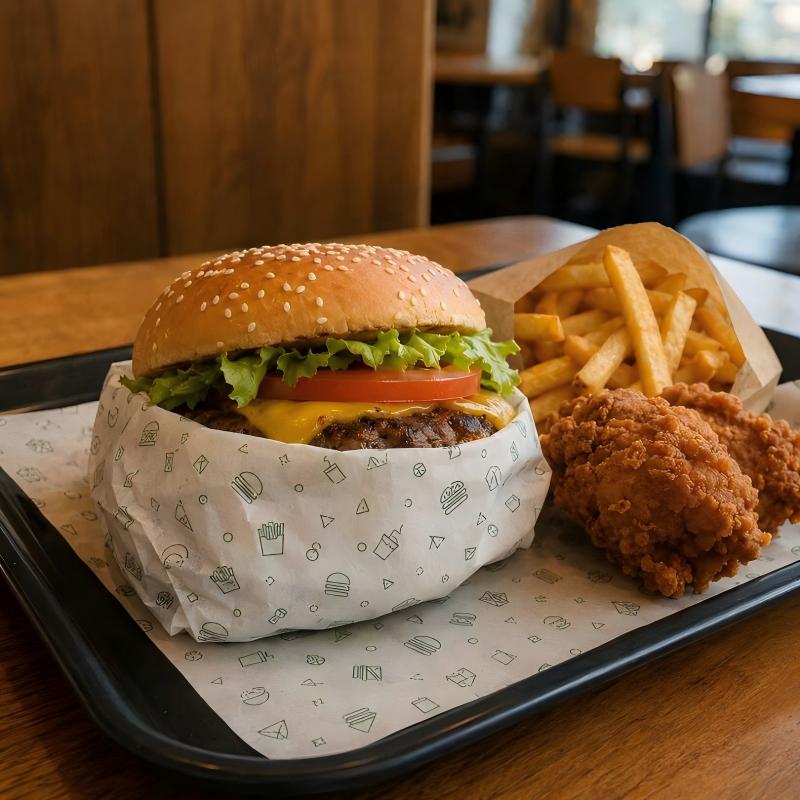
The right wrapping paper does more than hold a burger together — it locks in juiciness, prevents grease leaks, preserves bun texture, and shapes the customer’s first impression of your food. For fast food kitchens, food trucks and delivery brands, picking the correct burger wrap directly impacts food quality, customer satisfaction and operational efficiency.
There is no single “best” paper for every use case. The ideal option depends on your serving style, menu items, delivery distance and budget. This guide breaks down every common type of burger wrapping paper, their pros and cons, and how to choose the right one for your operation.
Key Takeaways
- Greaseproof paper blocks heavy cooking oil and grease to keep bags, trays and customers’ hands clean, making it the standard for most fast food settings.
- Foil-lined insulated paper traps heat effectively, making it the best choice for long-distance food delivery and takeout.
- Food-grade silicone parchment paper prevents melted cheese and sticky sauces from adhering to the wrap, ideal for loaded, cheesy burgers.
- Pre-cut deli sheets speed up packaging workflows in busy kitchens, reducing labor time and improving order throughput.
- Always verify food contact safety certifications before purchasing, and match the paper to your highest-priority need: grease resistance, heat retention or operational speed.
Common Types of Burger Wrapping Paper
Each type of wrap is engineered for a specific set of functions. Below are the five most widely used options, with their core benefits and ideal use cases.
1. Greaseproof Paper
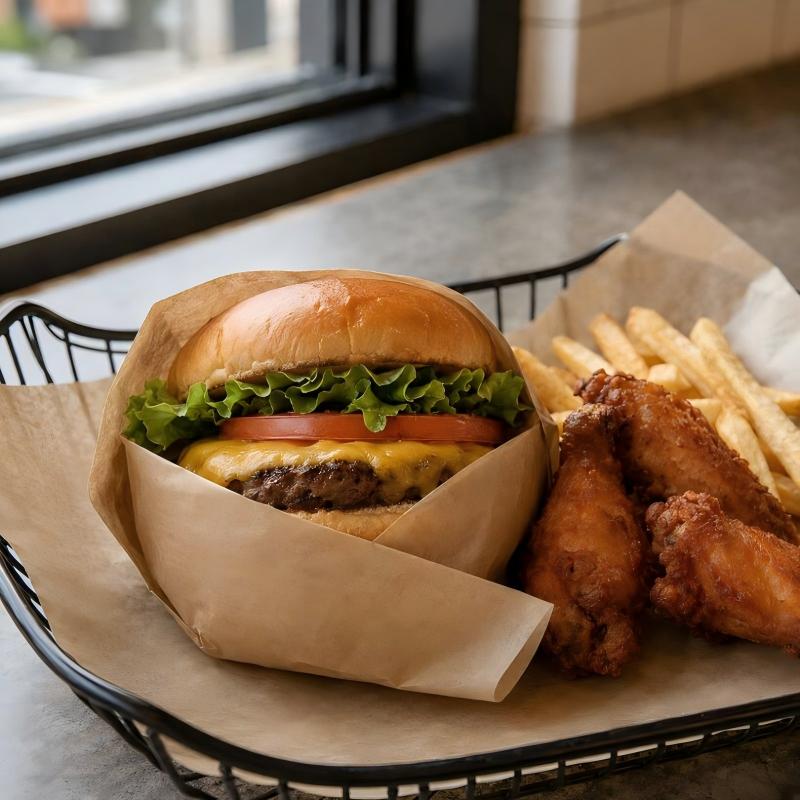
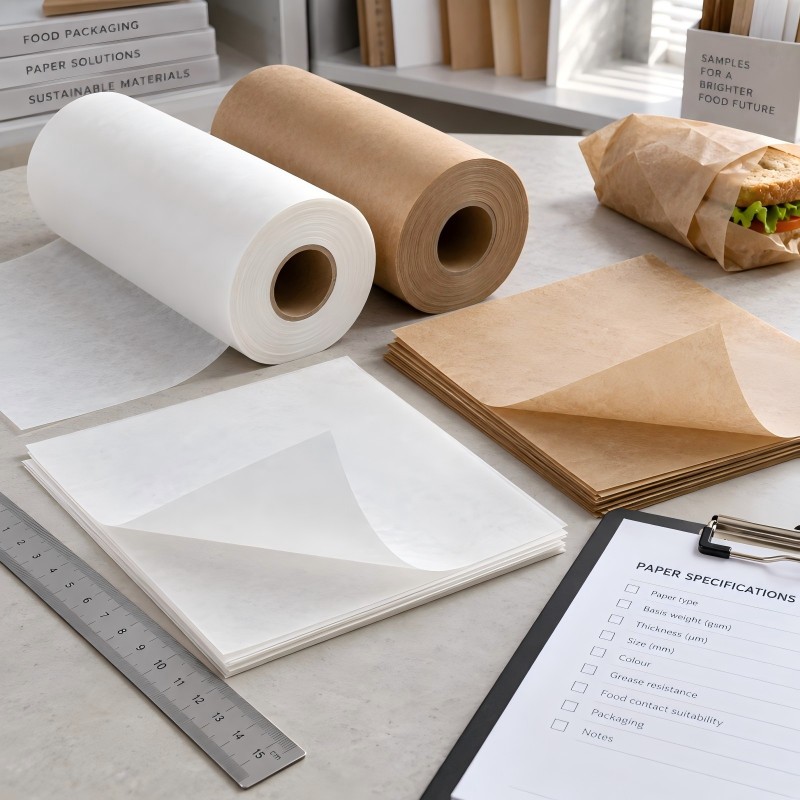
Greaseproof paper is the most widely used burger wrap for fast casual and quick service restaurants. It is made from densely refined wood pulp, processed through supercalendering to create a tight, non-porous fiber structure that blocks oil and grease from seeping through.
- Core benefits: Reliable grease resistance, low cost, printable for custom branding, breathable enough to prevent soggy buns from trapped steam.
- Best for: Standard beef and veggie burgers, dine-in service, short-distance takeout, basket liners.
- Limitations: Minimal heat retention, not fully waterproof for very saucy menu items.
2. Wax Paper (Waxed Deli Paper)
Wax paper is coated with a thin layer of food-grade paraffin wax on both sides, creating a moisture and grease resistant barrier.
- Core benefits: Low cost, non-stick surface, easy to fold and wrap, works well for cold and warm foods.
- Best for: Room-temperature sandwiches, light burgers, food truck quick service, basket liners.
- Important note: Wax has a low melting point of 46–90°C. It is not suitable for direct contact with freshly cooked, piping-hot burger patties, and cannot be used in ovens or microwaves, as melted wax will transfer to food.
3. Foil-Lined Insulated Wrapping Paper
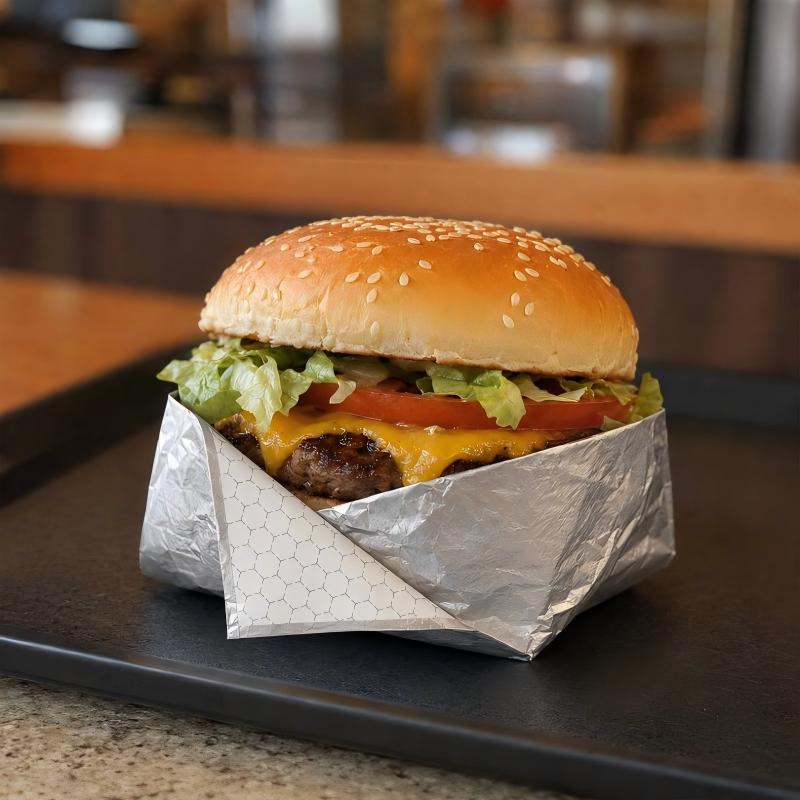
Foil-lined paper combines a paper outer layer with a thin aluminum foil inner layer, creating a heat-reflective barrier.
- Core benefits: Excellent heat retention, blocks both grease and moisture, maintains food temperature for 20–30 minutes.
- Best for: Long-distance third-party delivery, cold weather takeout, loaded hot sandwiches.
- Limitations: Higher cost than plain greaseproof paper, not microwave-safe (foil causes arcing in microwaves).
4. Non-Stick Parchment Paper (Silicone-Coated)
Parchment paper is coated with a thin layer of food-grade silicone, creating a smooth, non-stick surface that is heat resistant.
- Core benefits: Zero cheese or sauce sticking, heat safe up to 220°C, microwave-safe, clean release for messy, loaded burgers.
- Best for: Cheesy burgers, saucy menu items, kitchen prep, reheatable takeout.
- Limitations: Higher cost than standard greaseproof paper, lower grease resistance than dedicated greaseproof grades.
5. Pre-Cut Deli / Basket Liner Sheets
Pre-cut sheets are pre-sized sheets of greaseproof or wax paper, sold in stackable packs instead of rolls.
- Core benefits: No cutting required, consistent portioning, faster packaging workflows, easy for staff to grab and use.
- Best for: High-volume fast food kitchens, food trucks, concession stands, dine-in basket service.
- Limitations: Slightly higher per-unit cost than roll stock, less flexible for oversized menu items.
Key Factors When Choosing Burger Wrapping Paper
When comparing options, prioritize these 5 core factors based on your operation’s biggest needs.
1. Grease Resistance
Grease resistance is the most basic requirement for burger packaging. Industry standard testing follows the TAPPI T 559 KIT test method, which rates grease resistance on a 1–12 scale, with higher numbers meaning better oil barrier performance.
For standard beef burgers, a KIT rating of 5–7 is sufficient. For extra juicy, high-fat burgers, choose a rating of 8 or higher to prevent bleed-through.
2. Steam and Moisture Management
Trapped steam is the number one cause of soggy burger buns. Look for wraps that balance grease resistance with mild breathability, or choose options with micro-perforations to let excess steam escape without losing too much heat. Wax coatings can also help prevent moisture from softening the bun.
3. Heat Retention
For delivery operations, heat retention is critical to customer satisfaction. Foil-lined wraps trap heat by reflecting thermal energy back toward the food, and are far more effective at maintaining serving temperature than plain paper wraps.
4. Food Safety and Compliance
All food contact packaging must meet local regulatory standards. Look for products with FDA food contact compliance in the US, or EU food contact material regulation compliance for the European market. For brands prioritizing sustainability, look for FSC or PEFC certified fiber sources.
5. Operational Efficiency
For high-volume kitchens, pre-cut sheets will reduce packaging time per order. For operations with variable menu sizes, roll stock offers more flexibility and less waste. Custom printed options are also available for brands that want to build brand recognition through packaging.
Best Burger Wrapping Paper by Use Case
Match your wrap choice to your primary serving style for the best balance of performance and cost.
Best for Takeout & Long-Distance Delivery
Choose foil-lined insulated paper for delivery. Its heat-reflective foil layer keeps burgers hot during transit, and the greaseproof paper outer layer prevents leaks and keeps delivery bags clean. Pair it with a vented paperboard clamshell to reduce sogginess from trapped steam.
Best for Fast Casual & Dine-In Service
Choose greaseproof paper for dine-in and quick takeout. It is low cost, reliably grease resistant, and can be custom printed with your brand logo. Use pre-cut sheets for high-volume locations to speed up order turnaround. For basket lining, single-sided wax paper works well.
Best for Food Trucks & Catering
Choose pre-cut greaseproof or wax paper sheets for food trucks and off-site catering. Pre-cut sheets eliminate the need for cutting tools and speed up service in fast-paced, space-limited environments. For cheesy or saucy menu items, opt for parchment paper to prevent sticking.
Conclusion
The best burger wrapping paper is the one that matches your operation’s biggest priorities. For general fast food use, standard greaseproof paper is the most cost-effective and versatile choice. For delivery, upgrade to foil-lined insulated paper to protect food quality in transit. For cheesy, messy burgers, parchment paper prevents sticking and improves the customer experience.
Investing in the right wrapping paper is a small cost that has a big impact on perceived food quality, customer satisfaction and brand image. Reputable suppliers like Sure Paper offer a full range of food-grade burger wrapping papers with custom printing options and bulk pricing for high-volume operations.
FAQ
What type of paper is best for very greasy burgers?
Heavy-duty greaseproof paper with a high TAPPI KIT rating (7 or above) is the best option for greasy burgers. Its dense fiber structure blocks oil from seeping through to the bag or customer’s hands. For extra protection, choose a poly-coated greaseproof grade.
Can you microwave food in burger wrapping paper?
Only plain parchment paper and uncoated greaseproof paper are microwave-safe. Never microwave foil-lined paper, as the aluminum foil will cause electrical arcing and can start a fire. Wax paper is also not recommended for microwaving, as the wax coating may melt and transfer to food.
Which wrapping paper keeps burgers warm the longest for delivery?
Foil-lined insulated wrapping paper retains heat the best. The aluminum foil layer reflects thermal energy back into the food, keeping burgers hot for 20–30 minutes during delivery, which is significantly longer than plain paper wraps.
Are burger wrapping papers food-safe and eco-friendly?
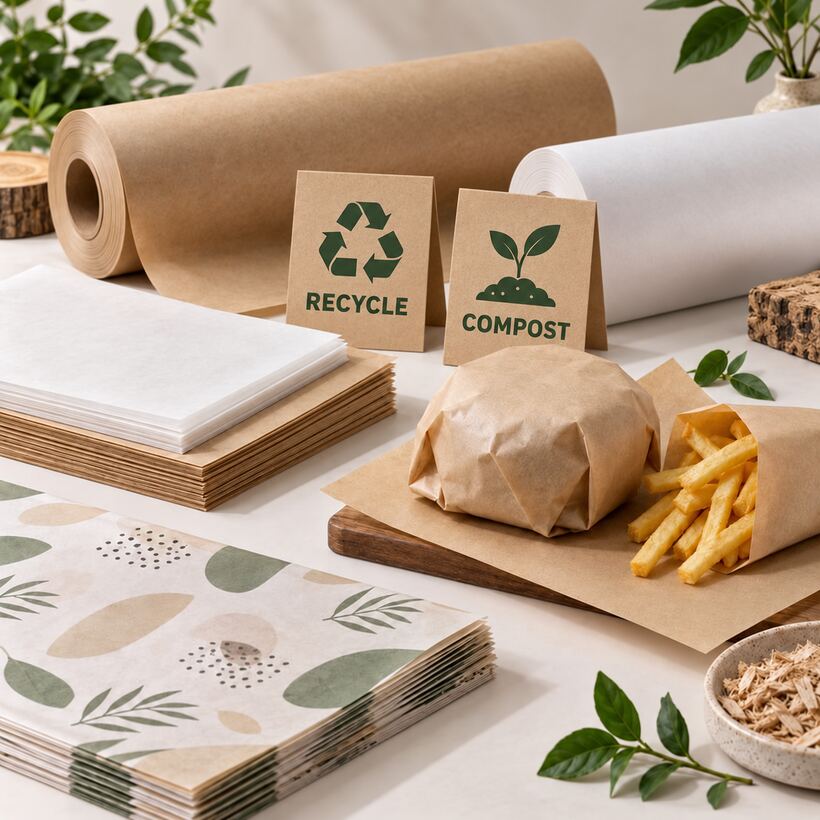
All food-grade burger wraps are safe for direct food contact when manufactured to regulatory standards. For eco-friendly options, look for uncoated greaseproof paper made from FSC-certified virgin or recycled fiber. Plastic-coated and foil-lined papers are generally not recyclable or compostable.
Why do busy fast food kitchens use pre-cut sheets instead of paper rolls?
Pre-cut sheets save time and reduce waste. Staff can grab a single sheet instantly without measuring or cutting, which speeds up order packaging during peak hours. Pre-cut sheets also produce consistent portioning, eliminating overuse and waste from incorrectly cut pieces.