Quality defects during polyethylene (PE) extrusion coating directly lead to high scrap rates, packaging failure risks, and increased production costs for converters. Common issues like poor adhesion, pinholes, uneven thickness and surface contamination can ruin finished products such as paper cups, food containers and medical wrappers.
Understanding the root causes of these defects — and how to prevent them — helps manufacturers reduce waste, maintain consistent barrier performance, and deliver reliable food-safe packaging. This guide breaks down the most frequent quality problems in PE coated paper production, their underlying causes, and proven mitigation strategies.
Key Takeaways
- Corona treatment raises paper surface energy to ensure strong PE adhesion and prevent delamination during converting.
- Pinholes in the coating layer destroy moisture and grease barrier performance, and are detected via dye penetration testing during quality control.
- Precise die gap adjustment and stable line speed control ensure uniform coating thickness across the full web width.
- Neck-in and edge bead formation create excess edge trim waste, and can be reduced by optimizing die distance and resin formulation.
- Static control and clean production environments prevent dust contamination and surface defects on the coated web.
Poor Adhesion and Delamination Problems
Poor adhesion between the PE layer and base paper is one of the most critical coating defects, causing layers to separate during die cutting, folding or end use.
Root Causes
- Insufficient corona treatment: Low surface energy of the base paper prevents the molten PE from wetting out and bonding to the fiber surface.
- Low extrusion temperature: Cold, insufficiently melted resin does not flow evenly or form a strong mechanical bond with the paper.
- Surface contamination: Dust, release agents or fiber debris on the paper web create weak boundary layers between the coating and substrate.
Corona Treatment: The Standard Solution
Corona discharge treatment is the industry standard method to improve adhesion. It raises the surface energy of the paper from ~30 dynes/cm to a target level that ensures permanent bonding of the molten PE resin.
| Application | Minimum Required Dyne Level | Optimal Working Range |
|---|---|---|
| Standard PE coating adhesion | 38 dynes/cm | 38 – 40 dynes/cm |
| High-quality flexographic printing | 40 dynes/cm | 42 – 44 dynes/cm |
| ISO 2835 flexo process standard | 38 dynes/cm | 38 – 42 dynes/cm |
Properly calibrated corona stations installed directly before the coating die maintain consistent surface energy, ensuring reliable peel strength and preventing delamination during downstream converting.
Pinholes and Barrier Failures in PE Coated Paper
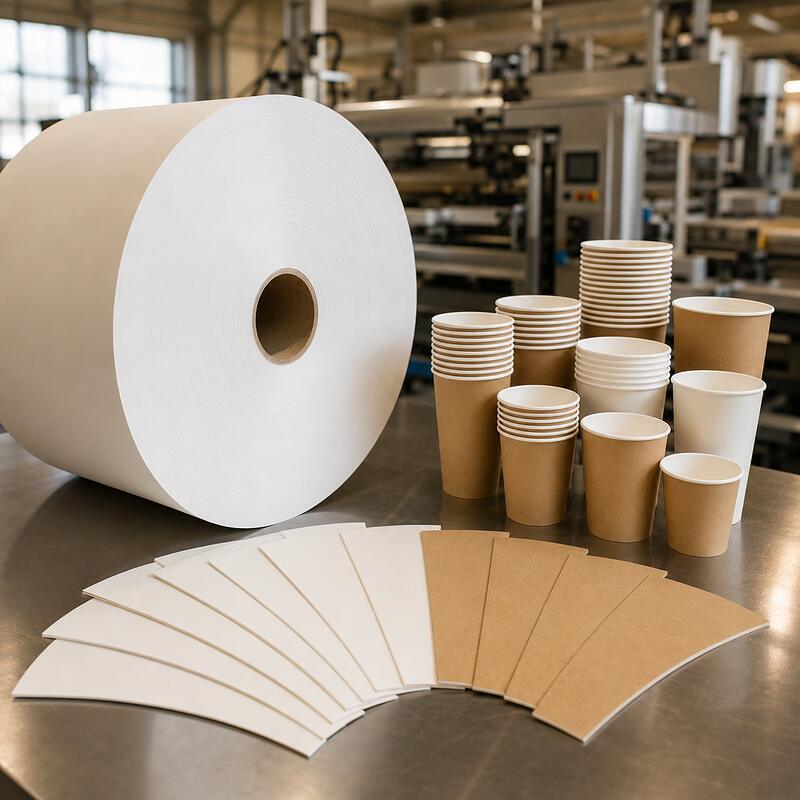
Tiny pinholes in the PE coating are a hidden but high-risk defect, as they break the continuous barrier layer and allow liquid or grease to soak through to the base paper.
Impact of Pinhole Defects
- For food packaging: Liquids and grease leak through, staining outer packaging and shortening product shelf life.
- For paper cups: Hot beverages seep through, softening the board and causing structural failure.
- For medical packaging: Loss of sterile barrier integrity compromises product safety.
Root Causes
- Trapped air bubbles in the extruded resin burst and leave tiny gaps in the coating.
- Insufficient coating weight: Thin resin layers cannot fully cover the peaks and valleys of paper fiber surfaces.
- Fiber protrusions or surface contaminants break through the wet coating film as it sets.
Detection & Prevention
Quality control teams use dye penetration testing to identify hidden pinholes: a colored test solution is applied to the coated surface, and dark stained spots on the reverse side indicate defect locations.
Prevention measures include:
- Optimizing resin melt temperature and die pressure to eliminate air entrapment
- Ensuring minimum coating weight is sufficient to fully cover fiber roughness
- Using clean, well-screened raw paper with a smooth surface finish
Coating Thickness Variation and Edge Quality Issues
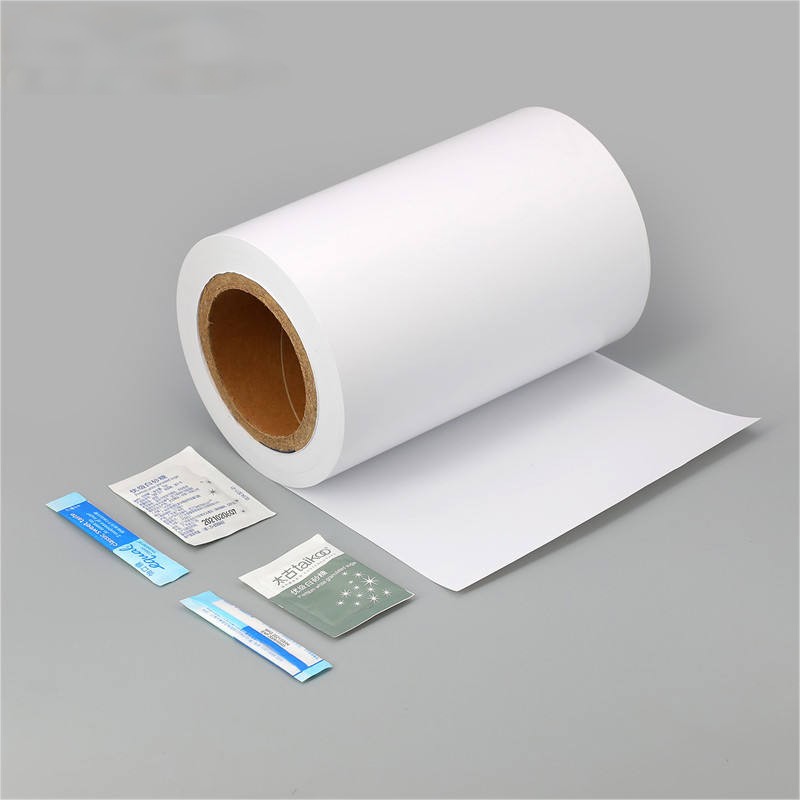
Non-uniform PE coating causes inconsistent barrier performance across the web, and edge-specific defects generate significant production waste.
Cross-Web Thickness Variation
Uneven coating thickness across the sheet width leads to weak spots in thin areas and excess material cost in thick areas.
| Root Cause Category | Specific Examples in Extrusion Coating |
|---|---|
| Die flow non-uniformity | Uneven die gap settings, carbon buildup inside the die, or uneven internal flow channels |
| Cooling irregularities | Uneven chill roll temperature, bent rolls, or non-uniform cooling across the web |
| Measurement error | Misaligned thickness gauges or poorly calibrated control systems |
Correction steps:
- Set and level the die gap uniformly at line startup
- Adjust die lip heating zones to match target coating weight across the web
- Calibrate online thickness gauges regularly for accurate feedback control
Neck-In & Edge Bead Formation
Neck-in is the natural contraction of the molten resin web as it exits the die, caused by surface tension. This effect creates thick, raised edge beads that must be trimmed and discarded, increasing material waste.
| Primary Cause | Mitigation Strategies |
|---|---|
| Surface tension of molten resin pulling edges inward | Reduce die-to-substrate distance to minimize draw time |
| Speed mismatch between extrudate and moving web | Optimize line speed and draw ratio |
| High melt viscosity amplifying contraction | Adjust resin formulation or melt temperature to reduce surface tension |
Controlling neck-in reduces trim waste, improves edge seal quality for converted products like paper cups, and increases overall material yield.
Surface Contamination Affecting PE Coated Paper Quality
Cosmetic and functional surface defects ruin print quality and can compromise barrier performance.
Wrinkling & Web Handling Defects
Wrinkles form when web tension is uneven or unstable during lamination:
| Cause | Effect | Solution |
|---|---|---|
| Uneven lateral tension | Local sagging creates wrinkles during bonding | Precision web tension control across full width |
| Tension spikes from mechanical faults | Permanent stretch deformation and longitudinal wrinkles | Closed-loop tension control system with real-time compensation |
| Differential elongation between webs | Compressive stress forms tunnel wrinkles parallel to machine direction | Precise tension matching between substrate and coating layers |
Mud-Cracking
Mud-cracking occurs when thick coatings dry or set too quickly, forming a network of fine surface cracks. It is caused by excessive cooling speed or mismatched melt and chill roll temperatures, and can be fixed by adjusting cooling roll temperature and line speed.
Static & Dust Contamination
Static charge on the fast-moving web attracts airborne dust particles, which embed in the wet PE coating and create surface defects and potential pinhole sites.
| Control Method | Mechanism | Application in Production |
|---|---|---|
| Humidification | Raises ambient humidity to reduce static buildup in dry conditions | Maintaining controlled humidity in the production hall |
| Ionizing bars | Generates air ions to neutralize static charge on the moving web | Installed near the coating die, slitter and winder stations |
| Anti-static treatments | Applies a thin conductive layer to dissipate charge | Used on substrate rolls for high-grade clean production |
Cleanroom-style production controls are especially critical for medical-grade PE coated paper, where contamination can compromise product sterility.
Conclusion
Consistent PE coating quality depends on tight control of surface preparation, extrusion parameters, web handling and production environment. By understanding the root causes of common defects like poor adhesion, pinholes, uneven thickness and surface contamination, manufacturers can reduce scrap rates, improve barrier reliability, and deliver consistent, food-safe finished products.
Leading paperboard suppliers maintain strict in-line quality control and conduct regular process audits to reduce coating defects, ensuring consistent and high-performance PE coated paperboard for food, medical, and industrial packaging applications.
FAQ
What is the most common cause of PE coating delamination?
Insufficient corona treatment is the number one cause of adhesion failure. If the base paper surface energy is too low, the molten polyethylene cannot wet out and form a strong bond, leading to layer separation during converting or end use.
How do manufacturers detect pinholes in PE coated paper?
Quality control teams use dye penetration testing: a colored test solution is applied to the coated side of the sheet, and any dark stained spots on the uncoated reverse side indicate pinhole defects. Online automated vision systems are also used for high-speed production lines.
What problems does uneven coating thickness cause?
Thin spots create weak points in the moisture and grease barrier, leading to leak risks in food packaging. Thick areas waste material, increase cost, and can cause issues during heat sealing if excess PE squeezes out of the seam.
What is neck-in in extrusion coating, and why is it a problem?
Neck-in is the inward contraction of the molten resin web as it exits the die, caused by surface tension. It creates thick, unusable edge beads that must be trimmed off, increasing raw material waste and reducing production yield.
How does static electricity affect PE coated paper quality?
Static charge on the fast-moving paper web attracts airborne dust and debris. These particles become embedded in the wet PE coating, creating surface defects, print flaws, and potential pinhole sites that compromise barrier performance.