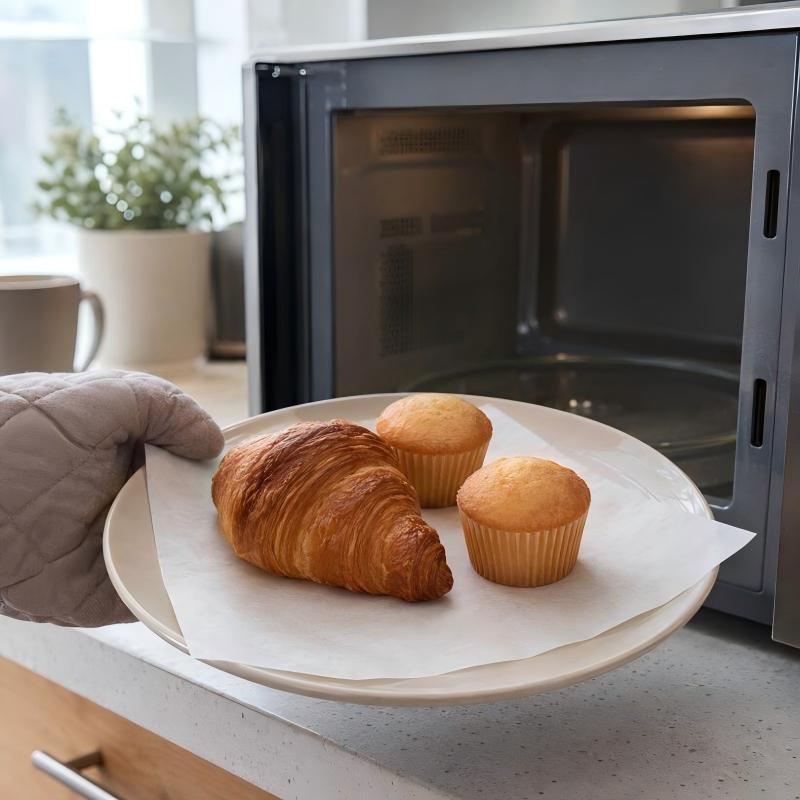
Not all paper products are safe for microwave use. Food-grade parchment paper and certified microwave-safe greaseproof paper can be suitable for microwave heating, while paper products with unsuitable coatings, metallic components, or unclear safety specifications may pose risks.
Choosing microwave-safe paper depends on factors such as material composition, coating type, food-contact certification, and intended use. Understanding these factors helps consumers and food businesses select the right paper for reheating, cooking, and microwave food packaging.
Key Takeaways
- Choose food-grade paper designed for microwave use, such as parchment paper or specifically labeled microwave-safe greaseproof paper.
- Avoid using wax paper, metallic-coated paper, printed paper, brown paper bags, and unlabeled paper products in microwaves.
- The coating type plays a major role in microwave safety. Food-grade silicone coatings and approved barrier coatings are commonly used in microwave applications.
- Always check microwave-safe labeling, food contact certifications, and manufacturer instructions before heating paper products.
- Even microwave-safe paper should only be used within recommended heating times and never heated empty.
Safe Paper Products for Microwave Use
Parchment Paper (Silicone Baking Paper)
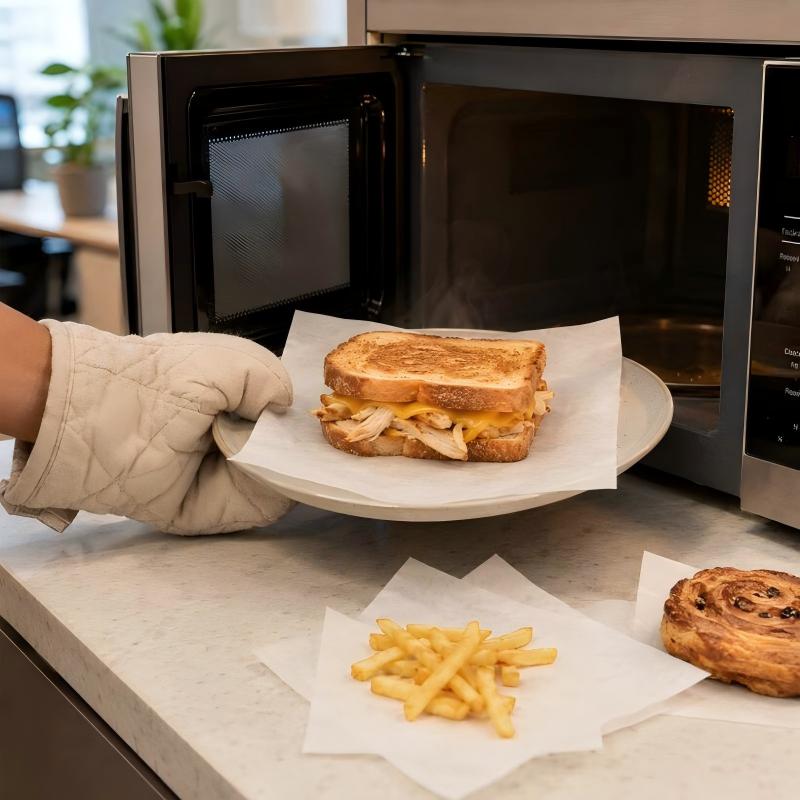
Parchment paper is one of the most commonly used paper products for microwave heating. Food-grade parchment paper, often silicone-coated, offers heat resistance, grease resistance, and a non-stick surface.
- Typical uses: Covering dishes, reheating baked goods, steaming vegetables, and lining plates.
- Heat resistance: Many parchment papers are rated for oven temperatures up to approximately 232°C (450°F), well above typical microwave heating temperatures.
- Safety: Use food-grade parchment paper according to the manufacturer’s instructions.
Microwave-Safe Greaseproof Paper
Greaseproof paper can be suitable for microwave heating when it is specifically designed and labeled for that use. Its main benefit is resistance to oil penetration, helping protect food and prevent grease from soaking through the paper.
- Typical uses: Reheating pastries, sandwiches, fried foods, and other short-duration heating applications.
- Key consideration: Microwave suitability depends on the paper’s coating, additives, and manufacturing process. Always check the product specification before use.
Paper Products to Avoid in the Microwave
Waxed Paper
Waxed paper is not intended for high-temperature heating unless the product is specifically labeled as microwave-safe. The wax coating may soften during heating and can transfer to food.
Printed or Decorative Paper
Avoid microwaving paper with inks, dyes or decorative coatings unless it is specifically approved for microwave use. Common examples include:
- Newspaper
- Printed wrapping paper
- Decorative paper plates
These materials may not be designed for direct food contact under heating conditions.
Brown Paper Bags
Brown paper bags are not designed for microwave heating. They may contain adhesives, recycled fibers, or other materials that can scorch or transfer unwanted substances to food.
Metallic-Coated or Foil-Laminated Paper
Do not microwave paper products containing aluminum foil, metallic coatings, or other metal components. These materials can cause sparks or arcing and may damage the microwave.
Unlabeled Paper Products
If a paper product does not clearly state that it is microwave-safe, it is better to avoid using it for microwave heating. This is especially important for products with unknown coatings, inks, adhesives, or recycled materials. certification may contain residual inks, additives, or contaminants that are unsuitable for microwave contact.
How to Identify Microwave-Safe Paper
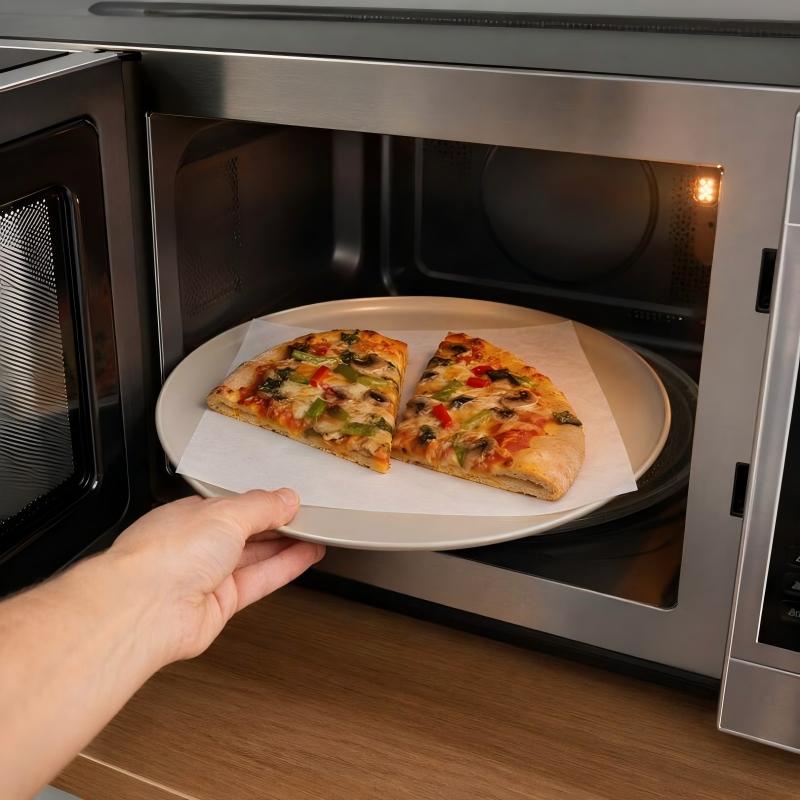
Check for Official Microwave-Safe Labeling
The most reliable way to confirm safety is to look for a clear microwave-safe symbol or text on the product packaging. This label means the item has passed standardized safety testing for microwave use.
Reputable manufacturers such as Sure Paper print clear usage instructions and safety ratings on all food packaging paper products. If a product has no microwave safety labeling, assume it is not safe for heating.
Verify Coating Type
Coatings are the biggest safety factor for paper products:
- Safe coatings: Food-grade silicone, water-based grease barriers, and uncoated virgin pulp.
- Unsafe coatings: Wax, polyethylene (PE) plastic, bioplastics, and metallic or foil laminations.
If you cannot confirm the coating type, do not use the product in the microwave.
Confirm Food Contact Certification
Safe microwave paper will also hold global food contact certifications, such as FDA 21 CFR for the US or EU 1935/2004 for the European Union. These certifications confirm the material is safe for direct contact with food.
Best Practices for Safe Microwave Use
- Stick to short heating times: Even safe paper products can scorch if overheated. Most reheating tasks only need 1–3 minutes. Never leave a microwave unattended while heating paper products.
- Remove all metal hardware: Take out staples, paper clips and metal twist ties before heating, as they cause sparks.
- Avoid sealing food completely: Leave a small gap for steam to escape, so pressure does not build up inside paper packaging.
- Do not use paper for empty or dry heating: Always heat paper together with food. Heating dry paper alone greatly increases fire risk.
- Follow manufacturer instructions: Always adhere to stated maximum heating times and usage guidelines on the product label.
Conclusion
Stick to explicitly labeled microwave-safe paper products for all heating tasks. Parchment paper and certified greaseproof paper are all reliable, low-risk options for everyday use.
The simplest rule is: if it does not have a microwave-safe label, or if you cannot confirm its coating and material, do not use it. Following label instructions and keeping heating times short will keep both your food and your appliance safe.
FAQ
What paper products are safe to put in the microwave?
Safe options include food-grade parchment paper, plain white unprinted paper towels, and paper packaging explicitly labeled microwave-safe. All should be free of wax, plastic and metallic coatings.
Can I use regular greaseproof paper in the microwave?
Only if it is explicitly labeled microwave-safe. Unmarked greaseproof paper may contain wax or trace metallic additives that can melt or spark when heated.
Why can’t you put brown paper bags in the microwave?
Brown paper bags are thin, unrated for heat, and can easily scorch or catch fire. They may also contain recycled pulp with residual inks or contaminants that leach into food.
How do I know if paper is microwave safe?
Look for an official microwave-safe label on the packaging. Also confirm the product has food contact certification and uses food-safe coatings with no wax, plastic or metal.
What happens if you microwave unsafe paper?
Unsafe paper can melt, scorch or catch fire. Wax, plastic or ink coatings may leach chemicals into food, and metallic components can cause sparks that damage the microwave.