
Selecting the right cupstock paper is a foundational decision for paper cup manufacturing, directly impacting product durability, food safety compliance, brand reputation, and production efficiency. High-quality cupstock ensures cups hold their shape, resist leaks, and perform reliably for both hot and cold beverages, while low-quality material can lead to product failures, regulatory issues, and wasted production costs.
To choose the optimal cupstock, manufacturers must evaluate fiber type, coating format, grammage (GSM), food safety certifications, sustainability attributes, and supplier reliability. Below, we break down every critical factor, common cupstock variants, and actionable selection criteria to help you match material to your product needs.
Key Takeaways
- Premium cupstock paper relies on virgin pulp, high stiffness, and wet strength to deliver durability, moisture resistance, and leak prevention.
- Coated cupstock options serve different needs: PE coating provides reliable performance and cost efficiency, while PLA coating supports compostable packaging goals.
- Selecting the right GSM (typically 150–320 GSM) depends on cup size, beverage type, structural requirements, and production equipment compatibility.
- Food safety certifications, printability, sustainability requirements, and total cost should all be considered when choosing cupstock paper.
- A reliable cupstock supplier should provide consistent quality, certification support, testing samples, technical guidance, and stable supply capacity.
Core Quality Metrics for Premium Cupstock Paper
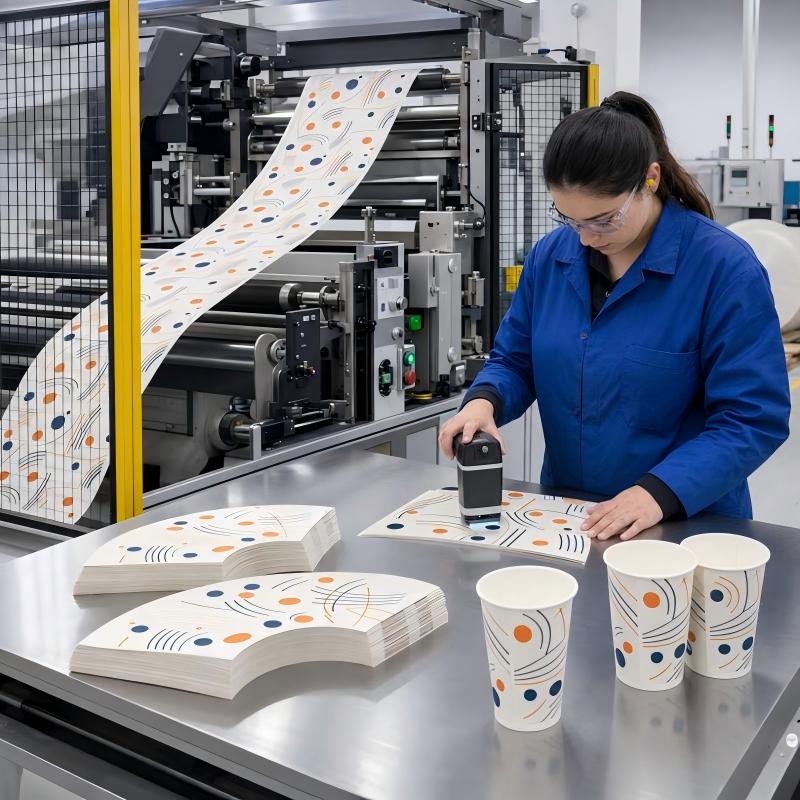
All high-performance cupstock paper is built on two foundational quality attributes that define real-world performance.
Virgin Pulp Base
Top-tier cupstock paper is almost always made from virgin wood pulp, which delivers superior structural strength and inherent moisture resistance compared to low-grade recycled fiber. Virgin pulp fibers form a tighter, more uniform sheet that maintains its rigidity even when exposed to hot or cold liquids for extended periods, preventing cup warping, softening, or leaks.
Beyond performance, food-grade virgin pulp carries lower risk of contamination, making it the standard for food contact packaging. Reputable cupstock paper manufacturers such as Sure Paper source 100% FSC and PEFC certified virgin pulp to ensure both safety and responsible forestry practices.
Stiffness and Wet Strength
Two mechanical properties determine how well a cup performs in use:
- Stiffness: Measures the paper’s structural rigidity, ensuring cups hold their shape when held, stacked, or filled. Insufficient stiffness leads to floppy, easily crushed cups that create a poor user experience.
- Wet strength: Measures how well the paper retains its strength when saturated. Combined with a barrier coating, high wet strength prevents liquid from seeping into the paper base and degrading the cup structure.
Specialized chemical treatments and fiber blends are used to boost wet strength, a non-negotiable feature for beverage cups.
Common Cupstock Paper Types and Their Use Cases
Cupstock paper is categorized primarily by its barrier coating (or lack thereof), each designed for specific product applications.
Coated Cupstock Paper
Coated cupstock paper features a thin barrier layer bonded to the paper to block moisture and heat. It is the standard for all beverage cups and liquid food containers. The four most common coating types are:
- Polyethylene (PE) Coated: The most widely used option, available in single-sided (for hot drinks) and double-sided (for cold drinks/ice cream) formats. PE coating provides reliable water resistance across temperatures from -18°C to 95°C, at a low cost. The primary drawback is that the plastic layer makes standard paper recycling more difficult.
- Polylactic Acid (PLA) Coated: A plant-based biodegradable alternative to PE. PLA coating provides good moisture barrier performance and breaks down fully in industrial composting facilities that meet EN13432 standards. It has lower heat resistance than PE, making it best for warm to moderately hot beverages.
- Wax Coated: A traditional budget option for cold drink cups, wax coating provides basic water resistance. It is less common today due to limited heat tolerance and poor recyclability.
- Clay Coated: Used primarily to improve surface smoothness, print quality, and stiffness, rather than as a primary moisture barrier. It is often combined with a functional barrier coating for premium branded cups.
Uncoated Cupstock Paper

Uncoated cupstock paper has no barrier layer, with a natural, matte paper finish. It is not suitable for beverages or wet foods, but is ideal for dry snack containers, bakery cups, eco-friendly event packaging, and low-cost high-volume dry food applications. It is fully recyclable and lower cost than coated variants.
Cupstock Paper Type Comparison Table
| Cupstock Paper Type | Moisture Resistance | Heat Tolerance | Environmental Profile | Best Use Case |
|---|---|---|---|---|
| Single PE Coated | Excellent | Up to 95°C | Not readily recyclable | Hot beverage cups |
| Double PE Coated | Superior | Good for cold/frozen | Not readily recyclable | Cold drinks, ice cream cups |
| PLA Coated | Very good | Moderate (lower than PE) | Industrially compostable | Eco-friendly beverage cups |
| Wax Coated | Good | Very low | Poor recyclability | Budget cold drink cups |
| Uncoated | None | N/A | Fully recyclable | Dry snacks, bakery items |
| Air Pocket Insulated | Good | Excellent heat retention | Depends on base coating | Premium hot drink cups |
6 Key Factors to Select the Right Cupstock Paper
Use these criteria to narrow down options and match material to your production and product requirements.
1. Food Safety & Regulatory Compliance
Food contact packaging is heavily regulated globally, and cupstock paper must meet all applicable standards for your sales regions. Mandatory and voluntary certifications to verify include:
Food Safety Standards:
- FDA 21 CFR 176.170 (U.S. standard for food contact paper and board)
- EU Regulation 1935/2004 + EU 10/2011 (EU food contact framework, with specific rules for PLA coatings)
- GB 4806.8-2022 / GB/T 27590-2022 (China national standards for paper cups and food contact paper)
- BRCGS AA rating, ISO 9001, ISO 22000 (quality and food safety management system certifications)
- PFAS-free declaration (critical for markets restricting per- and polyfluoroalkyl substances)
- Third-party chemical migration test reports
Sustainability Certifications:
- FSC / PEFC Chain of Custody (verifies responsible forestry sourcing)
- BPI / OK Compost EN13432 (third-party compostability verification)
- Flustix Plastic-Free certification
Always request full documentation from suppliers before placing bulk orders to avoid regulatory non-compliance.
2. Grammage (GSM) and Thickness
Cupstock weight typically ranges from 150 GSM to 320 GSM, and the right weight depends on your cup size and product type:
- Small cups (2–8 oz): 150–220 GSM
- Medium cups (12–16 oz): 220–280 GSM
- Large cups (20+ oz) / cold cups: 250–320 GSM
Key considerations for GSM selection:
- Hot drink cups require higher GSM for heat resistance and structural stability
- Cold drink cups need sufficient thickness to prevent condensation from softening the paper
- Larger cup sizes need heavier stock to maintain rigidity when full
- Always confirm compatibility with your cup forming equipment, as machines are calibrated for specific GSM ranges
3. Printability and Branding Needs
If your cups include custom printed branding, evaluate the paper’s print surface:
- Coated cupstock delivers sharp, vibrant print results with smooth ink coverage; gloss coatings support premium, eye-catching designs
- Uncoated cupstock produces a soft, matte, natural finish ideal for minimalist or eco-focused branding
- Clay-coated surfaces offer the highest print quality for detailed graphics and brand assets
Look for material compatible with food-safe inks to ensure printing does not compromise food contact safety.
4. Production Equipment Compatibility
Not all cupstock works with all cup forming machines. Thicker stock, specialty coatings, and laminated materials may require adjusted machine settings or specialized equipment. Confirm with your supplier that the cupstock grade is compatible with your existing production line to avoid jams, misfeeds, or increased waste.
5. Sustainability Goals
Align cupstock selection with your brand’s environmental targets:
- For recyclability goals: Choose uncoated stock or PE-coated stock compatible with dedicated paper cup recycling programs
- For compostability goals: Choose PLA-coated stock with verified BPI/EN13432 certification
- For lowest carbon footprint: Choose FSC-certified virgin pulp or bamboo-based cupstock
6. Total Cost of Ownership
Cheaper cupstock often leads to higher production waste, higher defect rates, and product failures. When evaluating pricing, factor in:
- Expected production waste and defect rates
- Coating consistency (uneven coating causes leaks and machine jams)
- Batch-to-batch quality consistency
- Shipping lead times and inventory carrying costs
How to Evaluate a Cupstock Paper Supplier
Your supplier’s reliability directly impacts your production schedule and product consistency. Evaluate suppliers on these four criteria:
- Full regulatory compliance: The supplier should provide all required food safety and sustainability certifications upfront, with test reports available on request.
- Production capacity and inventory stability: Look for suppliers with consistent production output and large on-hand inventory to avoid supply delays and price volatility.
- Sample and testing support: Reputable suppliers provide free samples for material testing, print trials, and machine compatibility checks before bulk orders.
- Technical support: A good supplier offers guidance on GSM selection, coating options, and production troubleshooting to optimize your process.
Sure Paper is one example of a trusted cupstock supplier, offering a full range of coated, uncoated, and eco-friendly cupstock grades, all certified to global food safety standards. With 8,000 tons of monthly inventory, and flexible custom printing and coating options, they support both small-batch and high-volume manufacturing needs
FAQ
What is cupstock paper typically made of?
Most food-grade cupstock paper is made from blended softwood and hardwood virgin wood pulp, formulated for optimal strength and formability. Eco-friendly variants may include bamboo fiber or post-consumer recycled content.
What is the best GSM for paper cup stock?
The ideal GSM depends on cup size: 150–220 GSM for small cups, 220–280 GSM for medium cups, and 250–320 GSM for large or cold drink cups. Most standard 12oz hot drink cups use 200–250 GSM coated cupstock.
Is PE or PLA coated cupstock better?
PE coated cupstock is cheaper, more heat-resistant, and more widely available. PLA coated cupstock is plant-based and industrially compostable, making it better for eco-focused brands. The choice depends on your budget and sustainability goals.
Can cupstock paper be recycled or composted?
Uncoated cupstock is fully recyclable. PLA-coated cupstock is compostable in industrial composting facilities. Standard PE-coated cupstock requires specialized paper cup recycling programs, as the plastic layer complicates standard paper recycling.
What certifications should I look for in food-safe cupstock?
Prioritize FDA or EU food contact compliance, FSC/PEFC fiber certification, and third-party migration test reports. For sustainable products, look for BPI compostability or plastic-free certification.
Final Thoughts
Choosing the right cupstock paper requires balancing performance, food safety, sustainability, and cost to match your specific product and production needs. There is no single “best” cupstock — the optimal material depends on your cup size, beverage type, branding requirements, regulatory markets, and environmental goals.
Start by defining your non-negotiable requirements (food safety certifications, temperature performance, sustainability targets), then shortlist materials that meet those criteria. Always test samples on your production line before committing to bulk orders to ensure compatibility and consistent quality.