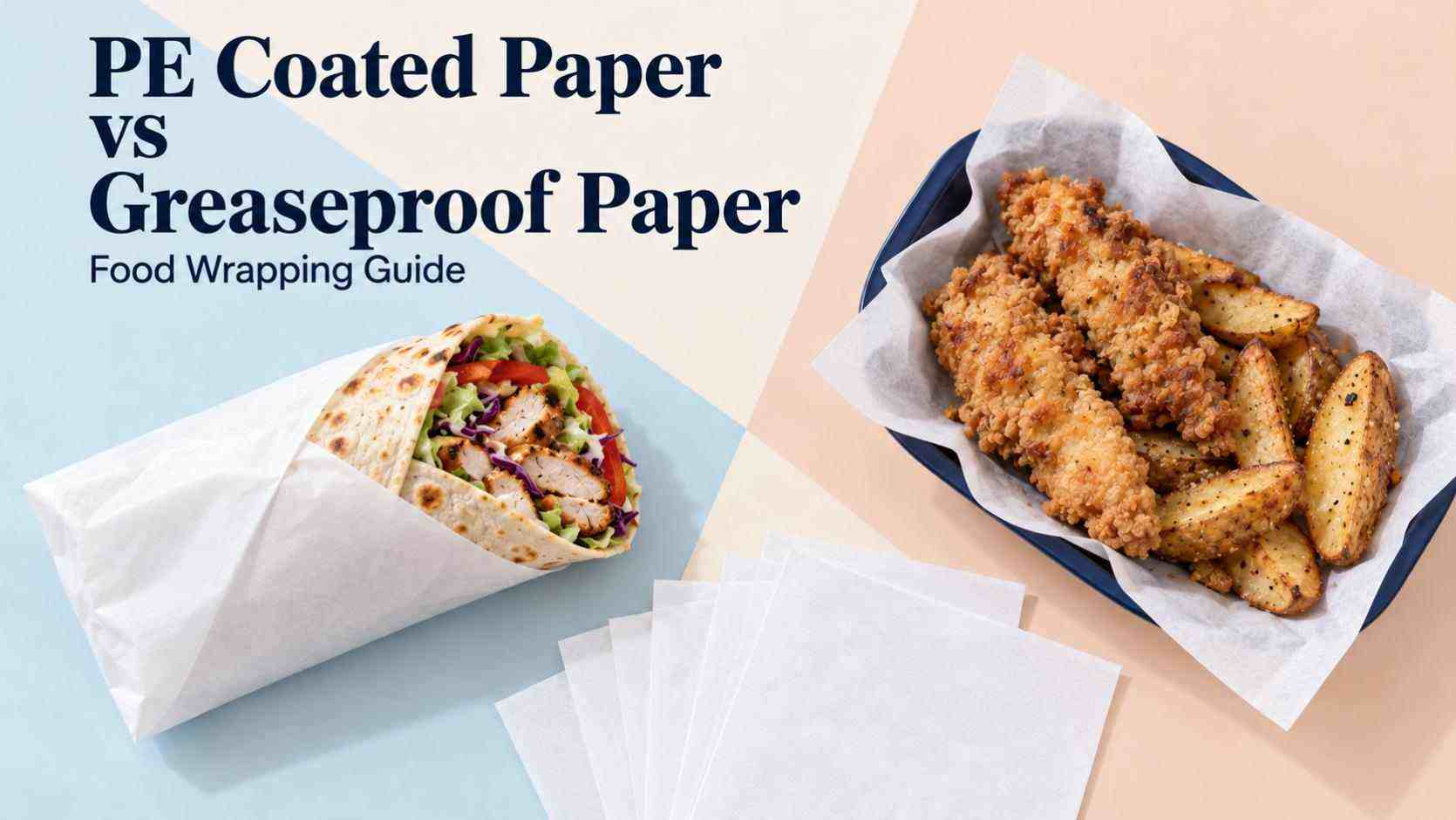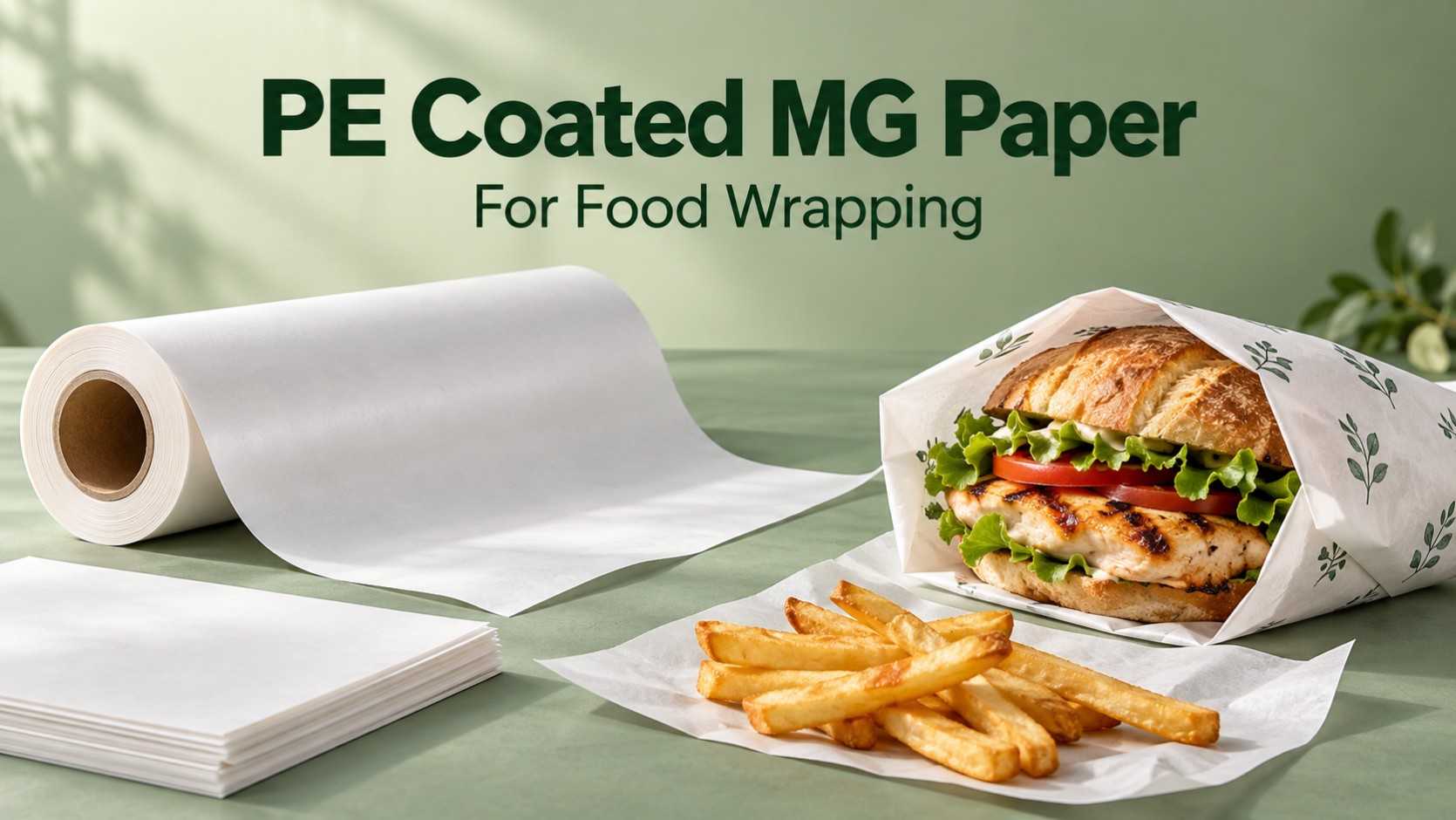
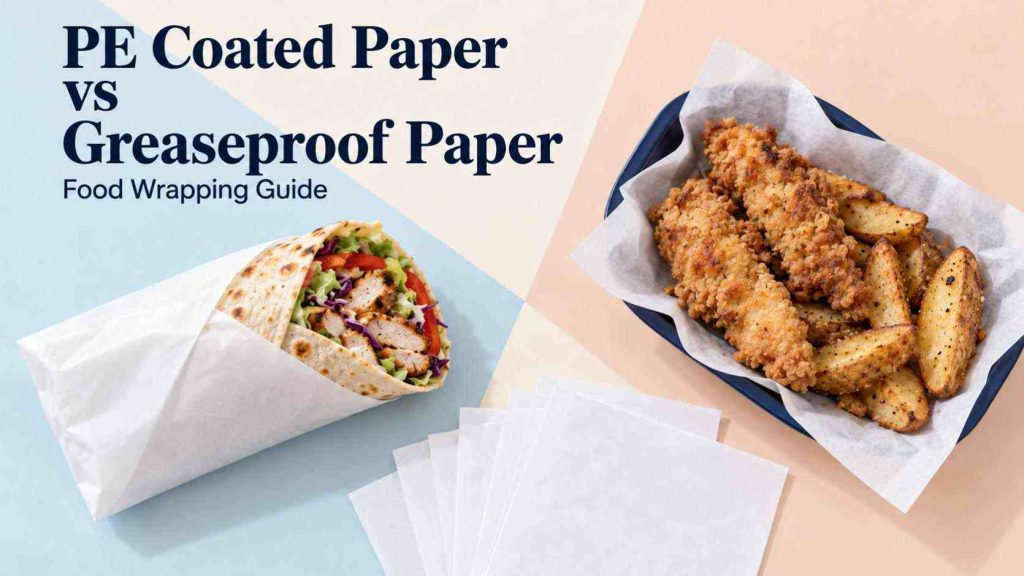
PE coated paper and greaseproof paper can both help keep oil from reaching the outside of a food wrapper. The main difference is the barrier structure: PE coated paper adds a polyethylene layer, while natural greaseproof paper obtains grease resistance mainly from a dense fibre network. Other commercial grease-resistant papers may use additional treatments.
PE coated paper is worth considering when moisture resistance or a heat-sealing layer is needed. Greaseproof paper can be suitable when grease resistance is the main requirement. Choose the specific grade around the food, contact conditions and packaging process, then validate it in the finished pack.
In this guide, plain greaseproof paper means a grade without an added PE film or dedicated heat-seal layer. Water resistance, strength and surface finish still vary between products.
Core differences at a glance
| Attribute | PE coated paper | Plain greaseproof paper |
| Barrier structure | Paper with a PE layer on one or both sides. | Grease-resistant paper; confirm whether performance comes from fibre structure or treatment. |
| Grease resistance | Depends on coating continuity and the finished package. | Depends on grade and food-contact conditions. |
| Water and water vapour | PE adds liquid-moisture resistance and reduces water-vapour transmission. | Grease resistance does not by itself establish water resistance or vapour-barrier performance. |
| Heat sealing | Suitable PE layers can heat seal; validate the seal interface and settings. | Usually needs a compatible sealant for heat sealing; folding or gluing may suit other formats. |
| Printing | Depends on the exposed paper or PE surface and ink system. | Depends on surface properties and the print process; not limited to simple artwork. |
| Recycling | Assess the whole structure and local collection and processing routes. | Also requires grade-specific assessment and local acceptance. |
Match the barrier to the food
Oil and liquid moisture are different challenges
Grease resistance describes how a paper resists oil penetration. It does not automatically tell you how the same sheet will behave with water, sauces or condensation. Some greaseproof grades also have water resistance or wet strength, while others are intended mainly for relatively dry foods. Ask for properties relevant to your application.
A continuous PE coating can help resist oil and liquid moisture, but it does not make every finished package leakproof. Pinholes, exposed edges, folds and seams can become weak points. Coating weight is only one factor alongside resin choice, coverage and adhesion.
Contact time has no universal cutoff
There is no general rule that greaseproof paper is suitable for less than 30 minutes and PE is required beyond that point. A dry pastry and a hot sandwich with sauce create different demands even during the same delivery period. Test each candidate for the expected contact time and temperature, including realistic delays.
Steam release and crispness need package testing
Dense greaseproof paper should not automatically be described as highly breathable. Ventilation, wrapping tightness, food temperature and the outer container all influence condensation and texture. For fries and fried chicken, assess crispness alongside grease staining; adding a stronger moisture barrier does not necessarily improve eating quality.
Chilled storage and reheating need separate approval
For chilled or frozen products, check moisture loss, low-temperature flexibility, sealing and the complete storage period. Suitable grades from either category may form part of a validated package. The material name alone does not prove protection against freezer burn.
Hot-food contact is different from microwave or oven use. Select a grade specifically supported for the heating method, temperature and time. Ordinary PE coated wrapping paper should not be assumed oven-safe, and ordinary greaseproof paper should not automatically be treated as baking paper.
Converting and sealing requirements
For a heat-sealed package, identify the surfaces that meet at the seal. PE-to-PE and PE-to-paper overlaps may need different structures or conditions. Validate seal strength using the actual temperature, pressure, dwell time and production speed, with food contamination at the seal considered where relevant.
Plain greaseproof paper generally needs an added functional layer for heat sealing. Depending on the package design, other options include cold seal, suitable adhesives or a folded wrap. Cold-seal and heat-seal systems can both support automated production; achievable speed depends on the material, equipment and package design.
Food applications and checks
Use the table below to shortlist materials. These are starting points for trials, not universal approvals for every grade.
| Food or format | What to check | Materials to consider |
| Burgers and saucy sandwiches | Grease staining, sauce contact, folds and strength at serving temperature. | PE coated paper or a greaseproof grade with suitable moisture performance. |
| Croissants and pastries | Oil transfer, sticking, handling and texture during storage. | Greaseproof paper; consider PE when moisture control or sealing is needed. |
| Fries and fried chicken | Grease resistance, steam release and texture after holding or delivery. | Suitable grades from either category, with a tested ventilation strategy. |
| Butter and chilled or frozen foods | Moisture loss, odour transfer, cold flexibility and package closure. | Grades specifically validated for the food and storage conditions. |
| Heat-sealed bags or wraps | Seal interface, strength, contamination tolerance and machine settings. | PE coated paper or greaseproof paper with a suitable sealing layer. |
| Microwave or oven reheating | Declared heating method, time, temperature and finished-pack suitability. | Only specifically validated grades; do not select by category alone. |
Printing and fold performance
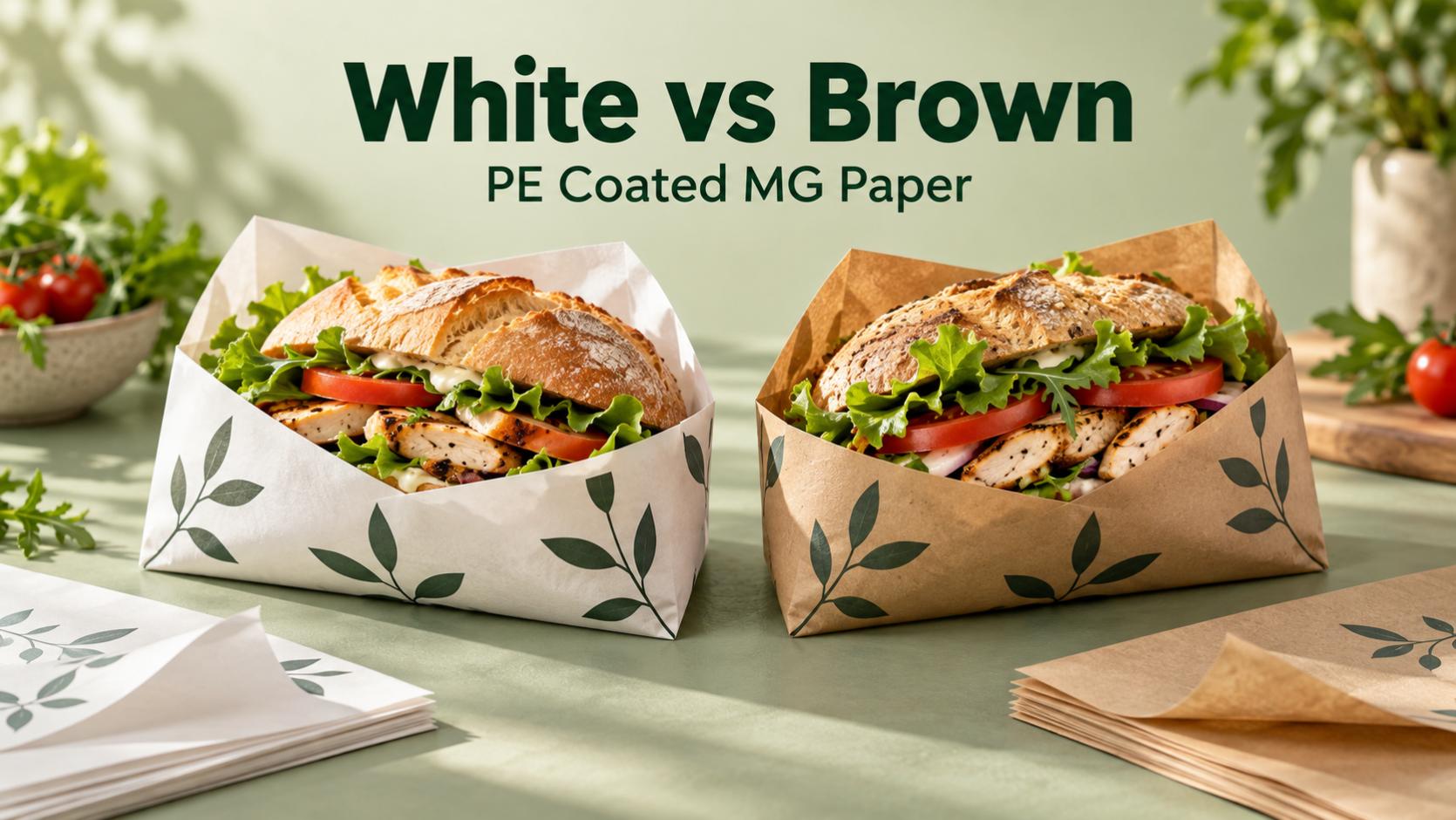
MG and MF describe paper finishing, not a guaranteed level of print performance. MG typically has one smoother, glossier face; MF surfaces vary by grade. Greaseproof paper can also support branded printing. Confirm the printing side and approve artwork on the actual material.
Printing on PE may require suitable surface treatment and compatible inks. For both options, check print adhesion, rub resistance, odour and set-off in reels or stacks. Food-contact suitability must account for the finished printed structure.
Fold and crease both materials during trials. A paper barrier can be affected by damage to its fibre structure, while a coated material can develop defects at stressed areas. Inspect folds, corners and seams after the intended handling and food-contact period.
Compliance and end of life
Request food-contact documentation for the intended market, food type, temperature and contact time. It should cover the relevant paper, coatings, inks and other components. General descriptions such as “food grade” do not replace a clear statement of suitability for the proposed use.
Recyclability depends on the complete structure, fibre recovery, additives, coatings, food residues and local waste systems. PE coated paper may need an appropriate recycling route, but plain greaseproof paper is not automatically accepted in every paper stream. Confirm the specific product assessment and local collection rules before making recycling claims.
Likewise, plastic-free, biodegradable and compostable are different claims. Do not infer them from a white or brown appearance or from the word “greaseproof.” Obtain evidence for the finished product and the claimed disposal conditions.
How to compare samples before ordering
- Define the use: food type, serving temperature, contact time, storage conditions and any reheating requirement.
- Record the structure: paper grade and basis weight; for PE coated paper, coating weight on each side and intended food-contact face.
- Test realistic packs: use the same food portion, wrapping method and outer container for each candidate.
- Check performance: grease staining, moisture effects, sticking, tearing, folds, odour and food texture at agreed intervals.
- Trial converting: assess feeding, cutting, printing and any sealing at the intended operating speed. Retain an approved sample and specification.
Frequently asked questions
Which option costs less?
There is no fixed price ranking. Grade, basis weight, coating, printing and order quantity affect the quotation. Compare prices per metric ton for the specified materials, alongside their performance in your application.
Does a higher grease-resistance rating guarantee better wrapping?
It can help compare performance under the stated test method, but it does not establish water resistance, heat suitability or delivery performance. Use test results together with trials of the actual food package.
Is greaseproof paper the same as parchment paper?
The terms are not interchangeable. Vegetable parchment and greaseproof paper differ in manufacture; baking papers may also include a silicone release treatment. Confirm the exact material, non-stick performance and intended temperature range rather than relying on the name.
Choose a grade for your application
Send Sure Paper your food application, required paper weight, reel or sheet dimensions and order quantity. For PE coated options, include the preferred coating weight if known. We can help you compare suitable options and arrange samples for evaluation, with quotations provided per metric ton.