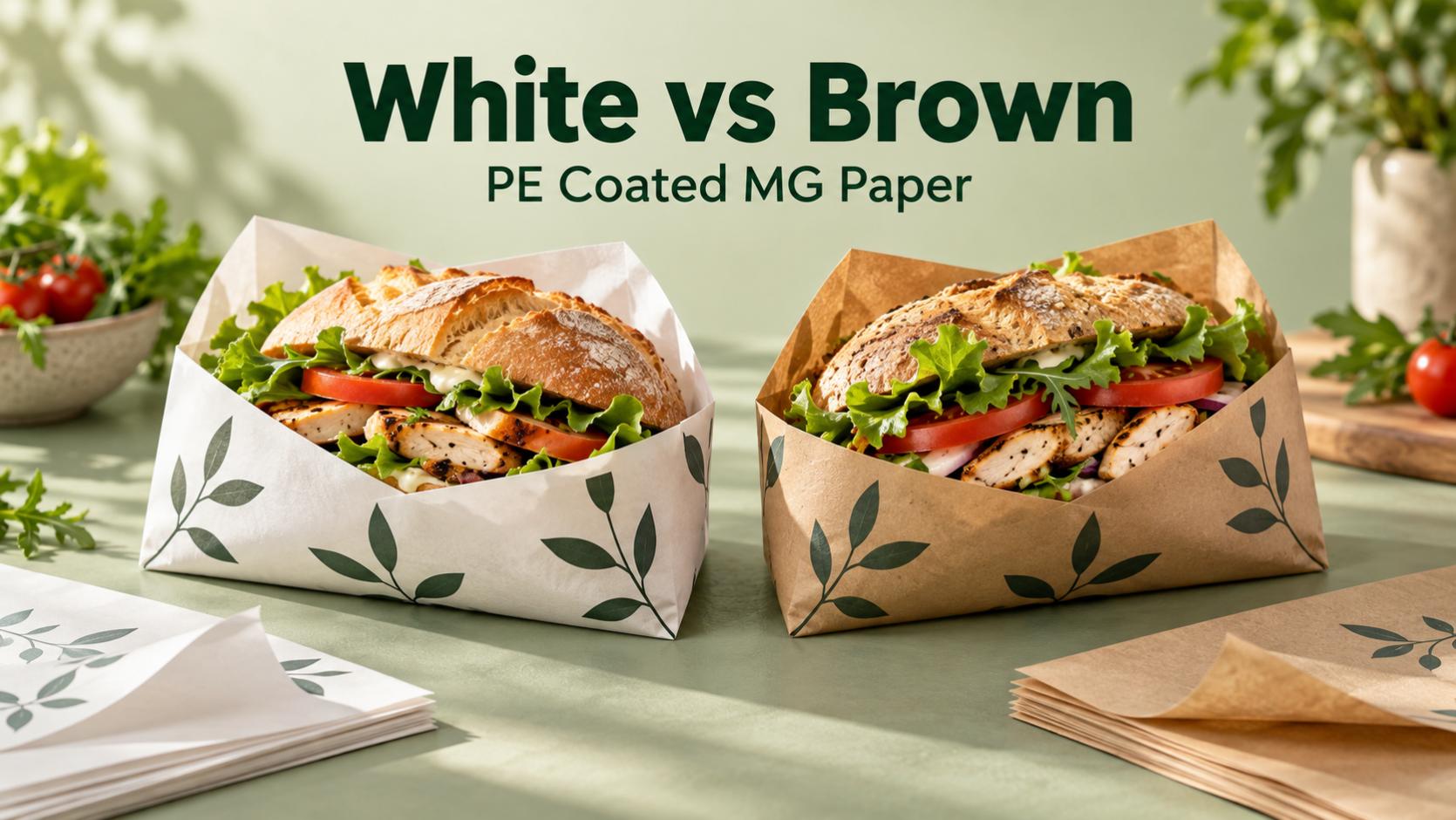
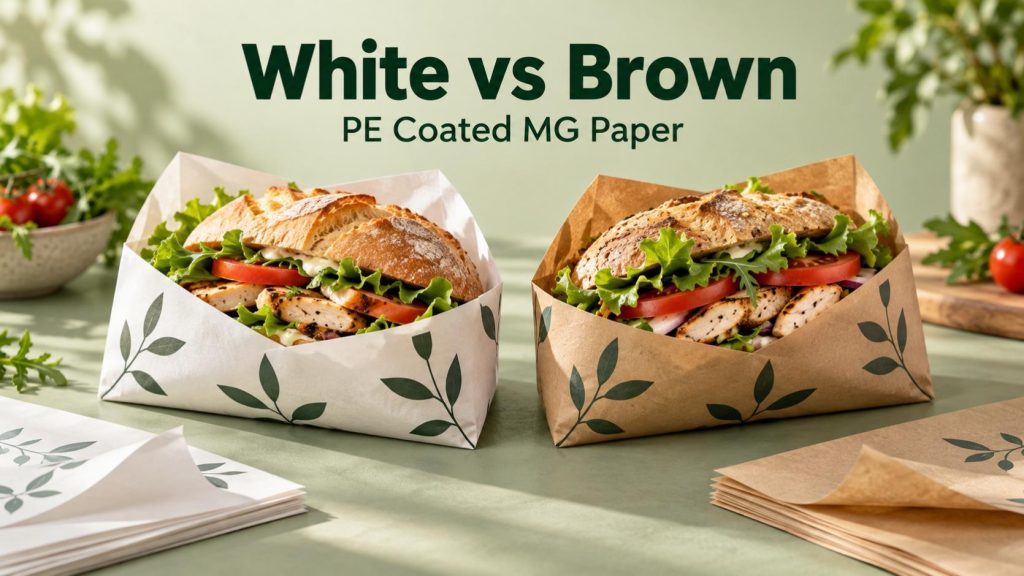
White PE coated MG paper is a useful starting point for bright graphics and a light, neutral background. Brown PE coated MG paper suits designs built around a warm kraft tone and bold contrast. Both can be suitable for food wrapping when the selected material meets the application requirements.
Colour is an important design choice, but it does not establish strength, food-contact safety or barrier performance. Buyers should compare the actual paper and coating specifications, then review printed samples and test the finished packaging.
What changes between white and brown
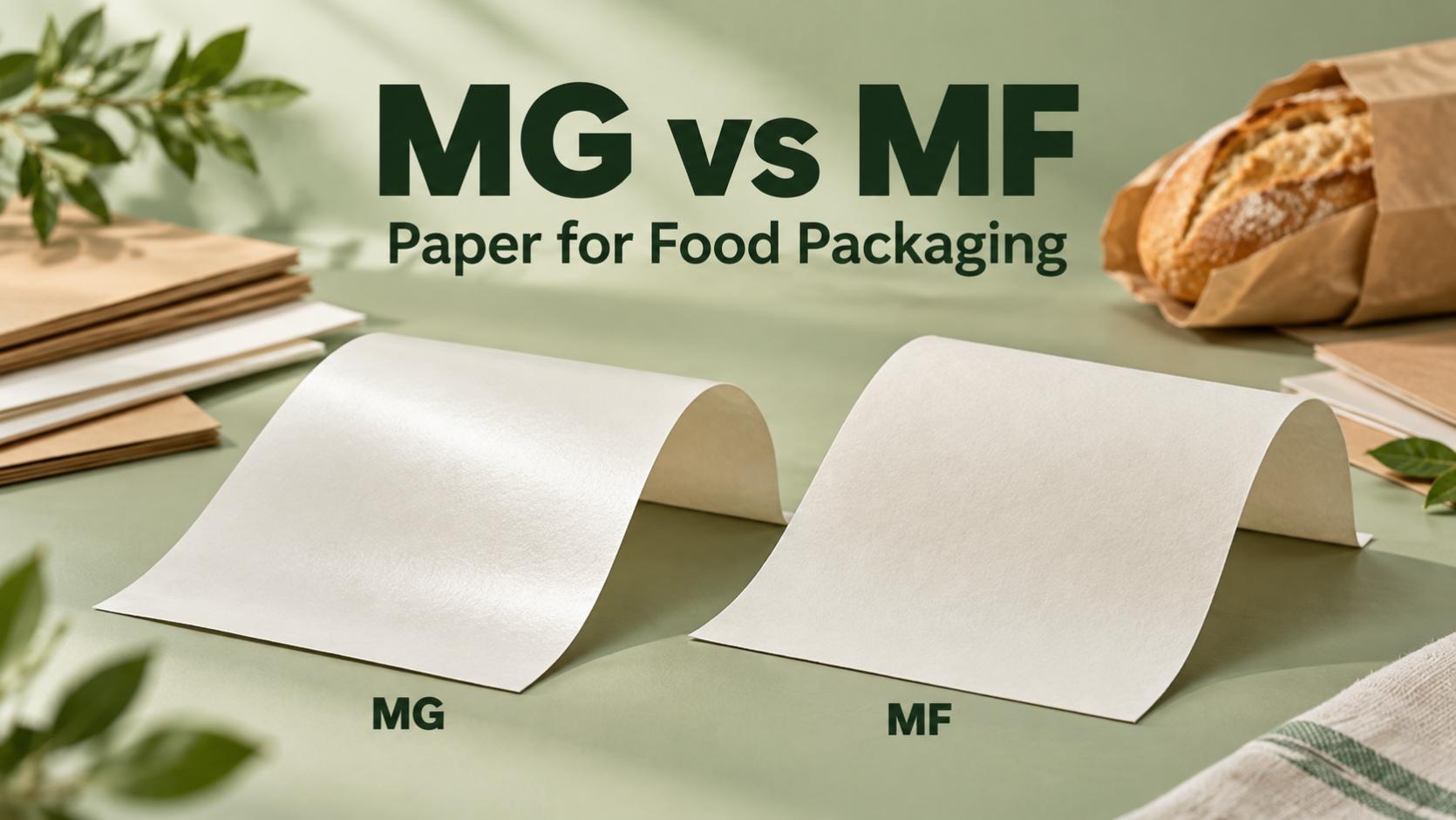
MG means machine glazed: the base paper typically has one smoother, glossier face produced during drying against a polished heated cylinder. Both white and brown MG grades can have a smooth glazed surface. Brown paper does not necessarily have a rough or heavily textured finish.
White grades are commonly made with bleached pulp, while natural brown grades commonly use unbleached pulp. However, colour alone does not establish the fibre source or composition. The two grades may differ in furnish, additives, thickness and strength even when their nominal GSM is the same.
PE is extrusion-coated onto the selected face or faces. Do not assume that the coating is always on the glazed side or always on the reverse. Confirm the glazed face, print face, PE-coated face and intended food-contact face before approving the specification.
Start with the packaging design
Choose the background that supports your actual artwork. A white sheet generally makes light colours and detailed graphics easier to present. A brown sheet can work well with dark logos, simple illustrations and designs that leave part of the paper visible.
Neither colour is limited to one market position. White packaging can look simple and economical, while brown packaging can look refined. Review samples with your branding rather than relying on labels such as “premium” or “natural”.
Compare printing on the actual material
| Print consideration | White PE coated MG paper | Brown PE coated MG paper |
| Background | Light background with relatively little colour influence. | Warm background that can influence printed colours. |
| Light colours and fine detail | Often easier to achieve contrast; proofing is still needed. | May need artwork changes or an opaque white underprint. |
| Dark logos and text | Usually provide clear contrast. | Can work well with bold, high-contrast designs. |
| Multicolour artwork | A practical starting point for colourful branding. | Possible, but check colour targets and ink coverage. |
Use the same artwork to compare both colours. If brown stock needs white ink beneath the design, ask the printer to assess opacity, registration and the additional printing cost. White stock also needs proofing: its shade, surface and ink system can affect the result.
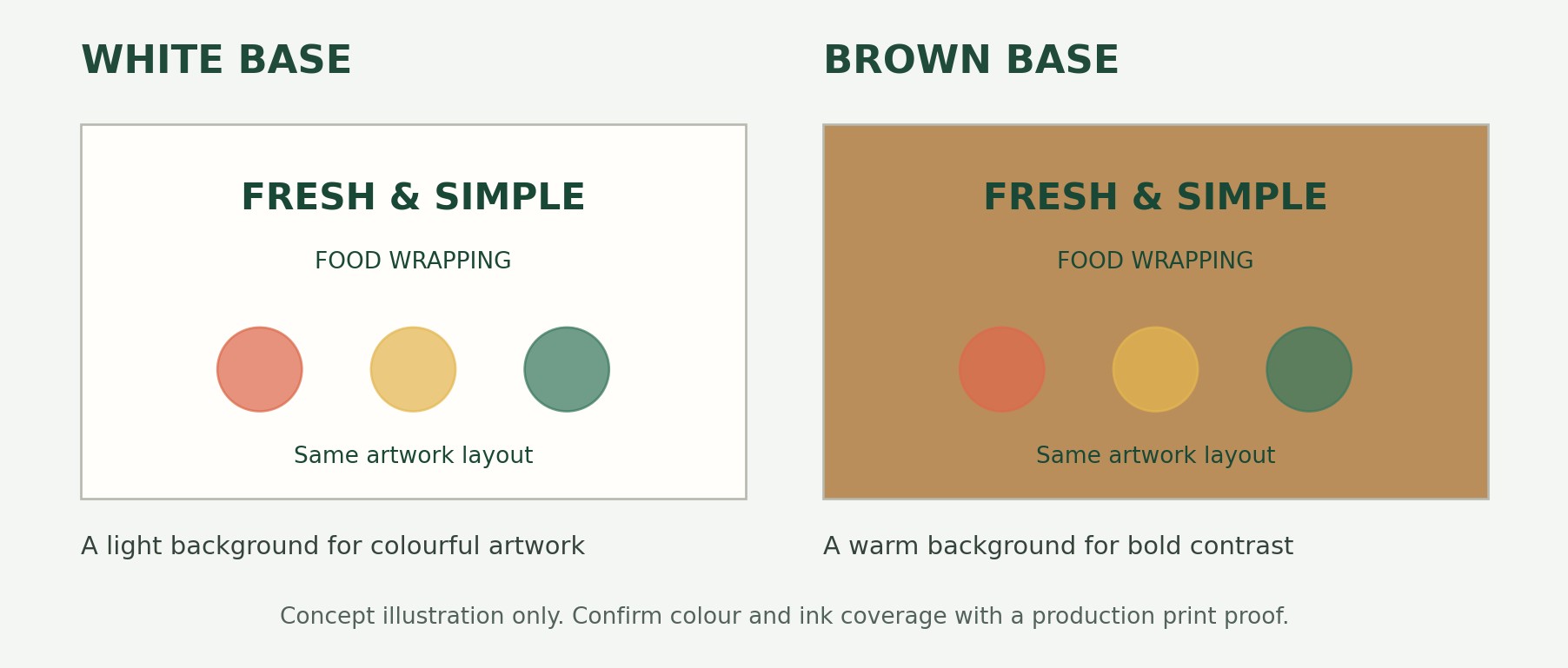
Figure 1. The paper background changes the visual impression of the artwork. This conceptual illustration is not a colour-matched print trial.
Also confirm whether printing will be on the paper face or the PE face. Printing on PE requires suitable surface treatment and inks. Check adhesion, drying and rub resistance, as well as transfer between sheets or wound layers.
Confirm performance separately from colour
Grease and moisture resistance
The PE layer contributes resistance to grease and liquid water and provides a degree of water-vapour barrier. Actual performance depends on the resin, coating weight, coverage, pinholes and the finished structure. Equal coating weights on white and brown paper do not guarantee identical performance.
Test the wrapper with the intended food, temperature and contact time. Check the folds and edges as well as the flat sheet. A heavier coating is not a universal answer to every barrier requirement, and colour cannot replace these checks.
Strength and converting
Do not assume brown paper is stronger or white paper is weaker because it has been bleached. Compare the selected grades using relevant tensile and tear data, thickness and samples. Check folding, feeding, curl and any tearing during the actual converting process.
Heat sealing
Both colours can be supplied in structures suitable for heat sealing. Confirm which surfaces meet at the seal, especially PE-to-PE versus PE-to-paper. Temperature, pressure, dwell time and equipment affect the result. Validate seal strength and leakage where relevant; the presence of PE alone does not guarantee a leak-proof package.
Food-contact suitability
Check the complete material for the intended food and conditions of use. Food-grade PE alone does not establish the suitability of the base paper, printing or finished wrapper. Request the relevant supplier compliance documentation and supporting tests for the destination market.
Match the choice to the food packaging
For burger and sandwich wraps, either colour may fit the brand. Prioritise resistance to grease penetration, folding behaviour and performance during the expected holding time. Choose the colour after comparing the actual printed design.
For bakery wraps and bag liners, consider the product temperature and moisture release as well as appearance. PE coating changes the behaviour of the original paper, so do not assume it provides breathability or prevents condensation.
For confectionery wraps and food-box liners, compare presentation, odour, grease resistance and ease of handling. Where extended shelf life is required, assess the complete package against its barrier needs rather than selecting a structure by colour.
Assess cost and environmental claims
Brown paper is not always cheaper. Compare current quotations per metric ton for the required specifications and order quantity. If one design needs extra ink coverage or a white underprint, consider that printing cost when choosing the finished packaging.
A brown appearance does not mean the paper contains recycled fibre or has a lower environmental impact. Likewise, white paper is not automatically the less sustainable option. Assess the fibre source, material composition, production information and end-of-life options before making environmental claims.
Recyclability depends on both the packaging structure and the collection and recycling systems available in the target market. PE can complicate fibre recovery. Relevant checks include repulping, separation of non-paper components and recovered-fibre quality; de-inking alone does not establish recyclability. Confirm local acceptance and use appropriate recyclability evidence for the finished structure.
A practical selection checklist
- Define the food, contact temperature, holding time and packaging format.
- Compare white and brown samples using the same artwork and intended printing process.
- Specify base paper GSM and PE coating weight separately; identify the coating weight on each side.
- Confirm the print face, coating face and food-contact face.
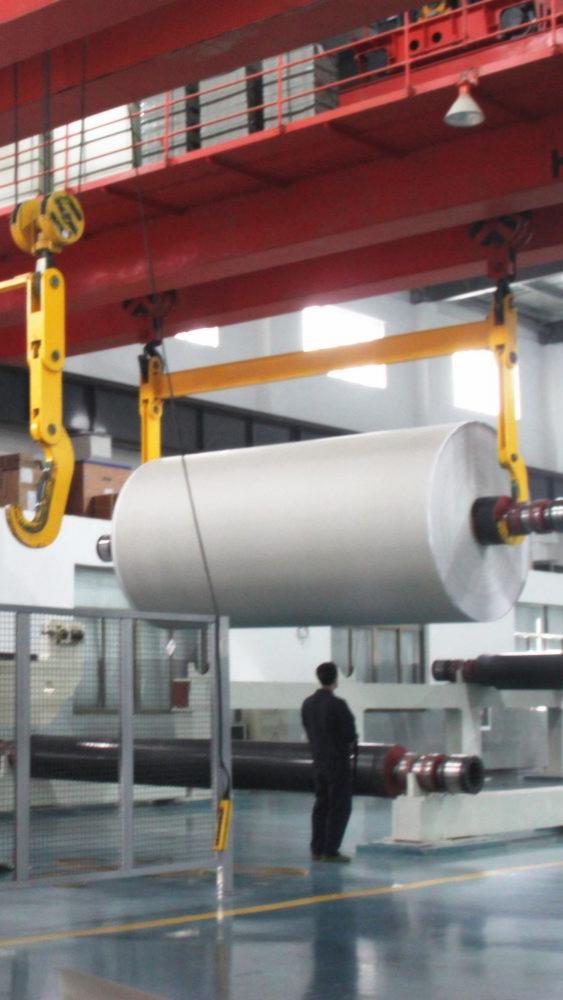
- Check reel or sheet dimensions and run samples through printing and converting.
- Review food-contact documentation, approve the tested specification and compare the per-ton quotation.
Frequently asked questions
Can brown paper carry a colourful design
Yes. Multicolour printing is possible, but the brown background can change the appearance of the inks. A white underprint may help where bright or light colours are important. Confirm the result through a print proof.
Does white paper provide better food hygiene
Colour is not a measure of food-contact safety or hygiene. Evaluate the selected material, production controls and supporting documentation for either option.
Which colour should I choose if both pass testing
Choose the one that best matches your approved artwork, customer expectations and overall packaging cost. Keep the approved sample as a reference for later orders.
Request white and brown samples
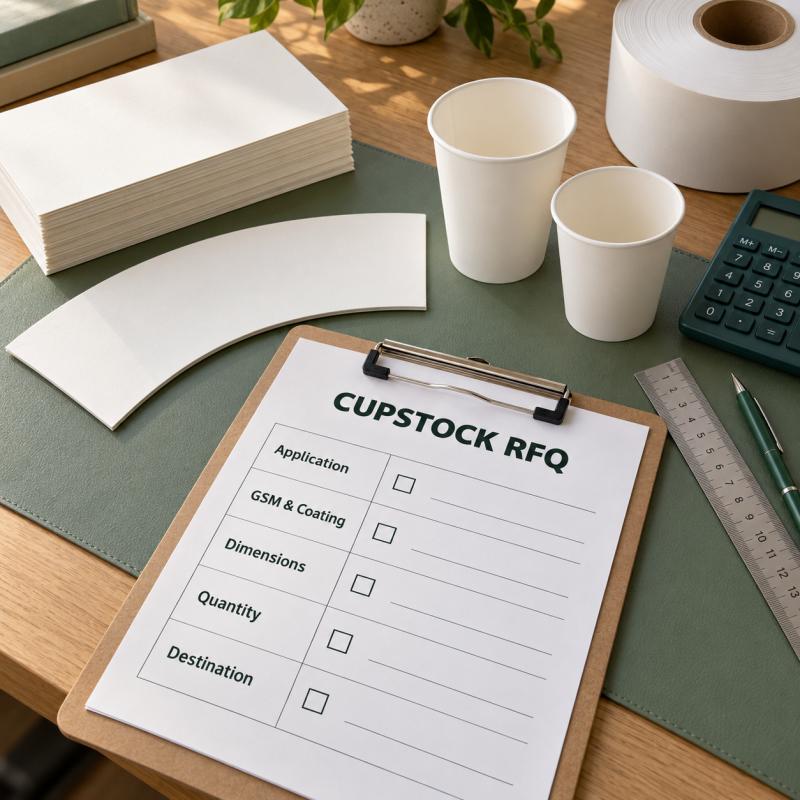
Sure Paper can help you compare white and brown PE coated MG paper for your food packaging. Share your application, artwork, base paper GSM, PE coating weight, dimensions and quantity to discuss suitable samples and receive a quotation per metric ton.