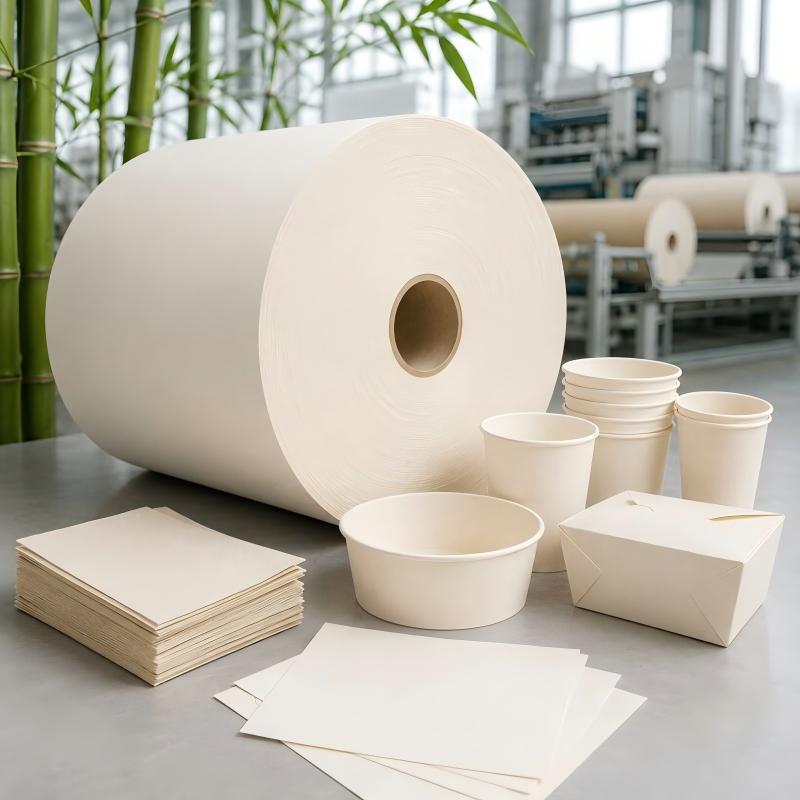
From soft tissue products to durable food packaging, bamboo paper has quickly emerged as a practical alternative to traditional wood pulp paper. It delivers comparable strength and performance while requiring fewer natural resources to produce.
Today, bamboo paper is used across a wide range of applications—from everyday household items to commercial packaging solutions. Understanding where it’s used and why it’s gaining popularity can help you decide whether it’s the right option for your needs.
Key Takeaways
- Bamboo paper is a versatile tree-free alternative used in tissues, writing paper, packaging, and specialty products
- Bamboo grows significantly faster than trees and can be harvested every 3–5 years
- It offers superior softness, strength, and absorbency compared to recycled paper
- Bamboo paper production uses 30–50% less water and generates 50% lower carbon emissions than wood pulp paper
- Sure Paper’s Bamboo Paper Cupstock is a strong option for eco-friendly food packaging.
Common Uses of Bamboo Paper
Tissue Products
Bamboo paper dominates the sustainable tissue market due to its unique combination of softness and strength. Its natural hollow fiber structure makes it 30% more absorbent than wood pulp paper, while its long fibers provide excellent wet durability.
| Type of Tissue Product | Softness | Strength | Wet Durability | Environmental Impact |
|---|---|---|---|---|
| Bamboo | Excellent | Very Good | Excellent | Low |
| Recycled Wood Pulp | Low | Low | Low | Moderate |
| Virgin Wood Pulp | Good | Very Good | Good | High |
Bamboo tissue products include toilet paper, kitchen towels, facial tissues, and napkins. They are naturally hypoallergenic and gentle on sensitive skin, making them ideal for families and individuals with allergies.
Writing and Office Paper
Bamboo paper is increasingly popular for writing and office applications. Its smooth, silky texture provides excellent ink absorption, resulting in crisp, clear text and vibrant images. It is also acid-free and archival, making it perfect for important documents and artwork.
The table below lists the differences between bamboo paper and ordinary wood pulp paper:
| Feature | Bamboo Writing Paper | Traditional Wood-Based Paper |
|---|---|---|
| Texture | Soft and supple | Varies, often rougher |
| Durability | Acid-free, archival quality | Varies, can yellow over time |
| Environmental Impact | Tree-free and sustainable | Often involves deforestation |
| Ink Absorption | Excellent | Good |
Common products include notebooks, printer paper, sticky notes, business cards, and envelopes.
Food Packaging Solutions
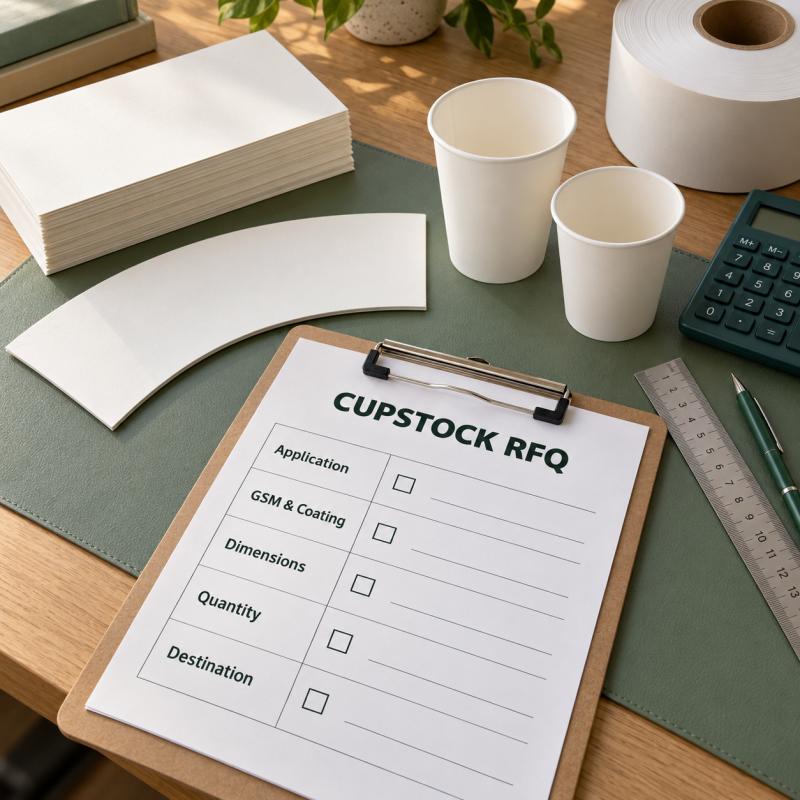
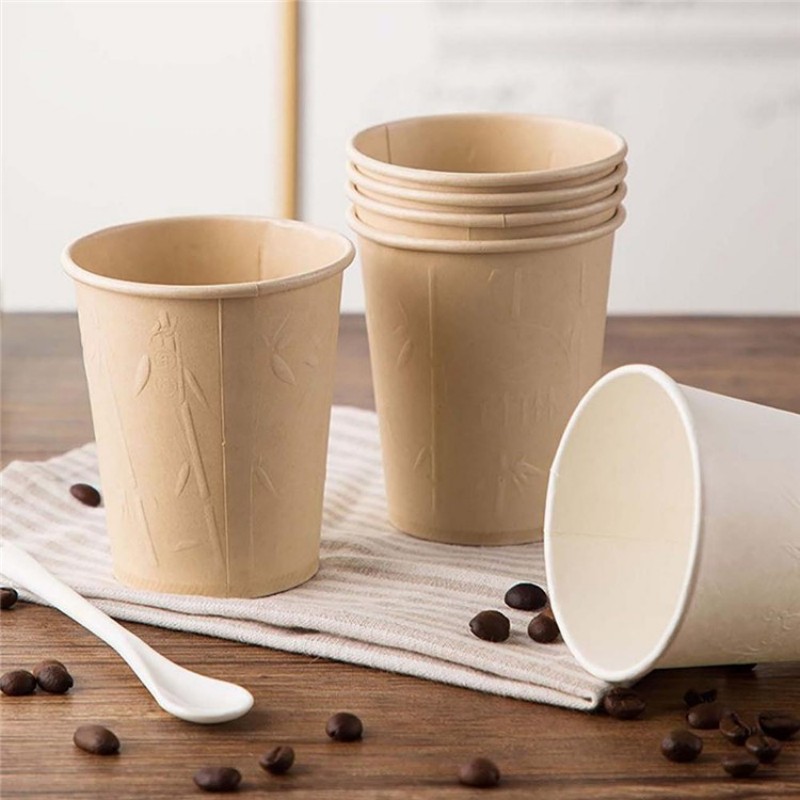
This is the fastest-growing application for bamboo paper. Its natural strength and resistance to moisture make it ideal for food packaging. Sure Paper’s Bamboo Paper Cupstock is specially engineered for this market:
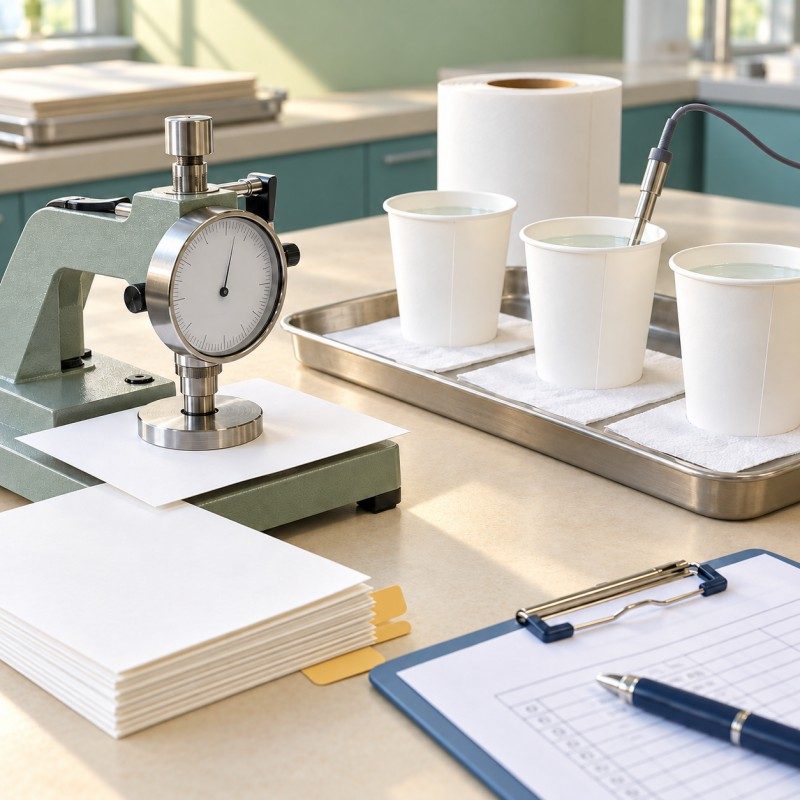
- Food-safe and compliant with FDA, EU, and GB 4806.8 standards
- Waterproof and greaseproof with PE or PLA coating
- PFAS-free and compostable
- Excellent heat resistance for hot drinks and foods
Common bamboo paper packaging products:
- Paper cups for hot and cold beverages
- Soup and noodle bowls
- Takeout containers and lunch boxes
- Ice cream cups and disposable tableware
- Food wrapping paper and sandwich bags
Business Tip: Switching to bamboo paper packaging helps brands meet ESG goals and attract eco-conscious customers, who are willing to pay a premium for sustainable products.
Specialty Papers
Bamboo’s long, strong fibers make it ideal for high-performance specialty papers:
- Tea bags and coffee filters: Natural, unbleached bamboo is safe for food contact and provides excellent filtration
- Art and drawing paper: The smooth texture is perfect for watercolors, ink, and pencils
- Medical and hygiene products: Surgical masks, wound dressings, and disposable wipes benefit from bamboo’s natural antimicrobial properties
- Shipping and packaging: Bamboo cardboard is lighter and stronger than traditional cardboard, reducing shipping costs
- Wallpaper and decorative papers: Bamboo’s natural grain creates a unique, organic look
Key Advantages of Bamboo Paper
Environmental Benefits
Bamboo is one of the most sustainable resources on Earth:
- Rapid growth: Some species grow up to 36 inches per day, reaching maturity in 3–5 years (vs. 20–50 years for trees)
- No replanting needed: Bamboo regrows from its roots after harvesting
- Carbon sequestration: Bamboo forests absorb up to 5 times more CO₂ per hectare than tree forests
- Lower resource use: Bamboo requires less water, fertilizer, and pesticides than trees
- Biodegradable: Bamboo paper breaks down naturally in 3–6 months under composting conditions
The table below compares the resource requirements of bamboo paper and traditional wood pulp paper production:
| Resource Type | Bamboo Paper Production | Wood Pulp Paper Production |
|---|---|---|
| Water Usage | 30–50% lower | Higher |
| Energy Usage | 20–40% lower | Higher |
| Chemical Usage | Fewer harsh chemicals | More bleaching agents |
Practical Benefits
Bamboo paper stands out for its combination of comfort, strength, and everyday practicality:
- Soft and comfortable: Bamboo fibers are naturally smooth, giving the paper a softer feel for daily use
- Strong and durable: The longer fiber structure improves strength and tear resistance compared to many wood-based papers
- Highly absorbent: The hollow fiber structure allows bamboo paper to absorb liquid more efficiently
- Naturally antibacterial: Bamboo contains compounds that help inhibit bacterial growth
- Gentle on sensitive skin: Often made without harsh chemicals, making it a suitable option for sensitive skin
Cost and Availability
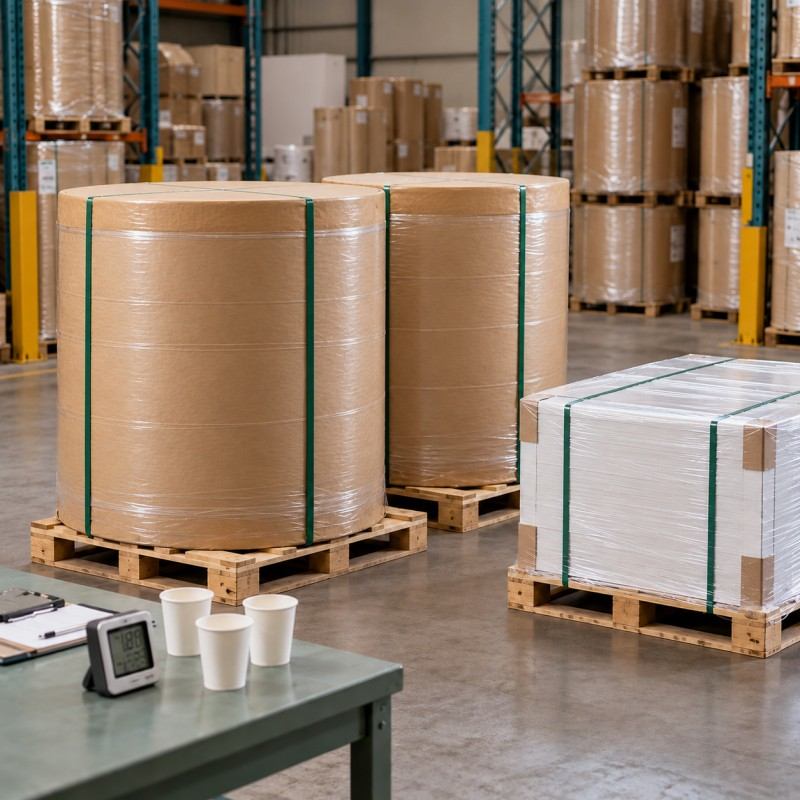
Bamboo paper is now widely available both in stores and online, and as demand continues to grow, pricing has become more competitive with premium wood pulp products. For businesses sourcing in bulk, companies like Sure Paper offer flexible ordering options, including a minimum order quantity of around 5 tons and typical lead times of approximately 30 days, depending on order specifications.
Is Bamboo Paper Better Than Wood Paper?
Bamboo paper offers clear advantages over wood paper in several key areas:
- Sustainability: Bamboo is far more renewable and has a much lower environmental footprint
- Performance: Bamboo paper is softer, stronger, and more absorbent than most wood papers
- Safety: Bamboo paper often uses fewer harsh chemicals and is naturally hypoallergenic
- Versatility: Bamboo can be used in almost every application where wood paper is used
The only potential drawback is that bamboo paper production in regions with coal-dependent energy grids can have a higher carbon footprint than wood paper produced with clean energy. However, this is a manufacturing issue, not an inherent problem with bamboo itself.
Conclusion
Bamboo paper is a versatile material that can serve as a practical alternative to traditional wood pulp paper in many applications. From everyday tissue products to durable packaging, it offers reliable performance along with a reduced environmental footprint.
As sustainability becomes a growing priority for both consumers and businesses, bamboo paper continues to gain wider adoption across different industries. Companies like Sure Paper are contributing to this shift by offering well-made, eco-friendly bamboo paper solutions designed to meet modern market needs.
FAQ
What makes bamboo paper eco-friendly?
Bamboo regrows quickly after harvesting and requires less water and fewer chemicals than traditional trees. It also helps reduce reliance on deforestation, and bamboo paper can break down more easily in natural environments with generally lower carbon emissions during production.
Can bamboo paper be used for food packaging?
Yes, bamboo paper is widely used in food packaging due to its strength and moisture resistance. Products like bamboo cupstock are typically designed to be food-safe, waterproof, grease-resistant, and suitable for both hot and cold applications.
Is bamboo paper safe for sensitive skin?
In most cases, yes. Bamboo paper is naturally soft and is often produced without harsh chemicals, making it a comfortable option for people with sensitive skin.
Is bamboo paper recyclable?
Yes, bamboo paper can usually be recycled through standard paper recycling systems. It is also biodegradable and may break down within a few months under proper composting conditions.
Where can people buy bamboo paper products?
Bamboo paper products are widely available in supermarkets, pharmacies, and online stores. For businesses sourcing in bulk, suppliers such as Sure Paper offer bamboo-based packaging materials with flexible ordering options.