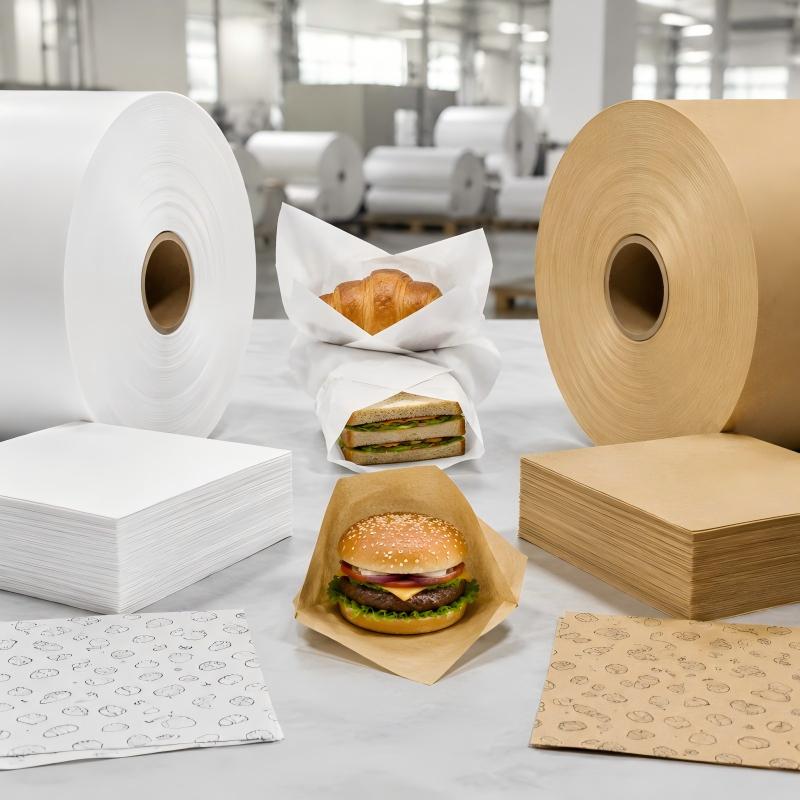
For bakeries, delis, food service operators and packaging distributors, choosing between white and brown greaseproof paper is mainly a question of brand presentation, printing requirements and procurement specifications—not a simple choice between “clean” and “greasy” foods.
White greaseproof paper gives food packaging a bright, clean background and supports accurate, high-contrast printing. Brown unbleached greaseproof paper creates a natural, rustic appearance that works well with simple or artisanal branding. However, color alone does not determine oil resistance, wet strength or suitability for a particular food.
A white and a brown grade with comparable GSM, KIT level, wet-strength performance and paper structure can often be used for similar applications. Buyers should first confirm the required technical performance, then select the color that best matches the brand and print design.
Key Takeaways
- White paper provides a bright background for detailed, multi-color and high-contrast printing.
- Brown paper supports a natural, rustic visual style and usually works best with dark, simple artwork.
- Grease resistance is determined by KIT level and paper specification—not by paper color alone.
- Food temperature, oil content, moisture and contact time should guide the required performance grade.
- Before a bulk order, compare samples using the actual food and request applicable food-contact documentation.
White vs. brown greaseproof paper at a glance
| Comparison factor | White greaseproof paper | Brown greaseproof paper |
|---|---|---|
| Appearance | Bright, clean and polished | Natural, warm and rustic |
| Printing | Better color accuracy and contrast | Best with dark colors and simple designs |
| Grease resistance | Specified by KIT level and grade | Specified by KIT level and grade |
| Wet strength | Depends on formulation and specification | Depends on formulation and specification |
| Brand fit | Premium, modern or colorful branding | Artisanal, natural-look or minimalist branding |
| Sustainability | Confirm fiber source, treatment and certification | Natural color does not automatically prove a lower environmental impact |
1. Appearance and brand positioning
White greaseproof paper: clean and professional
White greaseproof paper provides a neutral, bright background that keeps both the food and printed design visually prominent. Golden pastries, colorful desserts and fresh sandwiches generally stand out clearly against the lighter surface.
It is commonly selected by boutique bakeries, café chains, premium fast-casual brands, sandwich shops and companies using colorful logos or detailed graphics. The visual effect is clean, modern and presentation-focused.
Brown greaseproof paper: natural and artisanal
Brown unbleached greaseproof paper has a warm kraft tone that communicates simplicity, craftsmanship and a natural-looking packaging style. It is frequently used by sourdough bakeries, farm-to-table restaurants, street-food brands, burger shops and specialty food retailers.
The brown appearance can support sustainability-focused brand communication, but buyers should avoid treating color alone as proof that a paper is more recyclable, compostable or environmentally preferable. These claims should be supported by the product construction, certification and applicable test documentation.
2. Printing differences
Custom-printed greaseproof paper turns food liners and wraps into visible brand touchpoints. The base color affects contrast and the way printed inks are perceived.
White paper for brighter, more accurate color
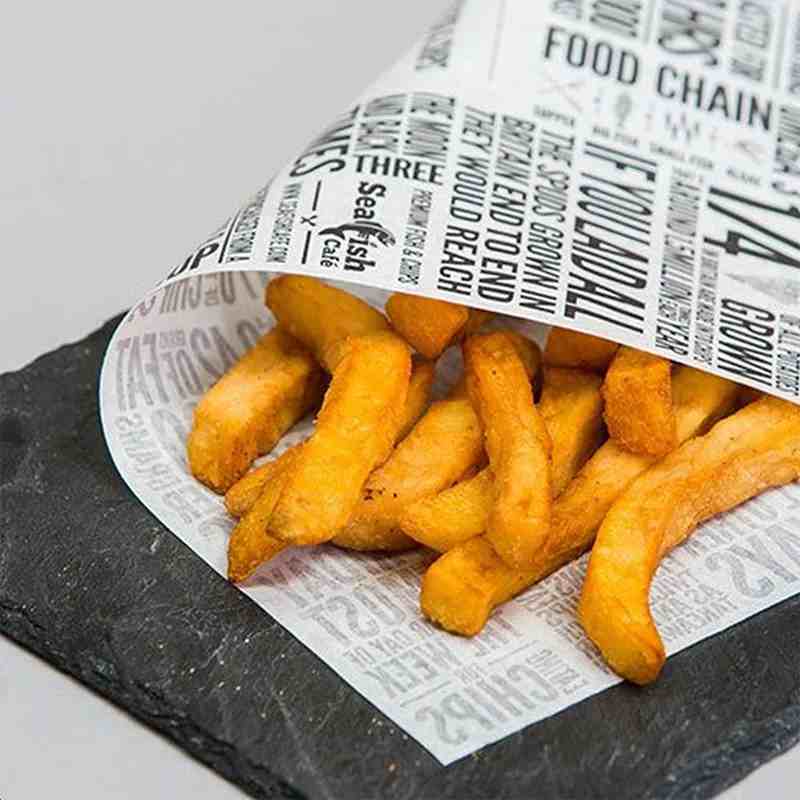
A white surface provides stronger contrast and generally makes printed colors appear brighter and closer to the approved artwork. It is the more predictable option for multi-color logos, fine text and detailed graphics. Final results still depend on the printing process, ink system, coverage and paper surface, so a printed proof or production sample is recommended.
Brown paper for simple, high-contrast artwork
The natural brown background changes the visual appearance of printed colors and reduces contrast. Black, dark brown and other strong single-color designs usually produce the most consistent results. Bright or light colors may appear softer than they do on a white substrate.
For either color, buyers should confirm whether the supplier supports flexographic or gravure printing, how many colors are available, and whether plate or cylinder charges apply.
3. Food application: choose performance before color
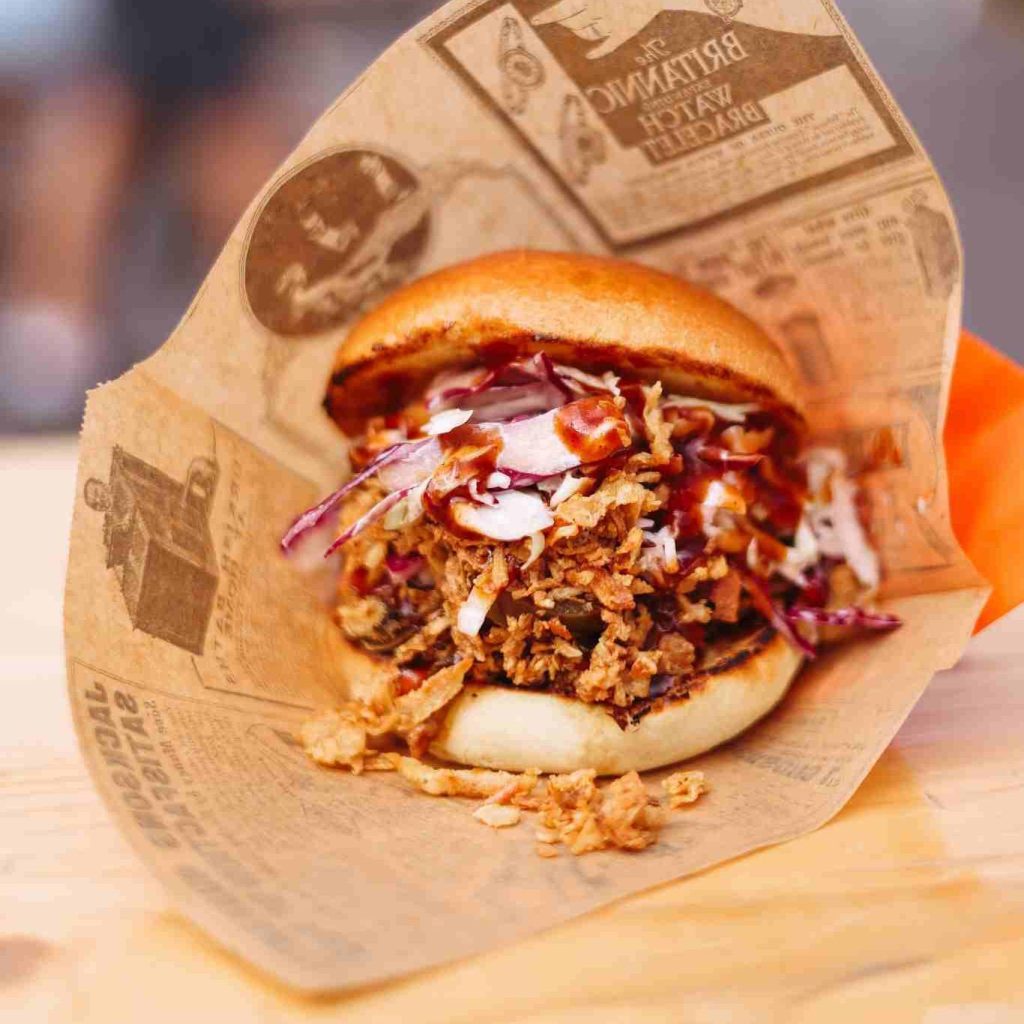
Both white and brown greaseproof paper can be produced for bakery products, sandwiches, burgers, fried foods and takeaway liners. The correct choice should be based on the food and serving conditions rather than color alone.
Key application conditions to evaluate
- Oil content: heavily fried or fatty foods normally require a higher grease-resistance level.
- Moisture: juicy, saucy or high-moisture foods may require verified wet strength.
- Temperature: hot foods can accelerate grease penetration and affect paper strength.
- Contact time: longer holding, delivery or display time may require stronger barrier performance.
- Handling: wrapping, folding, tray lining and converting place different demands on tensile and tear strength.
For example, a dry pastry used for short display periods may need a lighter grade, while fried chicken held in a takeaway package for an extended period may require a higher KIT level and stronger wet performance. Either application can use white or brown paper if the selected grade meets the technical requirements.
4. B2B buying guide
Specifications buyers should confirm
| Specification | What to confirm |
|---|---|
| GSM | Match basis weight to wrapping, lining, converting and handling requirements. |
| KIT level | Select grease resistance according to oil load and contact time. |
| Wet strength | Request relevant data when packaging moist, saucy or juicy food. |
| Temperature range | Confirm approved contact temperature and exposure time. |
| Format and dimensions | Specify sheets or rolls, width, length, roll diameter and core size. |
| Printing | Confirm print method, colors, ink coverage, artwork requirements and plate charges. |
| Food-contact compliance | Request documentation applicable to the destination market. |
| MOQ and lead time | Confirm minimum quantity by GSM, size, color and print design. |
Test samples with the actual food
A specification sheet is important, but an application test is still necessary. Evaluate oil penetration, tearing, staining, print rub-off and overall appearance under the real food temperature and expected holding time. If custom printing is required, approve the artwork and color result before mass production.
5. Final decision framework
1. Brand positioning: Choose white for a brighter, polished presentation; choose brown for a natural or artisanal visual style.
2. Print design: Choose white for greater color accuracy and detailed graphics; choose brown for dark, simple and high-contrast artwork.
3. Technical performance: Do not decide by color. Compare GSM, KIT level, wet strength, temperature, contact time and handling requirements.
4. Procurement conditions: Compare MOQ, lead time, roll or sheet dimensions, printing setup costs, packing and food-contact documentation.
Many food businesses stock both colors to support different branding or menu presentations. When the technical specification is equivalent, the final color choice can be made according to packaging design and customer experience rather than assumed performance differences.
FAQ
Is brown greaseproof paper more grease-resistant than white paper?
Not necessarily. Grease resistance is determined by the paper grade, KIT level, structure and treatment. White and brown paper can offer comparable grease resistance when produced to equivalent specifications.
Which color is better for custom printing?
White paper generally provides stronger contrast and more accurate color reproduction. Brown paper is well suited to black, dark or minimal designs. A print test is recommended for both colors before bulk production.
Can greaseproof paper be used in the oven?
Do not assume that every greaseproof grade is oven-safe. Some grades may tolerate limited heat exposure, but the approved temperature and contact time must be confirmed with the supplier. For high-temperature baking or roasting, use heat-rated silicone-coated baking parchment paper.
Is greaseproof paper recyclable or compostable?
It depends on the fiber source, barrier treatment, printing, food contamination and local waste system. Buyers should review the product specification, certification and local disposal requirements before making recyclability or compostability claims.
How much does custom-printed greaseproof paper cost?
The cost depends on GSM, sheet or roll size, order quantity, number of colors, ink coverage, printing method and plate or cylinder charges. Provide the artwork, dimensions and estimated volume to receive an accurate quotation.
Need help choosing white or brown greaseproof paper?
| Send us your required GSM, KIT level, sheet or roll size, printing colors, application and estimated order quantity. Sure Paper can recommend a suitable grade and provide samples for testing before bulk production. View our greaseproof paper specifications | Contact Sure Paper |