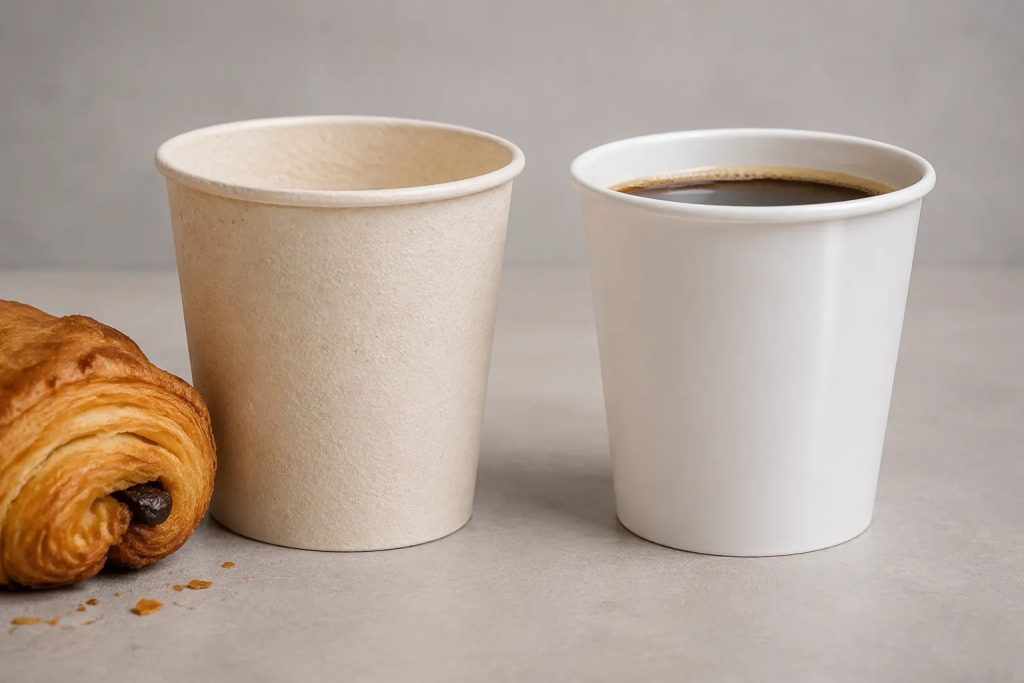
There is no universal “better” option between coated and uncoated cupstock — the right choice depends entirely on your package contents, print requirements, and end-of-life sustainability goals. Uncoated cupstock works best for dry foods and natural, fiber-forward branding, while coated cupstock delivers reliable liquid resistance and sharper print graphics for beverage and greasy food applications.
Key Takeaways
- Choose uncoated cupstock for dry foods and a natural, matte paper aesthetic.
- Opt for coated cupstock for beverages and greasy foods to prevent leaking and fiber softening.
- Smooth, coated, or specialized print-ready surfaces deliver sharper graphics and fine detail than raw, uncoated fibers.
- Water-based and PLA coated options support recyclable or compostable fiber packaging goals.
- Coated cupstock typically carries a higher price point than uncoated grades due to the extra production step.
Coated vs. Uncoated Cupstock: Core Definitions
Both coated and uncoated grades are available in standard 150–320 gsm weights and 0.22–0.48 mm thickness. The primary difference lies in surface treatment and barrier functionality rather than base paperboard stiffness alone. Fiber sourcing also plays a role: alongside standard wood pulp, bamboo cupstock is an eco-friendly fiber alternative available in both coated and uncoated variants.
What Is Uncoated Cupstock?
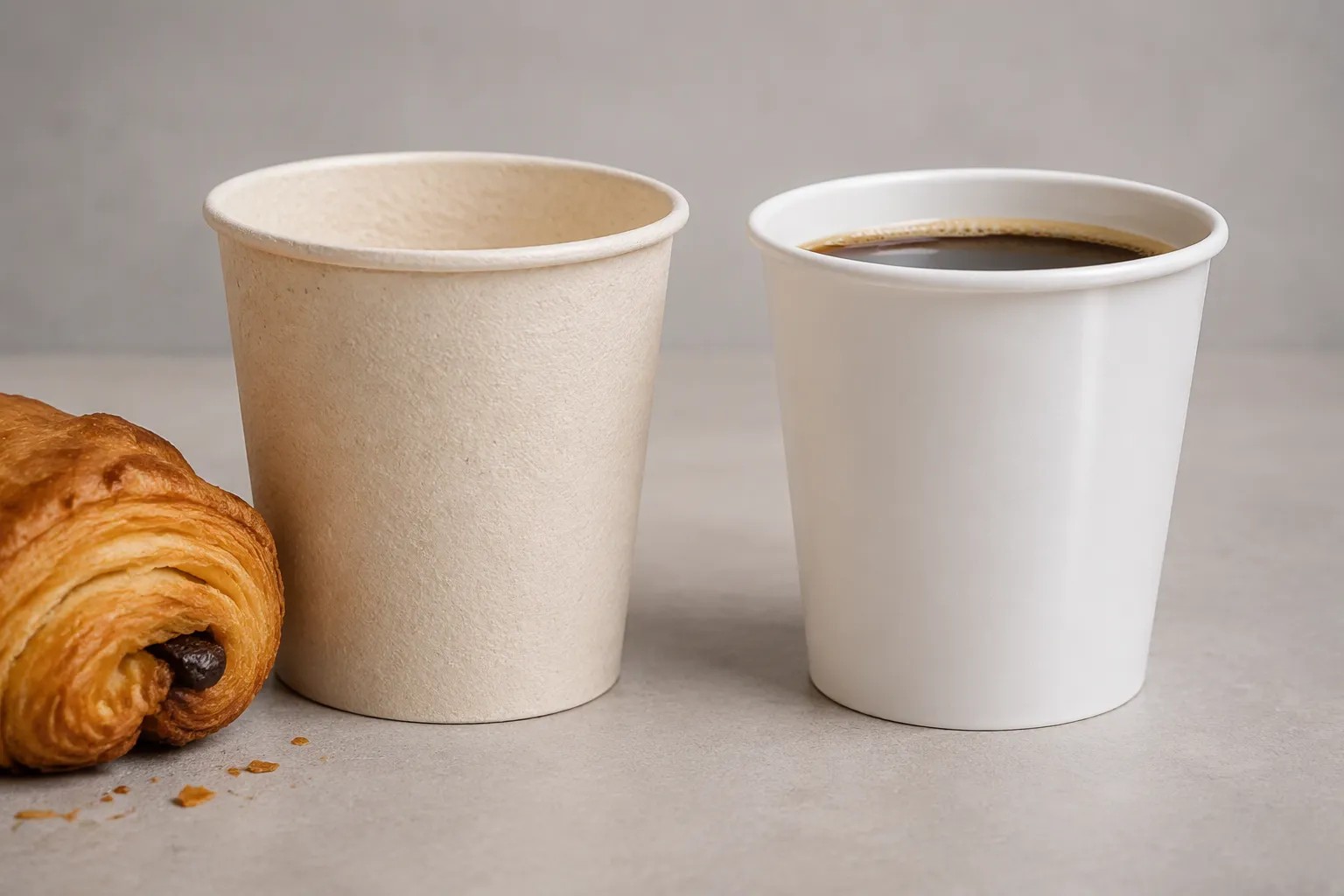
Uncoated cupstock is base paperboard with no surface barrier or finish layer applied. The exposed paper fibers create a rougher, more porous, more absorbent surface with a soft, natural paper texture. Many brands favor this texture for its honest, handcrafted visual character.
Without a sealing layer, uncoated stock absorbs liquid quickly, so it is only suitable for dry contents. Its open fiber structure also makes it the simplest grade to recycle, as there is no additional coating layer to separate from the pulp stream.
What Is Coated Cupstock?
Coated cupstock has a thin surface layer applied to one or both sides to seal the paper fibers or improve surface performance. Different coating and surface options serve different functions:
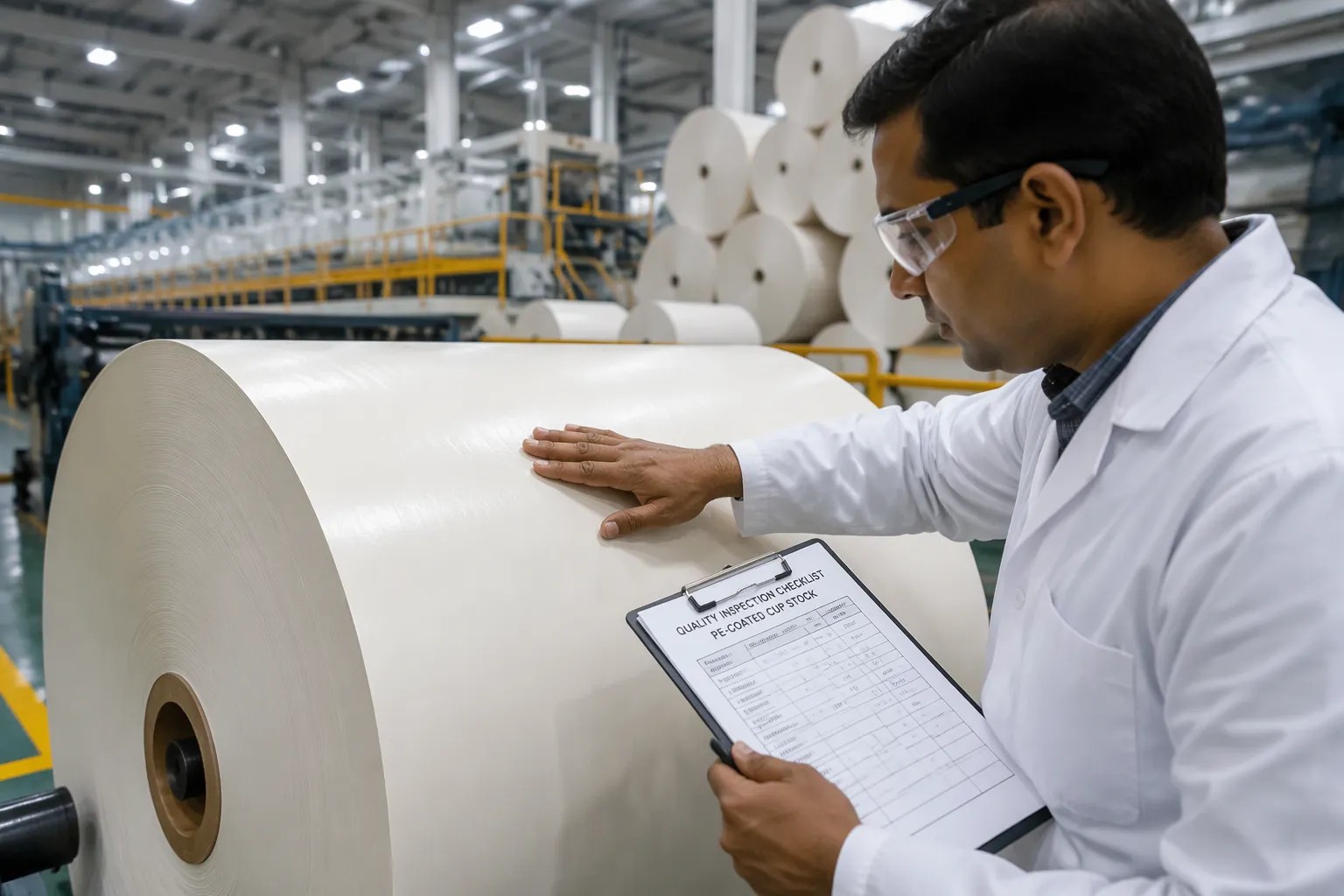
- PE (polyethylene) coated: Creates a strong water and grease barrier, plus heat-seal capability for hot and cold beverage cups.
- PLA coated: A plant-based compostable barrier option for eco-focused packaging.
- Water-based coated: Delivers moderate moisture resistance while remaining compatible with standard paper recycling streams.
- Clay-coated / print-grade surfaces: Often used on paperboard or specialized stock to improve print sharpness and high-contrast graphics; where liquid contact occurs, a dedicated moisture barrier (such as PE, PLA, or aqueous coating) is still required for leak resistance.
The sealed barrier surface prevents liquid from soaking into the fibers, so cups and bowls hold their shape through use. It also creates a smoother print surface for crisp, detailed branding.
Coated vs. Uncoated Cupstock: Side-by-Side Performance Comparison
| Factor | Uncoated Cupstock | Coated Cupstock |
| Moisture/grease resistance | None; absorbs liquid and softens when wet | Strong barrier performance; prevents wicking and grease penetration depending on coating type |
| Print quality | Soft, muted matte finish; fine detail may blur | Sharper, higher-contrast graphics; cleaner fine text and gradients |
| Texture & feel | Natural, fibrous, matte paper feel | Smoother, more uniform surface finish |
| Recyclability | Simplest fiber recovery; compatible with standard paper recycling | Varies by coating: water-based grades are compatible with standard recycling; PE grades often require specialized pulping or separation |
| Relative cost | Lower | Higher; varies by coating type and order volume |
| Best for | Dry snacks, pastry boxes, natural branding | Beverage cups, soup bowls, greasy foods, detailed printed packaging |
Key Decision Factors for Cupstock Paper
1. Moisture & Grease Protection
This is the most functional difference between the two grades. Uncoated paperboard absorbs liquid on contact, causing fibers to soften and the package to lose structural integrity. It is only suitable for dry, non-greasy contents that will not expose the board to moisture.
Coated cupstock creates a protective barrier that holds liquids and repels grease. PE coatings are widely used for hot coffee cups, cold drink cups, and soup bowls, as they also support heat-sealed seams. The exact level of protection depends on the coating type, single- or double-side configuration, and coating weight.
2. Print Quality & Brand Appearance
Surface texture directly impacts how ink reproduces. On uncoated stock, ink sinks into the exposed fibers, creating a soft, muted, matte look. Fine text and sharp edges may blur slightly, which works well for minimalist, natural, or handcrafted brand identities.
On coated or smoother surfaces, ink sits closer to the top of the sheet, producing sharper edges, richer color contrast, and cleaner fine detail. Smooth or print-optimized grades are well suited for packages with detailed logos, gradient artwork, or high-contrast branding.
3. Sustainability & End-of-Life
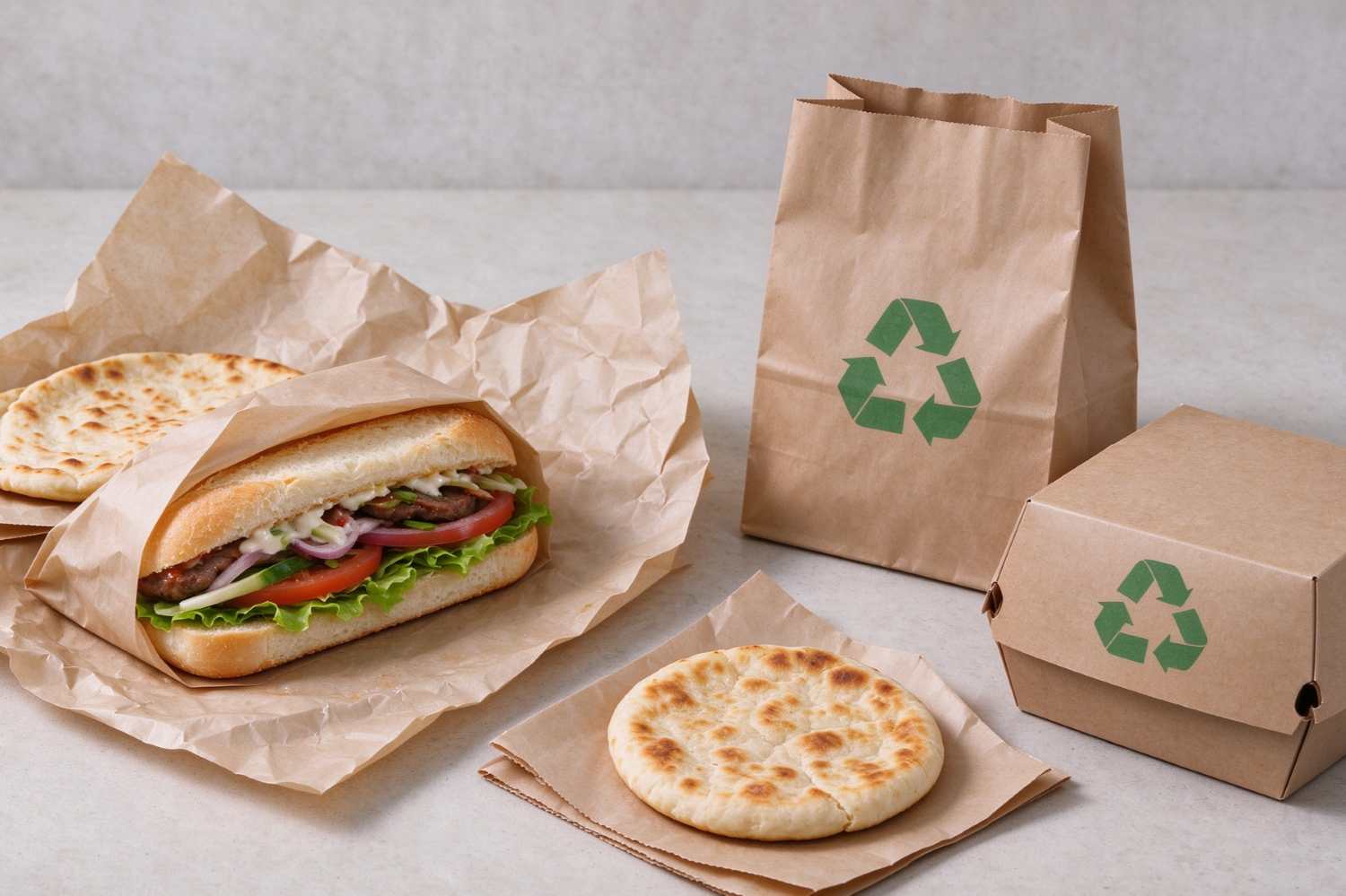
Uncoated cupstock has the simplest end-of-life path: it is fiber-based without an added polymer barrier, allowing it to enter standard paper recycling streams directly.
For coated grades, end-of-life suitability depends on the coating type and local infrastructure:
- Water-based coatings are typically designed to be compatible with standard paper recycling streams.
- PLA coatings are industrially compostable under appropriate composting conditions.
- Conventional PE coatings can be harder to process in standard paper recycling systems without specialized pulping or fiber-separation facilities.
Always confirm coating composition and local recovery options with your cupstock supplier if recycling or compostability is a core project goal.
4. Total Cost
Coated grades carry a higher per-unit price, as the coating step adds production labor, equipment time, and material cost. The size of the price gap varies by coating type and order volume. For dry-goods projects without liquid exposure, uncoated stock is typically the more economical choice.
Which Cupstock Is Best for Your Application?
Choose Uncoated Cupstock If:
- You are packaging dry foods, pastries, or dry snacks with no moisture exposure
- You want a natural, fiber-forward, or handcrafted brand aesthetic
- Simple fiber recyclability is a top priority
- You are working with a tighter budget
Choose Coated Cupstock If:
- You are packaging beverages, soups, greasy foods, or any moist contents
- You need sharp, high-detail printed graphics or polished brand presentation
- Your packaging requires heat-sealed seams
- You have specific sustainability targets (e.g., PLA for industrial compostability or water-based coatings for repulpability/recyclability)
FAQ
Can uncoated cupstock be used for cold drinks?
No. Uncoated paperboard absorbs liquid, which softens the fibers and causes the cup to lose structural integrity. Cold beverage cups require a coated grade with a liquid-resistant barrier layer.
Can you print full-color logos on uncoated cupstock?
Yes, but the result will have a softer, more muted appearance. Ink sinks into the open fibers, so fine details may blur and colors will appear less saturated. For sharp, high-contrast graphics, a smoother or print-optimized coated sheet is generally the better choice.
Does basis weight determine whether cupstock is coated or uncoated?
No. Both coated and uncoated grades are available across the standard 150–320 gsm weight range. The choice between coated and uncoated is driven by barrier function and print needs, not by weight alone.
Which cupstock grade is more recyclable?
Uncoated cupstock has the simplest recycling path because it has no additional barrier coating layer. Water-based coated grades are also formulated to support standard paper recycling. Always confirm coating composition with your supplier to align with your end-of-life targets.
Is coated cupstock more expensive?
Yes. The coating process adds a production step and extra material, so coated grades typically cost more than equivalent uncoated stock. The size of the difference depends on the coating type and total order volume.