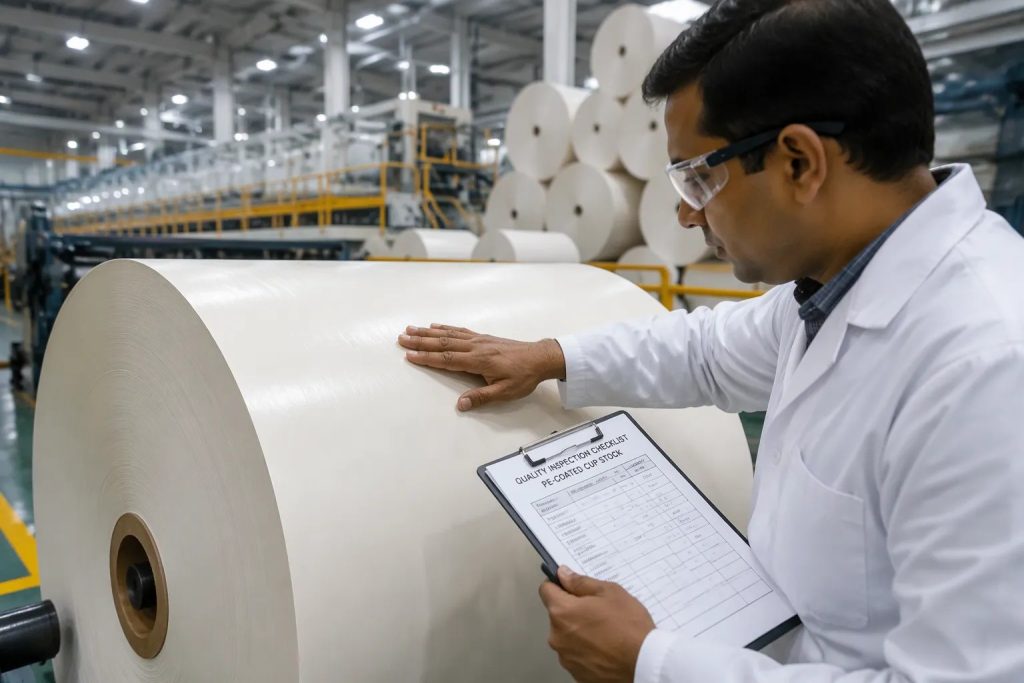
Well-defined specifications are the foundation of efficient, consistent cup production. When ordering PE coated cup stock paper, buyers need to define four core categories upfront: base paper properties, PE coating parameters, regulatory compliance requirements, and production machine details. Clear, detailed specifications reduce converting errors, ensure consistent seal strength and cup formation, and keep production lines running at stable speeds.
Key Takeaways
- Define both base paper grammage and caliper to ensure proper cup stiffness and structural performance.
- Select PE coating weight and single/double-side configuration to match your product’s barrier needs.
- Include required food safety certifications and migration test reports to meet regional regulatory standards.
- Share your cup machine model, line speed, and sealing method with your supplier for material fine-tuning.
Core Base Paper Specifications
The base paper sheet provides the structural body of the cup. Defining these properties correctly ensures clean forming, rigid rims, and reliable performance on high-speed lines.
Key Base Paper & Converting Parameters
| Parameter | Typical Range / Spec | Primary Function |
| Grammage | 190–320 gsm | Determines cup body stiffness and structural strength |
| Caliper (thickness) | Matched to grammage | Affects forming consistency and rim rigidity |
| Formation uniformity | Application-matched (even sheet/optical profile) | Ensures consistent thickness and predictable seal performance |
| Coating weight | 10–20 gsm (coating layer spec) | Controls moisture, grease, and liquid barrier performance |
| Line speed compatibility | 120–240 cups/min | Dictates required sheet stiffness and formation uniformity |
Grammage is the starting point for selection. Small tasting cups use lighter stock near 190 gsm, while large hot cups and soup bowls require heavier, stiffer board. Always specify both grammage and caliper — two sheets of the same weight can differ in thickness and stiffness, which directly impacts forming performance.
For reference, Sure Paper supplies PE coated cupstock in 190–320 gsm grades, with formulations matched to everything from small sampling cups to heavy-duty soup bowls. Virgin food-grade wood pulp and high stiffness help keep rims rigid and prevent cups from buckling under load.
Format Options
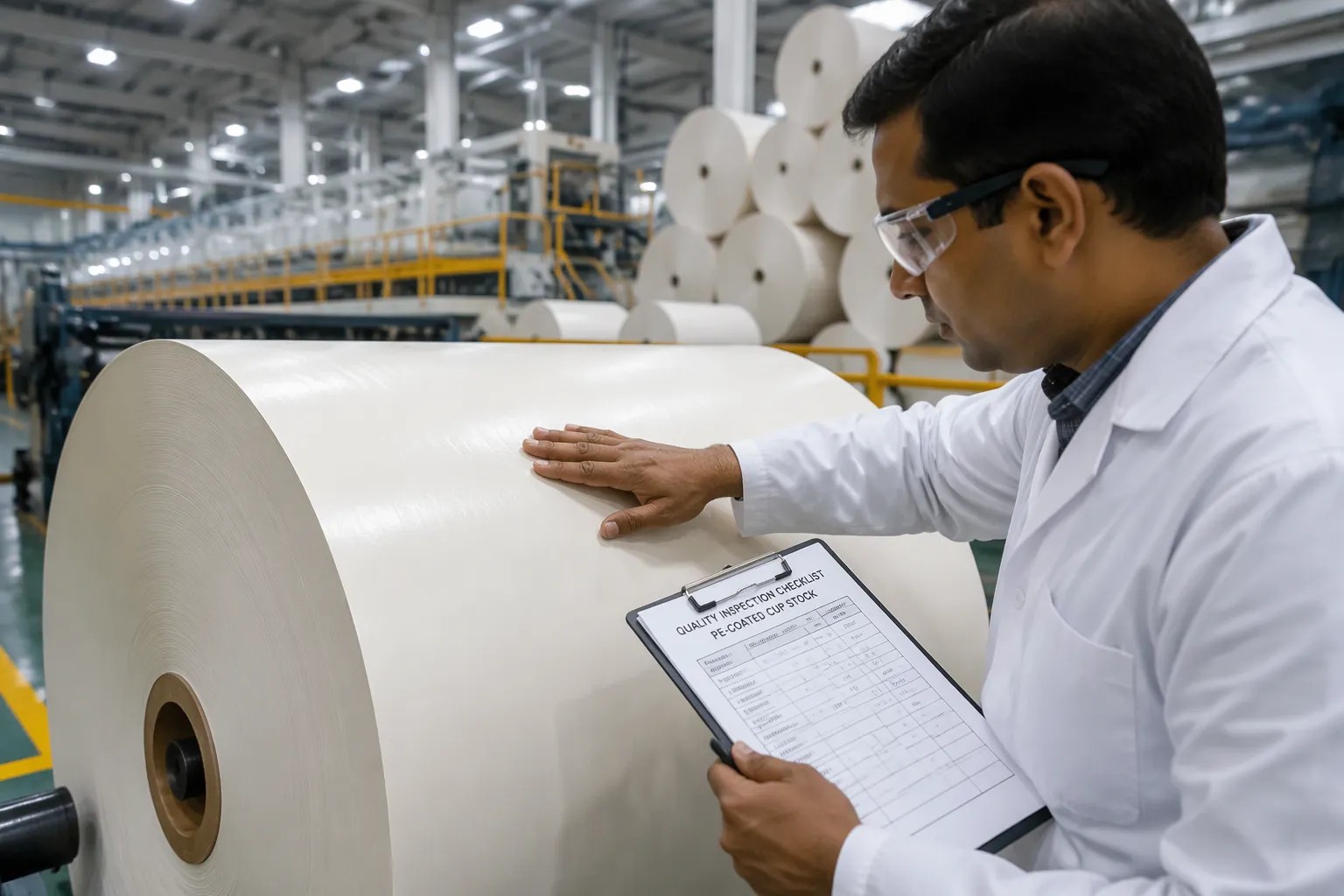
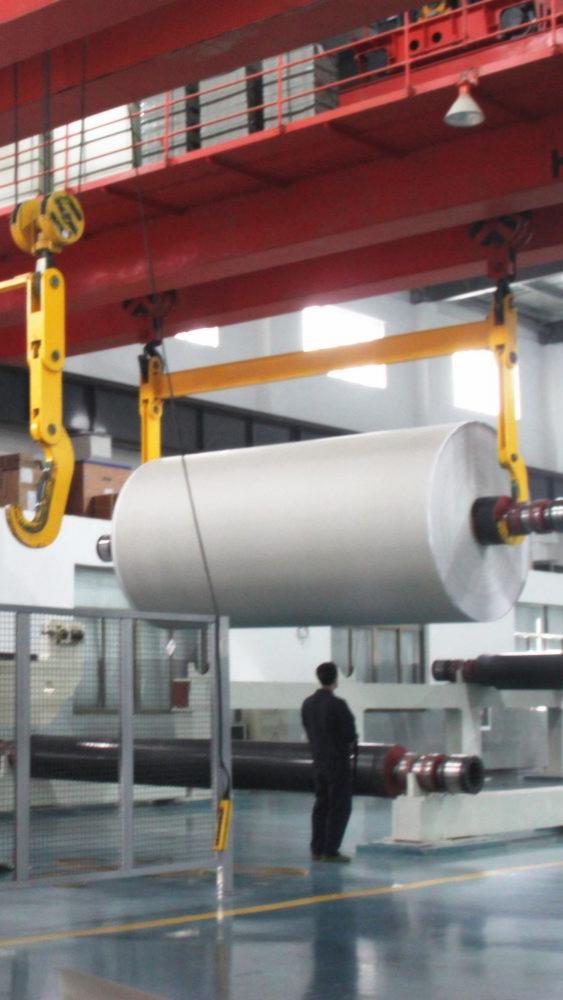
Converters can choose between roll stock for high-speed production lines or cut sheets for smaller, sheet-fed operations. For roll orders, confirm roll width, outer diameter, and core size to match your unwinder — mismatched core dimensions will stall production.
PE Coating Configuration
The PE coating is what turns plain paperboard into a liquid-holding cup. Coating specifications directly determine barrier performance, seal strength, and end-use suitability.
Coating Weight
Standard coating weights fall between 10–20 gsm, customizable to your application:
- Lighter coatings work for standard beverages and lower-cost projects.
- Heavier coatings build a stronger barrier for hot beverages, oily foods, and long storage requirements.
Single-Side vs. Double-Side Coating
- Single-side PE coating: Applied only to the inside face of the cup, where liquid contacts the paper. Suitable for many standard beverage cups.
- Double-side PE coating: Adds a second coating layer to the outside face. Improves external moisture/condensation resistance, surface protection, and grease resistance for cold drinks, humid environments, or oily food applications.
Resin Type & Sealing Compatibility
Low-density PE is the standard resin, offering flexibility and reliable heat-seal performance. Specialty resin grades are available for higher toughness or specific sealing processes. Always state your sealing method (heat sealing or ultrasonic sealing) in your spec sheet, as each places different demands on the coating layer.
Alternative: Aqueous Coating
For brands prioritizing non-PE surfaces or specialized printing requirements, water-based aqueous coating is a viable alternative. The table below compares the two options:
| Factor | PE Coating | Aqueous Coating |
| Typical coating weight | 10–20 gsm | Supplier-specific |
| Waterproof barrier | Strong | Good with optimized barrier formulation |
| Sealing compatibility | Heat and ultrasonic sealing | Line-dependent |
| Best for | General hot/cold beverages, high barrier needs | Brands prioritizing non-PE surfaces or special print requirements |
Neither option is universally superior. PE delivers robust waterproof performance and broad sealing compatibility for standard beverage use, while aqueous coating fits specific sustainability or printing workflows.
Food Safety and Regulatory Compliance for PE Coated Cup Stock Paper
Food-contact packaging requires formal compliance documentation for the destination market. Treat these requirements as core material specifications, not afterthoughts.
Regional Certifications
Required documentation varies by market:
- United States: FDA food-contact compliance documentation
- European Union: EU 10/2011 compliance, plus applicable national standards such as Germany’s LFGB
Always request independent third-party test reports from accredited labs to verify compliance. For brands marketing recyclability or repulpability, also ask for supporting documentation, especially for aqueous or alternative coating grades.
Barrier & Migration Testing
Migration testing confirms no harmful substances transfer from the coating into the beverage or food. Specify your actual use conditions (hot fill, cold storage, expected shelf life) so tests are run under realistic parameters. Clear compliance records prevent customs delays and support audit readiness.
Matching Material to Your Cup Production Line
Even a technically correct spec sheet can underperform if it is not tuned to your specific equipment. Sharing production line details with your supplier allows them to fine-tune the material for optimal performance:
- Cup machine model
- Target running speed (e.g., 120–240 cups per minute)
- Sealing method (heat or ultrasonic)
Suppliers can adjust base paper stiffness, surface smoothness, and coating properties to match your line. This reduces scrap rates, minimizes startup waste, and helps you reach full production speed faster.
FAQ
What grammage is best for standard hot coffee cups?
Grammage is selected by cup size and stiffness requirements. Sure Paper’s 190–320 gsm range covers everything from small tasting cups to large hot cups and soup bowls. Always specify both grammage and caliper, as weight alone does not guarantee required stiffness.
How do I choose the right PE coating weight?
Coating weight depends on your product fill and storage conditions. A 10–20 gsm coating works for many standard applications. Heavier coatings are used for oily foods or long storage requirements. Share your beverage or food type with your supplier for a tailored recommendation.
Can suppliers tune the material to fit my specific cup machine?
Yes. Sharing your machine model, line speed (e.g., 120–240 cups per minute), and sealing method allows suppliers to adjust sheet stiffness, smoothness, and coating properties for optimal line performance.
What order terms should I confirm before placing a volume order?
Confirm minimum order quantity, sample lead time, and production lead time. Sure Paper offers a 5-ton MOQ, free 3–7 day samples, and 25–30 day production after deposit. Always run a trial first to validate real-world machine performance.
When should I choose aqueous coating instead of PE?
Aqueous coating is ideal for brands requiring a non-PE surface or specialized printing processes. PE coating delivers more robust waterproof performance for general beverage use. Both can meet equivalent barrier targets when specified correctly, so compare based on real production output, not just price.