
For food wrapping converters, paper reel dimensions are directly connected to machine compatibility, material yield and production efficiency. A reel may meet the required paper grade and basis weight yet still cause problems if its width, core, outer diameter or winding direction does not match the converting line.
Before placing an order, buyers should confirm the complete reel specification—not just the nominal width. This guide explains the main dimensions and converting details to review with a paper supplier.
Key takeaways
- Select reel width according to the web path, finished slit widths and realistic trim allowance.
- Confirm that the core inner diameter and core construction are compatible with the unwind shaft or chuck system.
- Check both the maximum outer diameter and the maximum reel weight permitted by the equipment.
- Specify winding direction and coated-side orientation where these affect printing, sealing or converting.
- Agree on slit-width tolerances, edge quality and rewind requirements before production.
1. Reel width: match the web path and trim layout
Reel width determines how the paper fits the machine and how much material may be removed during slitting or edge trimming. The correct width depends on the web path, the number and width of finished rolls, the slitting arrangement and the converter’s tolerance requirements.
Standard and custom reel widths
| Width option | Potential advantages | Typical consideration |
| Standard width | May be available from stock or fit established production schedules. | Confirm that it matches the web path and finished-width layout; a standard width is not automatically the most efficient option. |
| Custom width | Can be tailored to a particular machine or slitting plan and may reduce unnecessary trim. | Check production lead time, minimum order quantity and achievable tolerance with the supplier. |
The target width should be calculated from the finished slit widths plus the required trim and any allowance specified by the slitting setup. For example, an 88-inch master reel can theoretically be allocated into four 22-inch finished widths before accounting for blade kerf and edge trim. Actual yield depends on the slitter configuration, knife arrangement and required tolerances.
Width tolerance and edge quality
A nominal width alone is not a complete specification. Confirm the acceptable width tolerance and how it will be measured. Clean, straight edges help the web run consistently, while damaged or uneven edges may contribute to web breaks, dust or tracking problems. If edge condition is critical, define the acceptance standard with the supplier.
2. Paper core specifications: inner diameter and strength
The paper core supports the reel and provides the mounting interface for the unwind equipment. Core selection should be based on the actual shaft or chuck system, reel dimensions, load and operating conditions.
Core inner diameter (ID)
Common core inner diameters include 3 inches and 6 inches, although other sizes may be available. The core ID must be compatible with the unwind shaft or chuck, taking dimensional tolerances and mounting requirements into account.
- A core that is too loose may slip or run off-centre, affecting web tension and tracking.
- A core that is too tight or dimensionally incompatible may be difficult or impossible to mount.
- Adapters may be an option for some equipment, but compatibility should be checked rather than assumed.
Measure or confirm the shaft and chuck specifications with the equipment supplier. Then agree on the nominal core ID and its tolerance with the paper supplier.
Core strength and construction
Core wall thickness, material and construction influence load capacity and resistance to crushing or deformation. The required core strength depends on reel weight, winding tension, handling method and the type of shaft or chuck. Share the expected reel weight and equipment details so the supplier can recommend a suitable core construction.
3. Outer diameter and reel weight: check equipment capacity
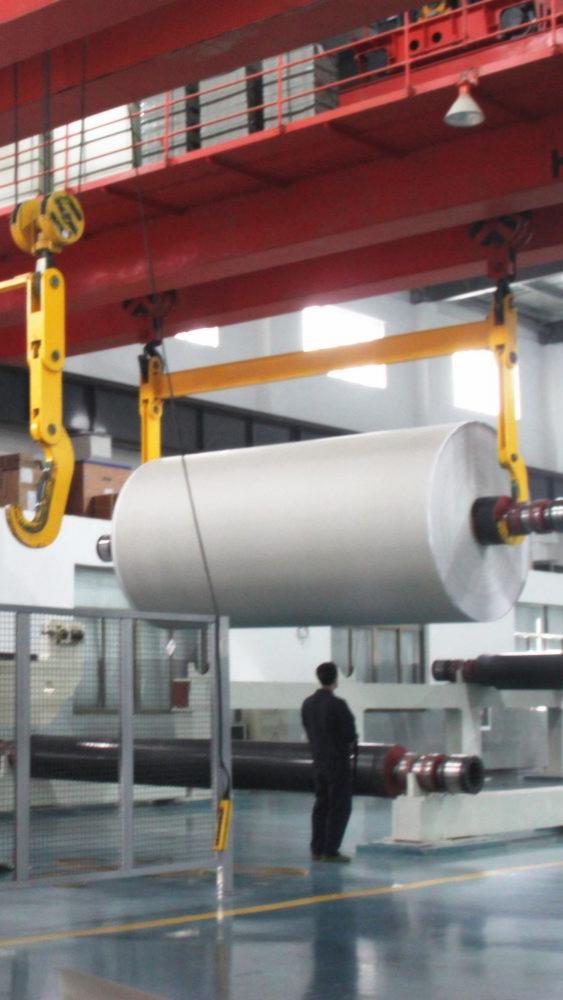
Outer diameter (OD) determines how much paper can be wound onto a reel of a given width and construction. A larger reel may reduce roll-change frequency, but it must fit the unwind stand and remain within the equipment’s weight and handling limits.
Outer diameter and production run length
- A larger OD can carry more paper and may reduce the number of roll changes.
- The reel must fit within the unwind stand’s maximum diameter, including any clearance needed for safe loading and operation.
- The equipment’s maximum load, shaft capacity and lifting arrangements may limit reel size even when the OD physically fits.
Confirm the maximum permitted OD and the maximum reel weight separately. Do not assume that a machine capable of accepting a particular diameter can also safely support the corresponding reel weight.
What affects reel weight?
Reel weight is influenced by paper basis weight, paper thickness, reel width, outer diameter, core dimensions and the way the reel is wound. Coatings and other material layers may also contribute. The core itself adds weight to the gross reel weight.
When calculating or confirming reel weight, clarify whether the figure requested is net paper weight or gross reel weight including the core and packaging. Ask the supplier to confirm the estimated or actual weight for the specified construction and dimensions.
4. Winding direction and coated-side orientation
Winding direction describes how the paper is wound onto the core and which side faces outward or inward. For coated or printed paper, this can determine how the material unwinds and which surface is presented to the next process.
If one side has a functional coating, print treatment or other surface requirement, confirm the required orientation in a clear, shared format. Words such as “inside” and “outside” can be interpreted differently unless they are tied to a drawing, sample or agreed winding diagram.
Why winding direction matters
- The wrong orientation may present the coated or printable side incorrectly to the next operation.
- A change in unwind direction can affect web threading and the sequence of downstream processes.
- Curl, roll set and web behaviour may influence handling and tracking, depending on the paper and converting conditions.
Best practice
Confirm the winding direction and surface orientation on an approved sample or winding diagram before production. Include the agreed orientation on the purchase specification and reel labels. If the paper has a functional coating, identify the coated side explicitly.
5. Slitting and rewinding requirements
Slitting converts a wider master reel into narrower finished reels. The quality of the slit and rewind affects how the reels run on the customer’s equipment. A complete order specification should define more than the final width.
Slitting details to confirm
- Finished slit widths and tolerances: list every required width and the acceptable variation.
- Trim allowance: define edge trim and any material allowance required by the slitting layout.
- Edge quality: state requirements for clean, even edges and acceptable levels of dust or damage.
- Rewind tension and roll hardness: agree on requirements suitable for the paper grade, reel dimensions and customer’s unwind system.
- Core dimensions: confirm core ID, wall thickness or construction, and any relevant tolerance.
- Winding direction: provide a diagram or sample where orientation is important.
Rewind tension should be suitable for the paper grade and reel dimensions. A roll that is wound too loosely or too tightly may create handling or unwinding problems. Where specific roll hardness or tension values are required, agree on the measurement method and acceptance range with the supplier.
6. Quality checks before shipment
A clear inspection plan helps ensure that the delivered reels match the purchase specification. The checks should be agreed according to the product, order and customer’s quality requirements.
- Verify reel width and the agreed tolerance.
- Check core ID and core condition.
- Measure or record outer diameter and reel weight where specified.
- Confirm winding direction and coated-side orientation.
- Inspect roll edges, surface condition, telescoping, damage and packaging.
- Review batch identification and the agreed inspection or quality records.
For food-contact paper, request the applicable product-specific food-contact documentation separately. Reel dimensional inspection does not, by itself, establish food-contact compliance.
7. Information to include in a paper reel purchase specification
| Specification item | What to state |
| Paper grade | Paper type, basis weight, coating or treatment, and any relevant performance requirements. |
| Reel width | Nominal width, tolerance and finished slit-width layout. |
| Core | Core inner diameter, tolerance, construction and any shaft/chuck compatibility requirements. |
| Outer diameter | Target or maximum OD and any required clearance. |
| Weight | Target net paper weight or gross reel weight, clearly identified. |
| Winding | Unwind direction, coated-side orientation and reference diagram if needed. |
| Slitting / rewinding | Trim allowance, edge quality, rewind tension or hardness requirements. |
| Packaging and documents | Packaging method, reel labels, batch records and any applicable compliance documents. |
Frequently asked questions
What reel width should a food wrapping converter specify?
Start with the machine’s web path and the finished slit widths. Add the required trim and slitting allowance, then confirm the layout and tolerance with the supplier.
Which core inner diameter should I choose?
Choose a core ID compatible with the unwind shaft or chuck system. Confirm the actual shaft dimensions, mounting method and tolerances rather than relying only on a nominal size.
How does outer diameter affect production?
A larger OD generally carries more paper and may reduce roll changes. It must still comply with the unwind stand’s diameter, weight and handling limits.
Does winding direction matter?
Yes, especially when the paper has a coated or printable side that must face a particular direction during converting. Confirm orientation with a diagram or approved sample.
What slitting details should I confirm with my supplier?
Specify finished widths and tolerances, trim allowance, edge quality, rewind requirements, core dimensions and winding direction.
Should I specify net or gross reel weight?
State which one you need. Net weight refers to the paper, while gross reel weight includes the core and may also include packaging, depending on the agreed definition.
Work with Sure Paper Pak on your paper reel requirements
The right reel specification helps converters reduce avoidable setup issues, manage trim and run their equipment more consistently. When requesting a quotation from Sure Paper Pak, share your paper grade, target width, core ID, maximum OD, weight requirements, winding direction and slitting details.
The team can review the requested dimensions and converting requirements with you so that the proposed reel specification is aligned with your equipment and application. Contact Sure Paper Pak to discuss custom paper reel requirements or request a quotation.