Choosing the right greaseproof paper GSM helps buyers balance flexibility, mechanical strength, converting performance, and material cost. However, GSM alone does not determine whether a paper will resist oil, moisture, or heat. These barrier properties must be specified and tested separately.
For most food-wrapping applications, the best result comes from matching the paper weight to the packaging format while also confirming grease resistance under the actual food, temperature, contact time, and handling conditions.
Key Takeaways
- GSM means grams per square metre and indicates the basis weight of the paper.
- Within the same paper grade, a higher GSM usually provides more body and stiffness, but it does not automatically guarantee greater tear strength.
- GSM does not directly determine paper thickness or grease resistance.
- Grease resistance should be specified separately using an appropriate laboratory or application-specific test.
- For many food-wrapping applications, 30–50 GSM is a practical starting range, subject to the paper grade and packaging requirements.
- Samples should be tested with the actual food and converted packaging format before bulk purchasing.
Understanding Greaseproof Paper GSM
What Does GSM Mean?
GSM stands for grams per square metre and measures how much one square metre of paper weighs. It is a basis-weight specification rather than a direct measurement of thickness, strength, or barrier performance.
Buyers use GSM to compare the general body, flexibility, and handling characteristics of similar greaseproof paper grades. A lower-GSM sheet is usually lighter and easier to fold, while a higher-GSM sheet normally has more body and stiffness.
How GSM Relates to Strength and Flexibility
Within the same paper grade and manufacturing construction, increasing GSM generally produces a heavier sheet with greater body and stiffness. It may also improve resistance to damage during wrapping and handling.
However, actual mechanical performance also depends on fiber composition, refining, paper density, machine direction, moisture, and the manufacturing process. Buyers should compare relevant strength data or test samples instead of treating GSM as a complete measure of paper strength.
GSM Is Not the Same as Paper Thickness
Two papers with the same GSM can have different thicknesses because paper density and calendering conditions vary. Likewise, a paper with a higher GSM is not always proportionally thicker. If thickness is important for printing, folding, feeding, or converting equipment, buyers should specify both GSM and caliper.
GSM and Grease Resistance Should Be Specified Separately
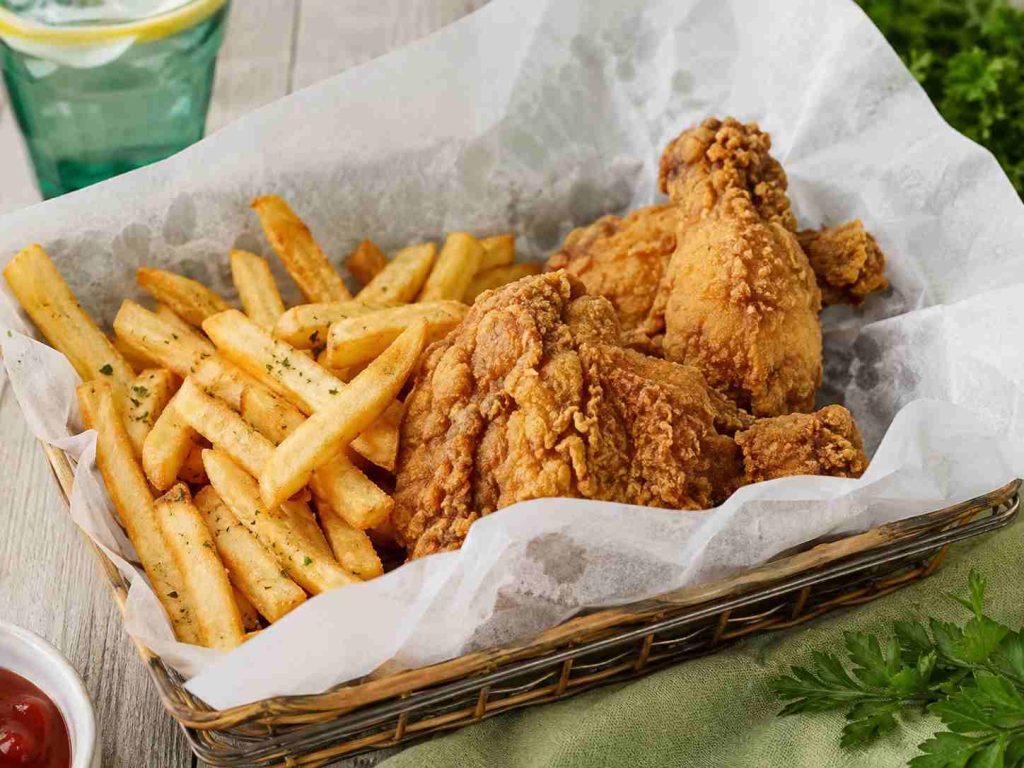
GSM mainly describes the mass of paper per unit area. Grease resistance describes how effectively the sheet prevents oils and fats from penetrating or wicking through the paper. These are two different performance characteristics.
For example, a 40 GSM paper with a suitable grease-resistant fiber structure or barrier treatment may perform better with oily food than a 50 GSM paper with lower grease resistance. Selecting a heavier paper cannot compensate for an unsuitable oil-and-grease barrier.
Depending on the paper construction and the buyer’s requirements, grease resistance may be evaluated using a KIT test, a permeability test such as ISO 16532-1, or an agreed application-specific method. The test method and acceptance criteria should be confirmed with the supplier before ordering.
Comparing Common Greaseproof Paper GSM Options
The following ranges are practical starting points for common 30–50 GSM greaseproof paper applications. They are not universal industry specifications, and availability depends on the paper grade and manufacturing capability.
| GSM Range | Typical Handling | Common Starting Applications | Other Properties to Confirm |
|---|---|---|---|
| Approx. 30–35 GSM | Lightweight, highly flexible, and easy to fold | Bakery wraps, interleaving sheets, and lightweight food liners | Grease resistance, food-contact compliance, dimensions, and tear performance |
| Approx. 38–45 GSM | Balanced flexibility, body, and routine handling strength | Burgers, sandwiches, wraps, pastries, and tray liners | Grease resistance, wet strength, printability, fold performance, and food temperature |
| Around 50 GSM | More body and generally greater stiffness | Larger sheets, demanding handling, or formats requiring additional mechanical support | Flexibility, crease performance, grease resistance, and compatibility with converting equipment |
Important: These ranges describe general handling characteristics, not guaranteed grease-barrier levels. Final performance must be confirmed using the actual paper grade and application conditions.
Matching GSM to Food Packaging Applications
Lightweight Paper for Bakery and Interleaving Uses
Greaseproof paper around 30–35 GSM is often selected where flexibility and low material weight are more important than high mechanical support. Typical starting applications include wrapping relatively light bakery products, separating individual food items, and lining lightweight packaging.
The food’s fat content still matters. Cookies, pastries, or baked goods containing butter may require greater grease resistance even when a lightweight GSM is suitable for the packaging format.
Medium-Weight Paper for Burgers, Sandwiches, and General Food Wrapping
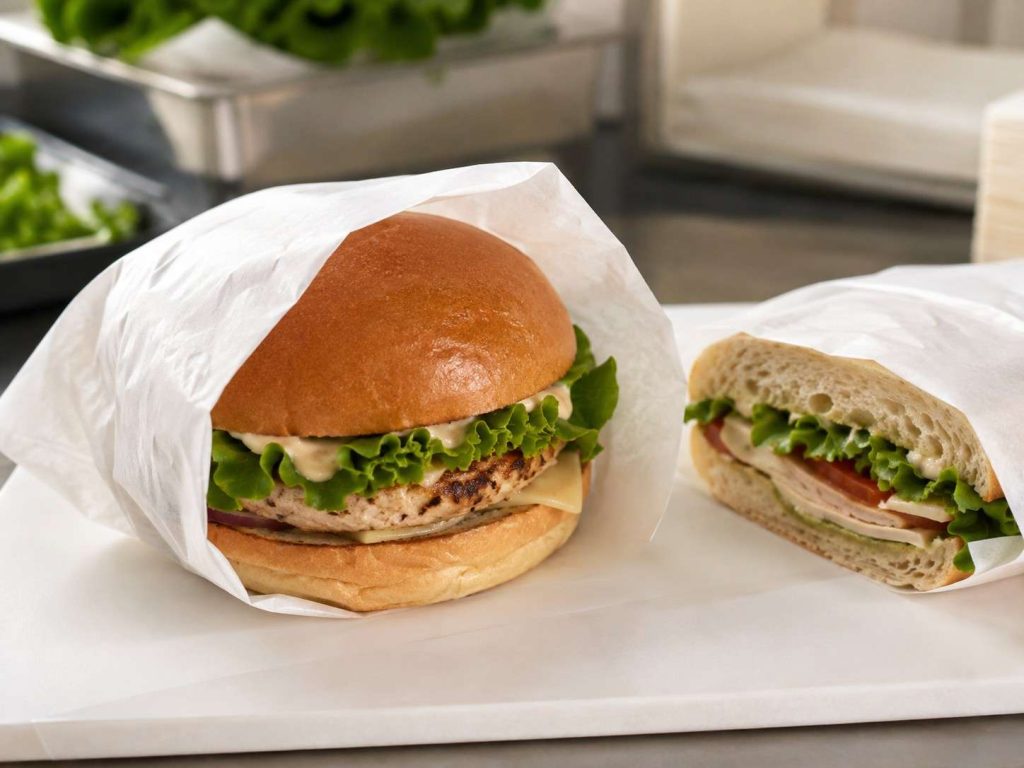
For many burgers, sandwiches, wraps, pastries, and foodservice liners, approximately 38–45 GSM provides a practical balance of flexibility, body, and routine handling strength. Paper in this range generally folds easily around food while offering more support than a lightweight sheet.
A 30–40 GSM paper may also be suitable for many burger and sandwich applications. The final choice depends on sheet size, filling weight, sauces, food temperature, wrapping method, and the required grease resistance.
Higher GSM for Additional Mechanical Support
Paper around 50 GSM may be considered for larger sheets, heavier packaging formats, tray liners, or applications that experience greater stress during handling and transport. The extra body can help the paper maintain its shape, but it may also make tight folds more difficult.
Heavily fried or oily food does not automatically require a higher GSM. In these applications, grease resistance, contact time, temperature, moisture, and fold performance are normally more important than paper weight alone.
How to Select the Best GSM for Your Application
1. Start with the Packaging Format
Consider whether the paper will be used as a flat liner, interleaving sheet, open wrap, tightly folded wrapper, pouch, or converted bag. A flat tray liner and a tightly folded burger wrap may need different flexibility even when they contact similar foods.
2. Evaluate the Food and Contact Conditions
Confirm the type of food, oil and moisture content, serving temperature, expected contact time, and whether the package will be transported, refrigerated, or reheated. These conditions help determine the necessary barrier and mechanical performance.
3. Separate Mechanical and Barrier Requirements
Specify the required GSM for handling and converting, then define grease resistance, moisture resistance, wet strength, and heat performance separately. Avoid using a higher GSM as a substitute for an appropriate barrier specification.
4. Consider Printing and Converting
Custom printing, folding, scoring, die-cutting, and bag making can affect the final performance. Creases and folds may create stress points, while printing and converting equipment may require a specific range of thickness, stiffness, smoothness, or moisture content.
5. Confirm Food-Contact Compliance
GSM does not determine whether a paper is suitable for direct food contact. Buyers should request the relevant food-contact compliance documentation for the intended market and verify that inks, coatings, and other converting materials are also suitable for the application.
Test the Paper Before Bulk Ordering
Laboratory specifications are useful, but real-use testing is essential. Test the paper with the actual food, packaging dimensions, wrapping method, temperature, and expected holding time.
During testing, check whether the paper:
- folds and wraps without cracking or excessive spring-back;
- resists tearing during packing, transport, and consumption;
- maintains sufficient shape and support for the product;
- prevents unacceptable oil or grease penetration for the required contact time;
- performs adequately when exposed to moisture and food temperature;
- runs correctly through printing or converting equipment; and
- maintains barrier performance along folds, creases, and printed areas.
Information to Provide When Requesting a Quotation
Providing complete application details helps the supplier recommend a more suitable grade and avoid unnecessary sampling rounds. Buyers should normally provide:
- the intended food and packaging application;
- the required GSM or the specification of an existing sample;
- the required grease-resistance level or test method, if available;
- sheet dimensions, roll width, or converted packaging size;
- printing colors and artwork requirements;
- estimated order quantity;
- food temperature and expected contact time;
- food-contact compliance requirements for the destination market.
FAQ
What GSM is best for greaseproof paper?
There is no single best GSM for every application. A practical starting range for many food wraps and liners is 30–50 GSM. The final selection depends on the packaging format, food weight, required flexibility, converting process, and barrier performance.
What GSM is suitable for burgers and sandwiches?
Approximately 30–40 GSM is a common starting range for many burger and sandwich wrappers. Larger portions, heavier fillings, larger sheet sizes, or demanding handling may justify a higher GSM, but grease resistance should always be specified separately.
Does higher GSM mean stronger greaseproof paper?
Often, but not always. Within the same paper grade, increasing GSM usually provides more body and stiffness and may improve handling strength. Actual tensile, tear, wet-strength, and fold performance also depend on the fiber structure and manufacturing process.
Does higher GSM mean better grease resistance?
No. GSM measures basis weight, while grease resistance is a separate barrier property. A lighter paper with an appropriate grease-resistant structure or treatment may outperform a heavier paper with lower grease resistance.
Is GSM the same as paper thickness?
No. GSM measures weight per unit area, while thickness is measured separately as caliper. Papers with the same GSM can have different thicknesses because their density and calendering conditions differ.
Can greaseproof paper be customized?
Yes. Depending on the supplier and paper grade, greaseproof paper can be customized by GSM, color, sheet size, roll width, printing, grease-resistance performance, and packaging format.