Which do you need for your paper cups?
Single PE coated cupstock has a polyethylene barrier on one side of the paperboard, normally facing the beverage. Double PE coated cupstock has PE on both sides, adding protection against moisture on the cup exterior. The right choice depends on beverage temperature, condensation, holding time and cup-making conditions.
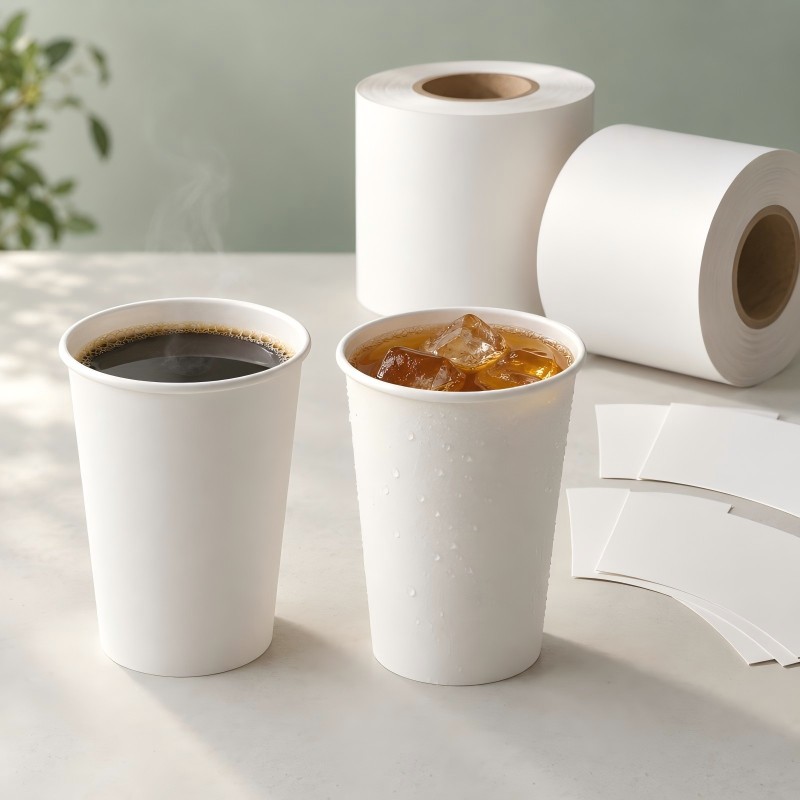
Single-side PE coated cupstock (1PE) is commonly used for hot beverage cups. Double-side PE coated cupstock (2PE) is often preferred for iced drinks where external condensation is expected. Neither specification alone guarantees a leak-free finished cup; the paperboard, coating quality and cup-forming process must work together.
Key Takeaways
- Choose by actual moisture exposure, rather than assuming more coating is always better.
- For cold drinks, assess beverage temperature, ambient humidity and holding time before choosing single PE.
- Double PE can be printed, but its outer surface treatment and ink compatibility need checking.
- Specify base paper GSM and the PE coating weight on each side separately.
Single and Double PE Compared
| Specification | Single PE coated cupstock | Double PE coated cupstock |
| Coating structure | PE on the beverage-facing side | PE on inner and outer surfaces |
| Exterior protection | No outer PE barrier | Outer PE helps resist external moisture |
| Typical use | Hot drinks; selected low-condensation cold applications after testing | Iced drinks and applications with external condensation |
| Printing | Print on the uncoated paper surface; confirm grade and ink suitability | Confirm surface treatment, ink adhesion and printing process |
| Cost | Usually lower for comparable base paper and specifications | Usually higher because of the additional coating |
When Single PE Coating Is Enough
Standard Hot Beverages
For hot coffee and tea, the main liquid barrier is normally required on the inside of the cup. Single PE coated cupstock is therefore a common starting point. Select the base paper strength and coating specification for the cup size, serving temperature and intended holding time, then confirm performance with finished-cup tests.
The uncoated outer face provides a paper surface for branding. Print quality still depends on paperboard smoothness, the ink system and the printing process. Cup insulation is a separate design consideration from the number of PE-coated sides.
Cold Drinks With Limited Condensation
Single PE may work for cold drinks when external condensation is limited and the serving period is short. This should be verified under the intended conditions rather than assumed from the amount of ice. A chilled drink without ice can still cause condensation when its cup surface is below the surrounding air’s dew point.
Test the finished cup using the planned beverage temperature, ambient temperature, humidity and holding time. If the exterior softens or the cup loses acceptable handling strength, consider double PE and repeat the trial.
When to Choose Double PE Coating
Iced Drinks and External Condensation
Iced water, soft drinks and other chilled beverages can cause condensation on the cup exterior. An outer PE layer helps reduce moisture absorption through the coated surface and the associated softening of the paperboard. This makes double PE a practical option for applications where external condensation is expected.
Other External Moisture Exposure
Longer serving periods, humid outdoor conditions and occasional contact with wet surfaces can increase the need for exterior moisture resistance. Assess these factors together: a long holding time alone does not automatically require double PE.
Double PE does not make every part of the finished cup waterproof. Cut edges, seams and the bottom construction still matter. Both single and double PE cupstock should be stored dry and protected according to the supplier’s handling instructions.
Printing and Cup Forming
A PE-coated exterior can be printed when its surface condition and ink system are suitable. Ask whether the outer PE surface has been treated for printing, such as by corona treatment, and confirm ink adhesion in a trial. Do not assume that settings used for uncoated paper will transfer unchanged to PE.
Confirm compatibility with the cup-forming equipment, including sealing method, temperature where applicable, pressure, dwell time and production speed. Test the cup body and bottom together before approving a material for routine production.
How to Specify Cupstock for Purchasing
A clear specification helps suppliers compare like-for-like materials and reduces misunderstandings during quotation and sampling. Send the following details with your inquiry.
| Item | What to specify |
| Application | Hot or cold beverage, cup capacity, serving temperature and expected holding time. |
| Base paper GSM | State the paperboard weight before coating; identify total coated GSM separately. |
| PE coating | Single or double PE, with inner and outer coating weights listed separately in g/m². |
| Supply format | Reels, sheets or cup fans; include dimensions or a cup-fan drawing. |
| Reel requirements | Width, core inner diameter, maximum outer diameter and winding requirements. |
| Printing and forming | Printing process, ink system, equipment and trial requirements. |
| Order details | Quantity, delivery destination and any required product documentation. |
For double PE cupstock, the inner and outer coating weights do not have to be identical. Avoid an ambiguous description such as “240 + 30 PE” without explaining whether 30 g/m² is on one side or shared between two sides.
Use a clear format: base paper ___ g/m² + inner PE ___ g/m² + outer PE ___ g/m². Ask the supplier to confirm the coated total weight and applicable tolerances.
What to Check in a Production Trial
- Run the proposed material on your actual printing and cup-forming equipment. Check feeding, forming, side seams and bottom seals.
- Fill finished cups at the intended beverage temperature and inspect for leaks over the planned holding period.
- For cold cups, reproduce expected humidity and condensation conditions. Check exterior softening and handling strength.
- Check print adhesion and appearance, including after expected moisture exposure.
- Record the material specification, machine settings, test conditions and acceptance criteria so repeat orders can be assessed consistently.
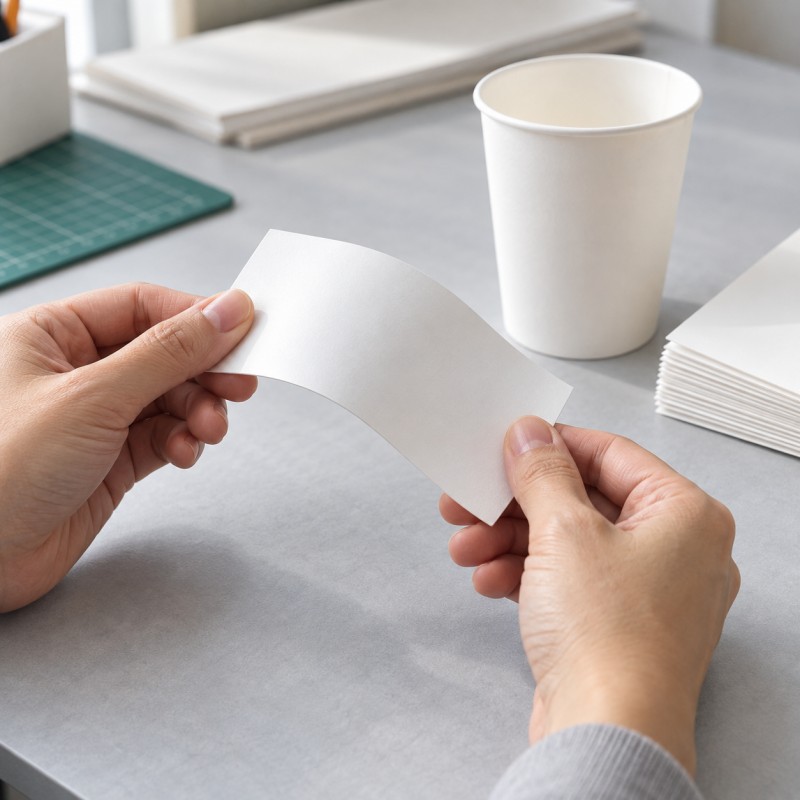
Approve the complete cup construction, including the bottom material. An A4 sheet sample can help assess appearance and feel, but a production trial is needed to evaluate forming and finished-cup performance.
Frequently Asked Questions
Does double PE coating mean a double-wall cup?
No. Double PE describes coating on both sides of a paperboard sheet. Double-wall describes a cup construction with an additional outer wall. They address different design requirements; an extra PE layer should not be treated as a substitute for an insulating wall.
Can double PE coated cupstock be printed?
Yes, with a suitable printing surface and ink system. Confirm the outer PE surface treatment and test ink adhesion using your intended printing process.
Is double PE always necessary for cold drinks?
No. Some applications with limited condensation may use single PE after testing. For iced drinks or longer exposure to external condensation, double PE is often the more suitable starting point.
What PE coating weight should I choose?
There is no universal coating weight for every cup. Select the inner and outer coating specifications according to barrier needs, base paper and forming performance. Confirm the final choice through trials rather than choosing only by coating weight.
Does PE coating affect sealing and cup forming?
Yes. PE is commonly used as a heat-sealable barrier, and its coating properties affect sealing and converting. The suitable settings depend on the material and equipment. Confirm the side seam and bottom seal under actual production conditions.
Find the Right Cupstock for Your Cups
Sure Paper supplies PE coated cupstock in reels, sheets and cup fans. Share your cup capacity, hot or cold beverage application, preferred base paper GSM, coating requirements, dimensions and order quantity. We can review the specifications with you and discuss quotation and sample options.
Not sure whether to choose single or double PE? Explore our support for cup and food container manufacturers and send us your application details.