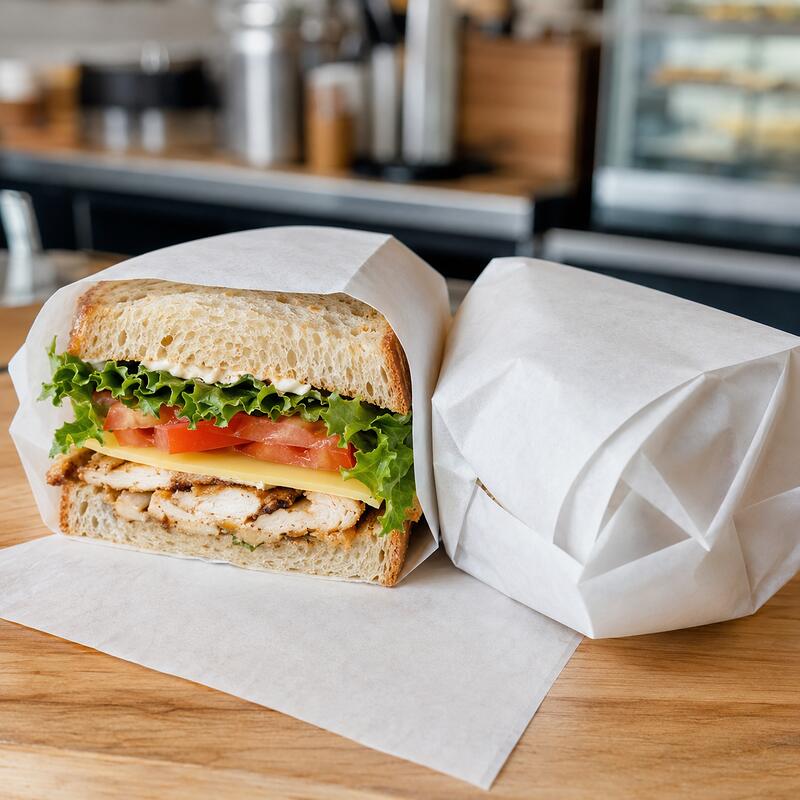
KIT level is a standardized metric for measuring the grease and oil resistance of paper packaging, measured using the TAPPI T 559 test method. For food packaging buyers, it provides a consistent way to evaluate how effectively greaseproof paper resists oil and grease penetration during food contact.
A KIT rating that is too low may result in grease stains and reduced packaging performance, while a rating that is unnecessarily high can increase material costs without providing meaningful benefits. The right KIT level balances grease resistance, packaging performance, and cost for the intended food application.
Key Takeaways
- KIT level measures grease resistance under the standardized TAPPI T 559 test.
- Higher KIT levels generally indicate stronger grease resistance.
- KIT 1–4 is suitable for low-grease and dry foods.
- KIT 5–8 is suitable for moderately greasy foods and general food packaging.
- KIT 9–12 is recommended for high-grease, fried, and oily foods.
What Is KIT Level?
KIT level is a standardized grease-resistance rating for paper and paperboard determined using the TAPPI T 559 test method. It provides a consistent way for paper manufacturers and packaging buyers to evaluate and compare the oil and grease barrier properties of greaseproof paper.
How the TAPPI T 559 KIT Test Works
The KIT test uses a series of 12 numbered test solutions with different penetration characteristics. Each solution is applied to the paper surface for a specified contact time and evaluated for signs of penetration or visible darkening.
A paper’s KIT level is the highest-numbered test solution it passes without visible penetration. The rating therefore provides a standardized numerical measure that can be used to compare greaseproof papers.
For example, if a paper passes KIT 6 but fails KIT 7, its reported rating is KIT 6.
Important: KIT level is specifically a measure of grease resistance under standardized test conditions. It is not a direct rating of heat resistance, moisture resistance, or overall food-packaging performance.
The Relationship Between KIT Level and Grease Resistance
The KIT number directly indicates the level of grease resistance demonstrated in the standardized test. In general, a higher KIT rating means the paper can resist more demanding grease-penetration conditions before showing visible penetration. For a greaseproof paper manufacturer, understanding KIT ratings is essential for developing paper products that meet the grease-resistance requirements of different food packaging applications.
| KIT Level | Relative Grease Resistance | Typical Performance |
|---|---|---|
| 1–4 | Lower | Suitable for light grease exposure and relatively dry foods |
| 5–8 | Moderate | Provides greater resistance for moderately greasy foods and general food packaging |
| 9–12 | Higher | Offers stronger resistance for high-fat, oily, or more demanding applications |
These ranges are general starting points rather than universal specifications. Buyers should confirm performance through application testing with the actual food, temperature, contact time and converted packaging format.
For example, KIT 8 provides a stronger grease barrier than KIT 4 under the standardized KIT test. As the KIT level increases, the paper generally demonstrates greater resistance to grease penetration.
However, a higher KIT level does not automatically mean the paper is suitable for every food application. Actual performance can also be affected by food temperature, oil content, grease viscosity, contact time, moisture, and packaging conditions. Therefore, the KIT level should be matched to the specific food application rather than simply choosing the highest available rating.
How to Choose the Right KIT Level for Your Food Packaging
Different foods require different levels of grease resistance from greaseproof paper. The right KIT specification depends on the type and amount of grease the paper needs to handle.
Low-Grease & Dry Bakery Foods
Recommended: KIT 1–4
Suitable applications include:
- Bread and dinner rolls
- Plain cookies and crackers
- Low-fat biscuits
- Dry bakery products
For these foods, greaseproof paper with a KIT level of 1–4 can provide sufficient grease resistance for basic food-contact applications without requiring a higher-performance grade.
Medium-Grease Fast Food & Deli Items
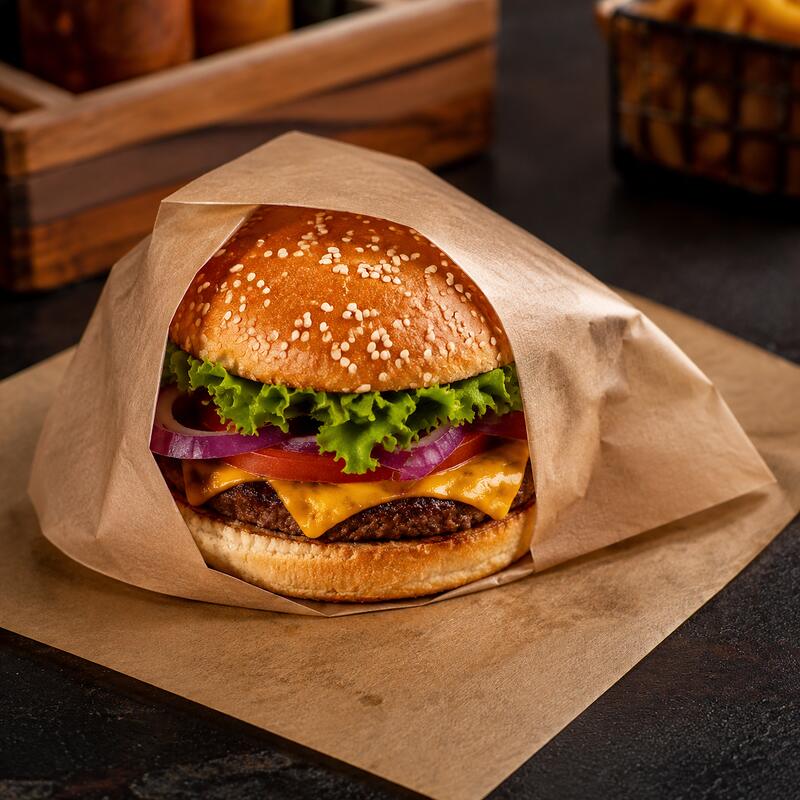
Recommended: KIT 5–8
Suitable applications include:
- Burgers and sandwiches
- Pizza slices
- Croissants and pastries
- Deli meats
- Bakery products with butter or cream fillings
For moderately greasy foods, KIT 5–8 greaseproof paper offers a stronger barrier and is suitable for common food wraps, liners, sheets, and bags.
Tip: A higher-KIT hamburger wrapping paper is suitable for burgers with fried patties, cheese, sauces, or oily fillings, helping improve grease resistance and reduce oil penetration during serving and takeaway.
High-Grease Fried & Takeaway Foods
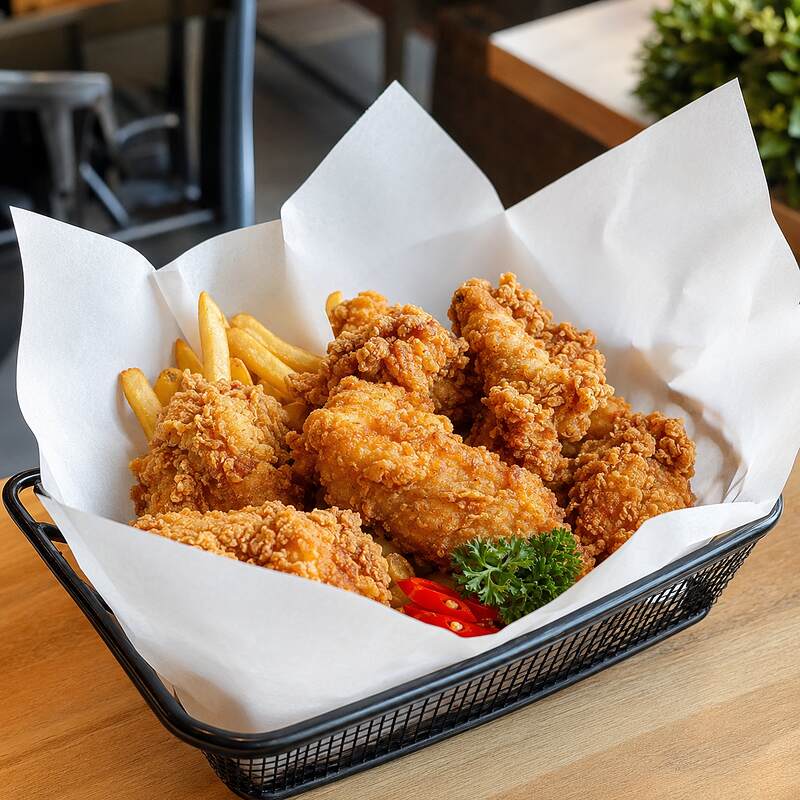
Recommended: KIT 9–12
Suitable applications include:
- Fried chicken
- French fries
- Fried snacks
- Bacon and other high-fat foods
- Greasy takeaway meals
For heavily oily foods, high-KIT greaseproof paper in the 9–12 range is generally the better choice. It provides stronger grease resistance for applications where substantial oil and fat contact is expected.
FAQ
What is the TAPPI T 559 test standard?
TAPPI T 559 is the global industry standard test method for measuring the grease resistance of paper. It uses 12 numbered test solutions of decreasing surface tension to determine the highest KIT level a paper can block without penetration.
How does KIT level affect packaging selection?
The KIT rating tells you how well a paper will prevent grease stains and oil seepage. Lower ratings work for dry baked goods and low-fat items, while higher ratings are required for hot fried foods. Choosing the correct level balances protection and cost for your specific application.
Does higher paper GSM guarantee better oil resistance?
No. Paper weight (GSM) measures sheet thickness and mass, not barrier performance. Grease resistance depends on fiber density, calendering and surface treatment. A lighter, highly calendered paper can have a higher KIT rating than a heavier, loosely constructed sheet.
Can paper be greaseproof without plastic coatings?
Yes. High-pressure roller calendering compresses wood pulp fibers into an extremely tight, dense structure that naturally blocks oil. This mechanical method produces plastic-free greaseproof paper available in KIT 3 through KIT 12, suitable for most food packaging uses.
How do folding and converting affect grease resistance?
Folding, scoring and die-cutting may create stress points that reduce grease resistance along crease lines. For bags, wraps and folded packaging, buyers should request testing on the converted sample or folded paper rather than relying only on the flat-sheet KIT result.
Does a high KIT rating mean the paper is PFAS-free?
No. KIT rating measures grease resistance, but it does not identify which treatment was used or confirm PFAS-free status. Buyers who require PFAS-free packaging should request a specific declaration or test report in addition to the KIT result.
Final Thoughts
KIT level is the most important specification to evaluate when selecting greaseproof paper for food packaging. Rooted in the standardized TAPPI T 559 test method, the 1–12 scale provides an objective, apples-to-apples way to compare barrier performance across different materials and suppliers.
The best approach is to match the KIT rating to your specific use case: account for food fat content, serving temperature, contact time and any converting processes, and build in a small safety margin for real-world conditions. This ensures reliable grease protection without overspending on unnecessary high-performance material.