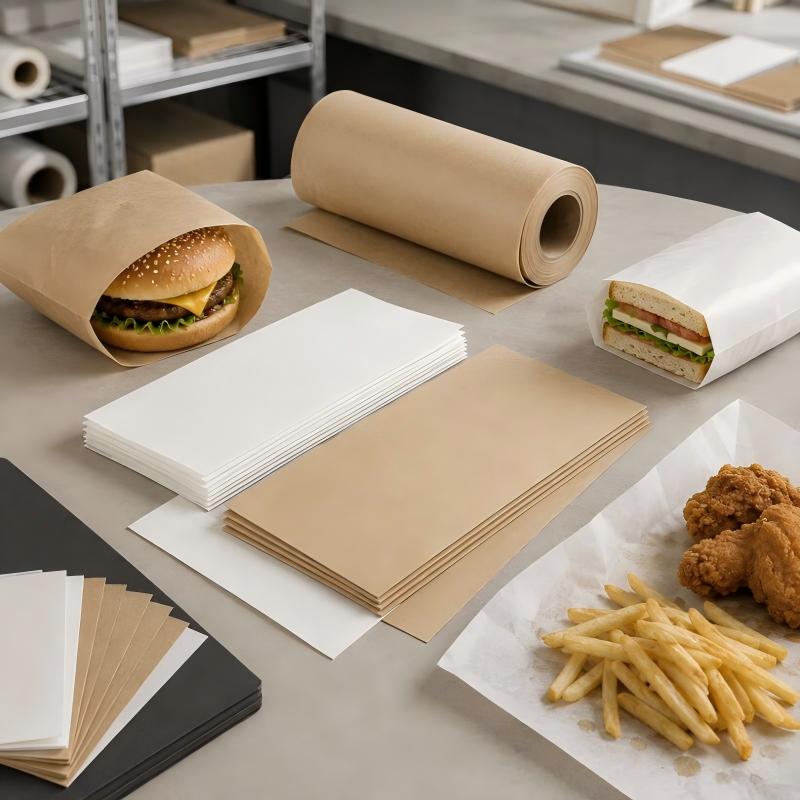
Choosing the right greaseproof paper for burgers, sandwiches, French fries, fried chicken, and baked goods requires more than comparing paper color or price. Buyers need to match mechanical strength, grease resistance, food temperature, contact time, packaging format, and converting requirements to the actual application.
GSM and KIT describe different properties. GSM indicates basis weight and affects the paper’s body and handling, while KIT measures grease resistance under standardized test conditions. A heavier paper is not automatically more grease resistant, and a higher KIT rating does not by itself confirm heat resistance, moisture resistance, or PFAS-free status.
Key Takeaways
- Use GSM to select the flexibility, body, and handling strength required by the packaging format.
- Use KIT to define grease resistance; do not treat GSM as a substitute for barrier performance.
- Match the specification to the food’s oil level, moisture, temperature, and expected holding time.
- Test the converted paper with the actual food, especially along folds, creases, and printed areas.
- Confirm dimensions, printing, food-contact documentation, MOQ, lead time, and packing before bulk production.
Quick Selection Matrix
The following ranges are practical starting points, not universal specifications. Final selection should be based on supplier test data and application testing with the actual food and packaging format.
| Food application | Starting GSM | Starting KIT | Main checks |
| Dry baked goods | 30–35 | 3–4 | Fat content, flexibility, presentation |
| Sandwiches and light burgers | 30–40 | 5–8 | Fillings, sauce, folding, short-term handling |
| Large or heavily sauced burgers | 38–45 | 7–9; consider 9–12 for demanding use | Sauce load, holding time, wrap integrity |
| French fries | 30–40 | 9–12 | Hot oil, ventilation, short takeaway period |
| Fried chicken and oily takeaway foods | 35–50 | 9–12 | Food weight, oil load, longer contact time |
| Butter-rich pastries | 30–40 | 5–8 | Fat content, display time, print quality |
Important: The KIT test commonly uses the TAPPI T 559 method and a 1–12 scale. KIT values are comparative laboratory results; they do not replace real-use testing or confirm PFAS-free status. Request a separate declaration or test report when PFAS-free packaging is required.
Choosing Greaseproof Paper by Food Application
Burgers and Cheeseburgers
For many burger wrapping paper applications, 30–40 GSM is a common starting range. Approximately 38–45 GSM may provide additional body for larger burgers, heavier fillings, or more demanding handling. Around 50 GSM should generally be considered only when a larger sheet or greater mechanical support is required.
KIT 5–8 may be suitable for standard burgers, while burgers with fried patties, cheese, mayonnaise, or heavy sauces may require KIT 7–9 or a higher grade. Check grease penetration at the folds and underneath the burger, where oil and sauce tend to accumulate.
Sandwiches
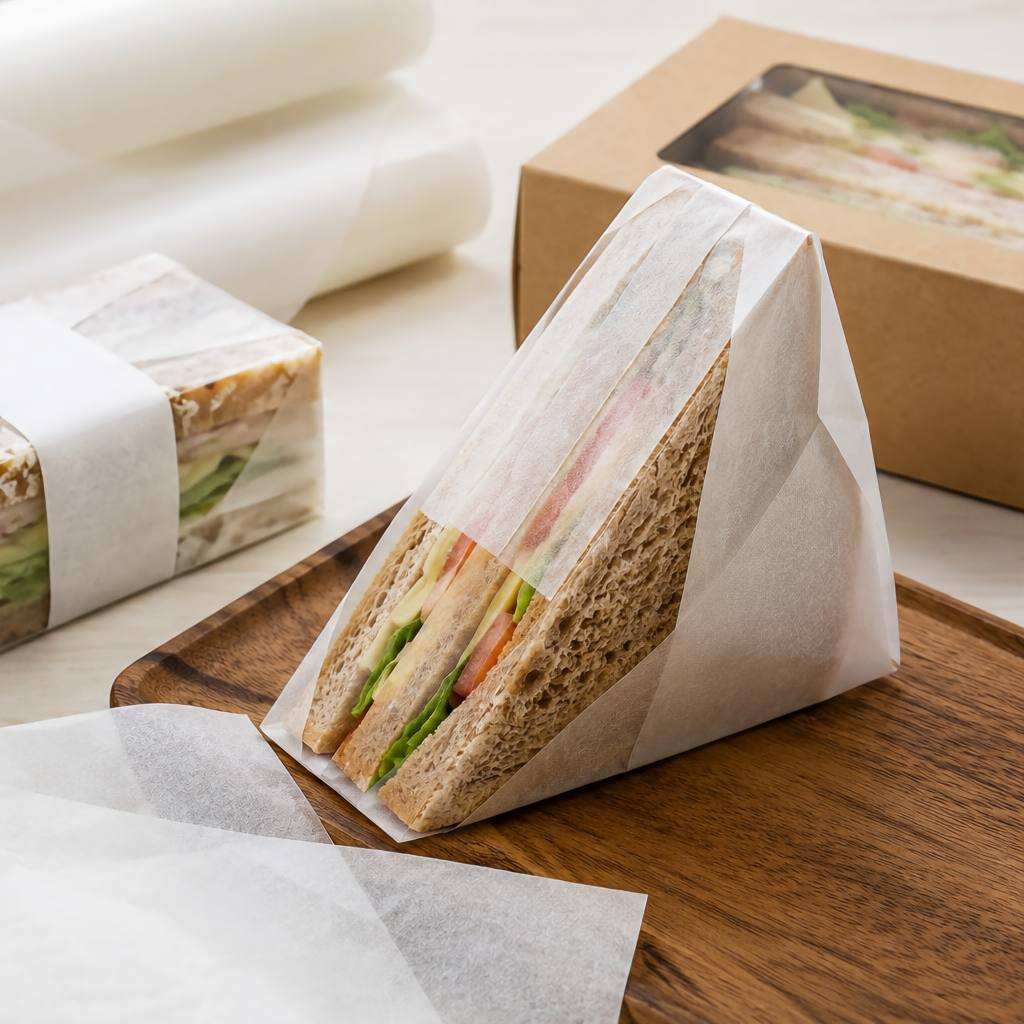
Sandwich wrapping paper should remain flexible enough to fold tightly without tearing or springing open. A 30–40 GSM paper is suitable for many standard sandwiches, while heavier or larger portions may benefit from approximately 38–45 GSM.
Dry sandwiches may need only moderate grease resistance, but cheese, deli meats, sauces, and oily fillings increase the barrier requirement. Moisture resistance and wet strength may also matter when the filling contains vegetables, pickles, or chilled ingredients.
French Fries
French fries are often served hot and release surface oil immediately after frying. Because contact time is usually shorter than for a wrapped meal, a lightweight 30–40 GSM paper may provide enough handling strength for cones, tray liners, or basket liners. However, the grease barrier should still be strong; KIT 9–12 is a more suitable starting range for hot, oily fries than a low-KIT grade.
Test the paper with freshly fried food, not cooled samples. Also check whether the packaging needs ventilation, because trapped steam can soften both the fries and the paper.
Fried Chicken and Oily Takeaway Foods
Fried chicken places greater demands on the packaging because of its food weight, surface oil, irregular shape, and longer holding time. Approximately 35–50 GSM may be considered depending on whether the paper is used as a flat liner, individual wrap, bucket liner, or converted bag. KIT 9–12 is a practical starting range for heavily oily applications.
Do not rely on a higher GSM alone. The paper must maintain grease resistance after folding, contact with bones or sharp edges, and exposure to heat and moisture during takeaway delivery.
Baked Goods and Pastries
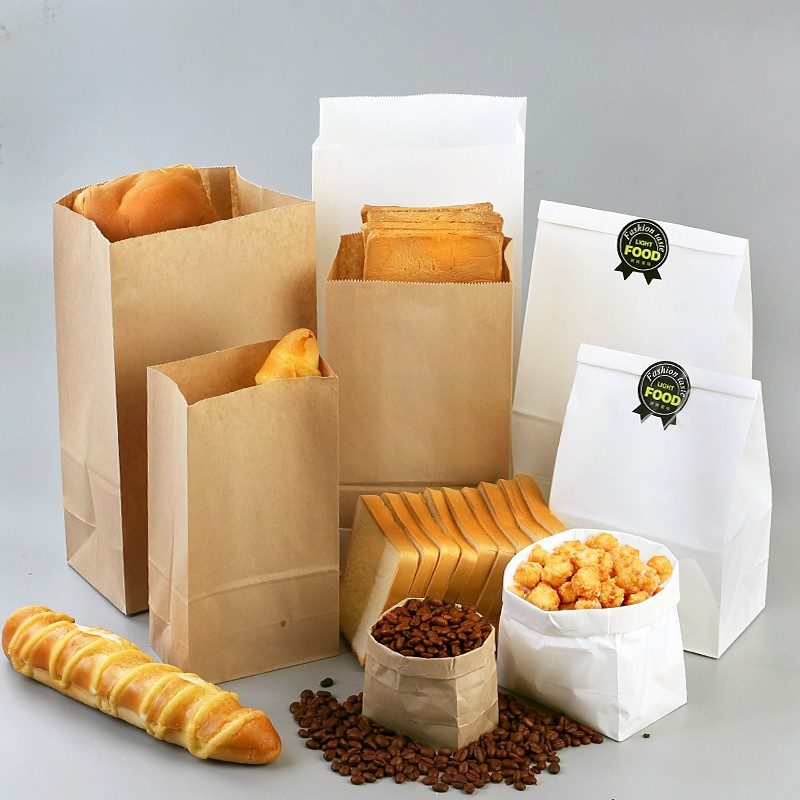
Bakery wrapping paper should balance flexibility, grease resistance, presentation, and printability. Dry bread, cookies, or low-fat products may perform well with 30–35 GSM and a lower KIT grade, while croissants, doughnuts, and butter-rich pastries may require KIT 5–8.
For retail bakery packaging, surface appearance and print clarity can be as important as barrier performance. White paper provides a clean printing surface, while brown paper supports a natural or rustic brand style.
How GSM and KIT Work Together
For a detailed explanation of basis weight, see How to Choose the Right Greaseproof Paper GSM for Food Packaging. Within the same paper grade and construction, higher GSM usually provides more body and stiffness, but it does not necessarily guarantee better tear strength or grease resistance.
For a detailed explanation of the grease-resistance scale, see What Does KIT Level Mean in Greaseproof Paper?. A higher KIT rating generally indicates stronger resistance under the specified test, but performance can still change with temperature, oil type, contact time, moisture, printing, and converting.
Four Factors Buyers Should Check Beyond GSM and KIT
1. Food temperature and contact time. Hot oil can penetrate faster than cooled grease, and a 10-minute serving period is different from a 60-minute takeaway journey.
2. Moisture and sauce. Greaseproof performance does not automatically guarantee wet strength or moisture resistance. Sauces, steam, vegetables, and chilled fillings should be evaluated separately.
3. Folds, creases, and converting. Folding, scoring, die-cutting, and bag making can create stress points. Test the final converted format, not only a flat laboratory sheet.
4. Printing and food-contact requirements. Confirm printability, ink adhesion, rub resistance, and the food-contact suitability of inks, coatings, and other converting materials.
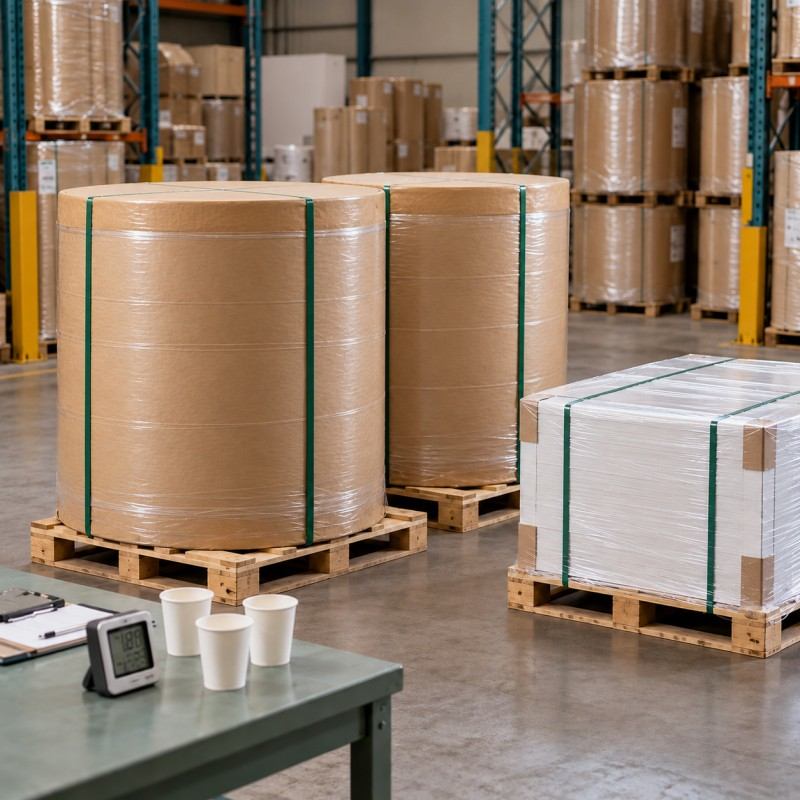
Sheets vs. Rolls
Sheets are convenient for standardized burger wraps, sandwich wrapping, basket liners, tray liners, and food-service applications where consistent dimensions are important. Buyers should confirm sheet size, grain direction when relevant, packing quantity, and whether the paper will be manually wrapped or machine fed.
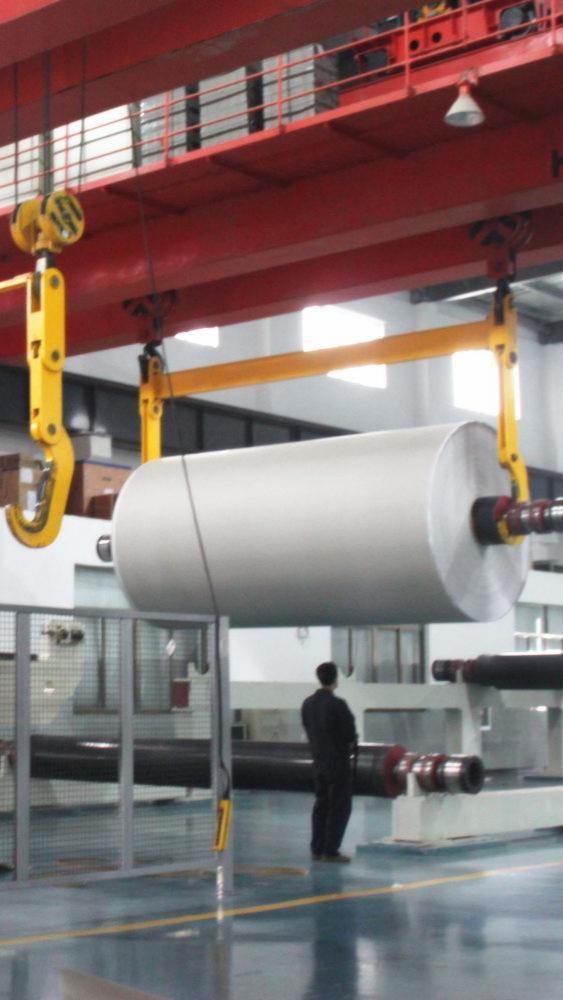
Rolls offer greater flexibility for converters that print, slit, cut, fold, or make bags. Confirm roll width, diameter, core size, maximum roll weight, winding direction, splice requirements, and compatibility with the converting line.
How to Test Samples Before Bulk Ordering
1. Use the actual food. Test the hottest, oiliest, and heaviest version of the product rather than an easier substitute.
2. Use the final packaging format. Wrap, fold, line, or convert the paper exactly as it will be used in production.
3. Match the real holding time. Inspect the sample after the expected serving, display, refrigeration, or delivery period.
4. Check critical failure points. Look for grease stains, tearing, wetting, cracking, spring-back, ink transfer, and barrier loss along folds and creases.
5. Approve a converted sample. For printed or converted orders, approve the final size, color, artwork, folding, and packing before mass production.
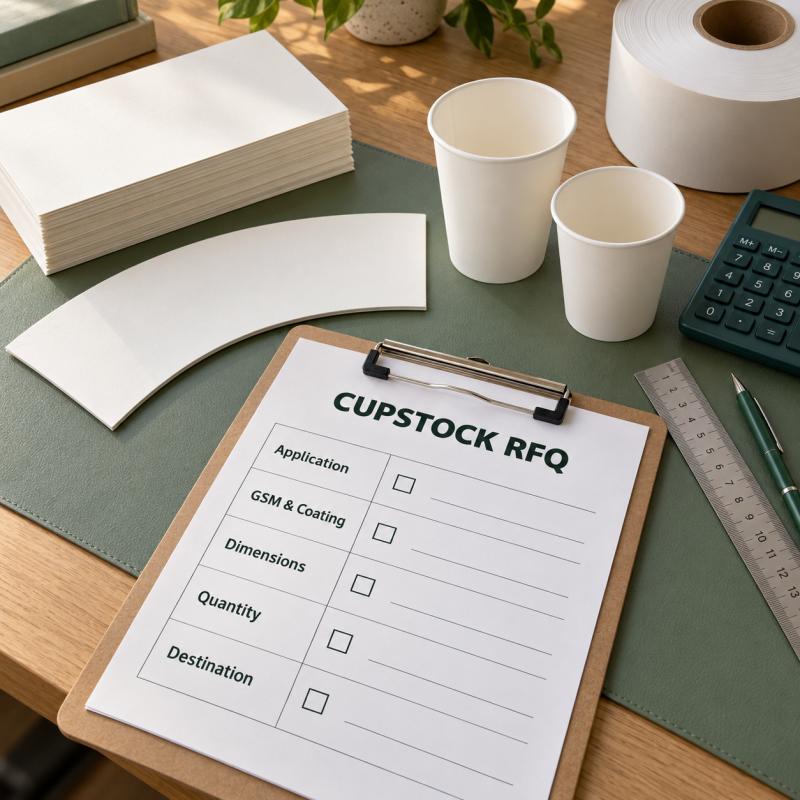
Information to Provide When Requesting a Quotation
- Food type, serving temperature, grease or sauce level, and expected contact time
- Required GSM and KIT level, or the specification of an existing sample
- Sheet dimensions or roll width, diameter, core size, and winding requirements
- White or brown paper, printing colors, artwork, and food-safe ink requirements
- Required food-contact documents and any PFAS-free, FSC, or market-specific requirements
- Estimated quantity, delivery destination, preferred packing, and required lead time
FAQ
What GSM is best for burger wrapping paper?
Approximately 30–40 GSM is a common starting range for many burger wrappers. Around 38–45 GSM may be considered for larger burgers, heavier fillings, or more demanding handling, while grease resistance should be specified separately.
What KIT rating is suitable for French fries?
KIT 9–12 is a practical starting range for hot, oily French fries. The final level depends on oil load, serving temperature, contact time, and whether the paper is used as a cone, wrap, or tray liner.
What KIT rating is suitable for fried chicken?
KIT 9–12 is generally more suitable for heavily oily fried chicken and takeaway foods. Food weight, holding time, folds, steam, and sharp edges should also be included in the application test.
Does a higher KIT rating mean the paper is PFAS-free?
No. KIT measures grease resistance under a specified test method; it does not identify the treatment used. Buyers requiring PFAS-free packaging should request a separate declaration or test report.
Should I order sheets or rolls?
Choose sheets for standardized food-service wrapping and lining. Choose rolls when the paper will be printed, slit, cut, folded, or converted into multiple formats.
Final Thoughts
The right greaseproof paper specification should balance GSM, KIT level, food temperature, contact time, packaging format, converting performance, and compliance requirements. Laboratory data is useful for comparing grades, but real-use testing with the actual food and final packaging process is essential before bulk ordering.
| Request a Sample or Specification RecommendationSend us your food application, GSM or KIT target, required size, printing details, and estimated quantity. We can help you identify a suitable starting specification for evaluation. |